After You Sign the Contract

You did it! You succeeded in acquiring an agent, your book sold, and you just signed your contract. Ahhh. Life is amazing.

But…

There’s more work to do. Maybe the hardest work of all. This is where an author truly needs encouragement, practical ideas, and inner strength. But it all starts with thoughts.

Magic of Thinking Big Book
Little Thoughts Keep Your Writing Small

“Success is determined not so much by the size of one’s brain as it is by the size of one’s thinking.” The Magic of Thinking Big by David J. Schwartz

Allowing any task to become daunting can deter us from doing all we are capable of. Especially when there’s a lot at stake — like the completion of a life’s dream. I know, I almost let it happen to me.

I was approximately 85% finished with my final manuscript and three weeks from deadline. Then I froze. There’s no reasonable explanation I can offer as to why. My outline was solid, and until that morning, my words flowed smoothly.

At first, I attributed it to exhaustion. After all, I was still working over sixty hours a week as the general manager of a large river resort, and it was early September. But after taking a couple of extra days off, catching up on rest, and trying again, still no go.

I panicked. A swell of fear felt like it was swamping over me. In a choked voice, I told my husband, “I guess I’ll send the advance money back.”

“What’s wrong?”

“I can’t finish.” I felt my chin quiver. “I don’t know why I ever thought I could write a book. It isn’t good enough to send in, and I can’t get any new words on the page.”

“I thought you wanted this.”

I ran out of the room. My husband meant well, and he was right. It was what I wanted, but in that moment, I didn’t know how to get it done.

First Hired Last Fired
Available in Major Bookstores and Online

The next morning, I awoke feeling no less anguished, but one thing had changed. My determination not to give up. My husband’s final words on the subject resonated in my heart. I did want this. So I got on my knees and thanked God for helping me finish what He had started. Then I took advice from my own book, First Hired, Last Fired — How to Become Irreplaceable in Any Job Market, and resolved to get the job done, regardless of how I felt.

I won’t lie and tell you things suddenly got easy. Those final pages were excruciating, and to this day, I can pick them out of my book by the weakness I see in the sentences forced into existence. But I did it. Exactly on my deadline date, I submitted the full manuscript according to contract. And I learned something.

Michael HyattI’m not the first author to experience soul-crushing panic deep into the book writing journey. Many have relayed similar experiences, including best-seller Michael Hyatt.

But I also learned how to push past my fears, and whether the world likes it or not, to put the message out there. It was hard, but the satisfaction is sweeter than my earlier efforts and emotions.

I’m not sure where you are on the path to publication. But if you’re new to the process, be prepared for some emotional bumps after you sign the contract. And remember — sometimes we need to do what we love, versus what feels safe.

Have you ever panicked in the middle of a big accomplishment? It’s never too late to start again.

Anita Fresh Faith
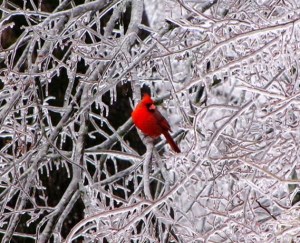
Frozen in Time: Writing and Healing

Photo/LeahSchultzHealing … is change from a singular self, frozen in time by a moment of unspeakable experience, to a more fluid, more narratively able, more socially integrated self. (Writing and Healing, Charles Anderson & Marian M. MacCurdy)

These words challenged my heart. Am I “frozen in time”?

The writing process helps me work through the painful trauma of my “unspeakable” experiences. It enables me to view my story from a more objective viewpoint, melting my frozen numbness, offering me hope beyond the icy boundaries of emotional bondage.

Helpful process. When I write about traumatic events, I often sense fear closing in on me like the twisted, frozen branches of a tree—wrapping its bone-chilling claws around me, choking the inspiration right out of me.

When I work on certain writing projects—like my book proposals—I freeze. I can’t control my thoughts, and chaos emerges, stealing my creative energy and organizational skills.

I try to forget some things for fear of stirring up painful memories, but they resurface when I least expect them. Often something unrelated triggers a memory—like a smell, a song, a picture, a person, or a place. Then, panic sets in again. And I freeze from the memory, unable to cope, until I regain control of my thoughts and reactions.

Healing narratives. Sometimes I‘m not sure how to begin composing my healing narratives. But I know the writing process will bring restoration. So I just start writing, even if I don’t know where the process will take me.

Do you fear writing certain projects? Are the stories too painful to consider? Do you fear the memories will trigger hidden emotional scars? Can we escape being “frozen in time”? Yes!

Hopeful vision. I long to write my stories without fear of a panic attack rooted in painful memories. But sometimes the writing process seems impossible. Luke 1:37 promises, “… nothing is impossible with God” (NLT).

I’ve observed the power of writing and healing as a writing instructor. Many students seem compelled, like I am, to write their own gut-wrenching narratives. And many of those writers come out of their secret hiding places, free from their emotional bondage. They experience change and healing—“to a more fluid, more narratively able, more socially integrated self.” And they begin to live new stories, delivered from their “frozen in time” memories.

As I write my healing narratives, I pray that I have the faith and courage to tell the stories that matter most and encourage others to experience the power of writing and healing.

What stories have you written that have brought healing to you and others?

Photo/LeahSchultz

Smokin’ Hot

fried eggsSometimes my day feels like a cracked egg, running all over the pan in a yellowy glob of goo. Time slides fast. Out of control. Joy skitters away in the wake of unmet expectations.

From this broken shell of a place, the Holy Spirit whispers in the midst of waning joy, “Rejoice in me, the one who breathes fresh life in you.”

“Are you kidding?”

Of course, he isn’t. I know the chapter and verse:

“Rejoice in the Lord always. I will say it again: Rejoice! Let your gentleness be evident to all. The Lord is near.” Philippians 4:4-5

His invitation rings warm. And in this hope-stirred moment, I unclench my fists, wondering, Is joy really a choice? By focusing on God’s truth, can I turn up the joy knob a notch? Watch this broken egg that’s staring back at me bubble up warm in its rawness?

I look up joy in Bible Gateway and find it singing and shouting everywhere, even in the broken places of defeat.

“Burst into songs of joy together, you ruins of Jerusalem, for the Lord has comforted his people, he has redeemed Jerusalem.” Isaiah 52:9

I’m not used to singing in the midst of chaos. It hasn’t quite become habit yet. But I know neuroscience shows it positively affects our brain chemistry. Healthy thoughts register deep in our dendrites.

I also know that it’s easier to sing when I know who I am: chosen, redeemed, clothed in God’s righteousness. The same spirit that raised Christ from the dead dwells in me. In me. This little writer who longs to make a big difference.

God-dreams tick louder than time bombs. Do you feel their press to keep moving forward? We have much to say, but sometimes we stare blankly at that empty egg pan.

“Rejoice in the Lord always. I will say it again: Rejoice!”

Thank you, God, for the gift of words. Crack me open for you. Pour me out raw. I want to flow in your joy and hope and all things good.

When life turns up the heat, we wait with confidence in his presence: hopeful, grateful, and open to the fact we’ll soon feel that first bubble. And one bubble will lead to another and another. And before we know it, whoa–we’re cooking, Baby! Smokin’ hot for Jesus. All we need to do is stay open in God’s great pan. Let him stir up our gifts and see what happens.

“The Lord directs the steps of the godly. He delights in every detail of their lives.” Psalm 37:23

5 Ways to Add Humor to Your Writing

1373807555xxxa8


Humor is a life-giving stress reliever and ice breaker. I often sprinkle my talks, articles and books with funny word pictures and phrases, because laughter opens a reader/listener’s heart to the serious points I want to make. Thankfully, my home is full of crazy guys (including my husband, who’s the most hilarious person I’ve ever met) and I’m a ditzy, accident-prone bundle of midlife hormones. Thus, I’m never short on material.

It’s true that humor, like writing, is an innate gift, and some people have it in abundance. Others…well, not so much. However, certain aspects of both crafts can be taught. As a follow-up to this popular post, here are a few ways to humorously pump up your prose:

1. Wordplay.

Mae West said, “I used to be Snow White, but I drifted.” Classic!

Cultivate your LOL quotient by reading children’s books, which are full of 1362536802le12smarvelous wordplay. Humor writers and comedians are childlike spirits–playing constantly with sounds, alliteration, and rhyme. Let loose a little, and see what happens.

2. Exaggeration.

Never stop at one when fourteen will do. In humor, less is not more and more is better. Erma Bombeck, one of my all-time favorites, was a master at exaggeration: “I’ve exercised with women so thin that buzzards followed them to their cars.”

Remember George Burns? He often exaggerated about his age: “When I was a boy the Dead Sea was alive.”

3. Surprise.

When my nine-year-old saw that our local drive-in was up for sale, he said, “Mom, I’m sad about that. It’s such an iconic part of our town.” I laughed because I was surprised that he knew the word at all, let alone used it correctly.

Want your reader to laugh? Take a phrase and change the ending to something unexpected, like Jim Carrey did:  “Behind every great man is a woman rolling her eyes.” Stephen Wright makes a living by crafting surprise endings to one-liners: “A lot of people are afraid of heights. Not me, I’m afraid of widths.”

4. Parody.

“Weird” Al Yankovich has been doing parody songs for years. More recently, Christian comedians Tim Hawkins (“Cletus, Take the Reel,” etc.) and Anita Renfroe (“All the Wrinkled Ladies”) have gotten into the act. There’s even a clever parody of the infamous song “Blurred Lines” called “Church Signs.” The writers make fun of Christians’ tendency to preach mini-sermons with little plastic letters.

A word of caution (especially for Christian writers): let’s be careful when poking fun at other people. Sarcasm can be soul-crushing, as can insult humor. Remember the Golden Rule.

5. Learn from the best.

Read funny writers, watch comedy videos on Netflix, take courses in humor writing, or read books about the craft. You can also hire professional humor writers to spice up your work (I did this with the first book proposal I sold, and learned a ton from the experience.)

While you’re learning, though, remember to be yourself and not a copy of someone else. Readers can tell when you’re trying to force a joke, and it will make them uncomfortable. Find a style of humor you like, and try it on for size. Ask for opinions from people you trust–if it doesn’t fit, simply try another.

Most of all, have fun!

How have you used humor in your writing?

Tell Your Story

Tell Your Story

Each year thousands of folks descend on the tiny town of Jonesborough, Tennessee, for the National Storytelling Festival. Tucked in these southern Appalachian hills, the International Storytelling Center hosts storytellers and attendees from throughout the country for exciting performances.

What New Orleans is to jazz… Jonesborough is to storytelling.
 Los Angeles Times

Watching this unfold for many years now, I’m seeing how the crowds gather, yes, for the exceptional story-telling, but I believe for more than that. More as in the exponential healing power that story holds.

There’s just something about story that somehow makes our lives better, easier to live.

As writers, we understand this, how the greatest stories of all time evolve from a raging internal conflict. As writers, we can also use this. I don’t mean “use” as in “cheapen,” I mean “use” as in put to good use, aligning with God’s purpose.

We live in a self-aware generation that craves authenticity and real connections with writers who are willing to share raw and real, willing to share the story of overcoming, yes, but also the backstory. Today’s generation wants real hope, seeded in Truth, from folks who have been there.

We can use our stories to make a difference.

I’m passionate about this, believing we’re part of a selfishly divine design. Our stories hold the potential to unlock hardened {or even hopeless} hearts, our personal experiences serving as a point of reference for others in similar places.

Consider the Israelites—an intimidating Jordan River standing between them and God’s future, the imposing waters (seemingly) blocking God’s promise. Remember how God successfully led Joshua and his people through those waters? We know this story because God called them to establish a memorial. He had them return to the trouble-spot {that very place they thought they would never endure} to gather twelve stones to mark the occasion of His divine deliverance. These twelve stones served as an invitation for a future generation {including us}.

“In the future, when you are asked, ‘what does this mean?’ God said, “tell them the story (Joshua 4).”

He meant the whole story. The storyteller was required to be careful and exact. To share the intricate details and not change one single word. The Israelites story of deliverance began in back-breaking bondage as slaves to the Egyptians. The oppression was as much a part of their story as the victory, the pain as important as the healing, and God wanted their children, and their children’s children, and all future generations to know that.

Will we do this, ground our legacies through the power of authentic story?

Oh, that our epitaph would read what was said of King David. “David served God’s purpose in his own generation, then he died (Acts 13:36 ESV).” Yes, God has a purpose. And I pray that by the time I arrive at my grave I’ve lived out mine, that you will have lived out yours, and the same can be written about us.

Everyone has a story. It’s time to tell yours.

Deeper Still: Do you ever feel stuck in the “in-between”? This stalled out place somewhere between the joy of using your story to make a difference and the daily to-do’s of parenting, a busy career, or even a fear of failure? What is one step you can take today to move you closer to using your story?

(Photo: Shanyn Silinski)

The Slow-Writing Revolt

exhausted-woman-Writetodone.com“Nice piece on that Huge Famous Blog, Allie,” you say to your friend, sincerely.

“Oh yeah, that thing. I just dashed that off, after two other pieces I wrote that day.” She tosses her perfect hair and regards her French nails.

“Really? How long did that piece take you?” you say, curious, but knowing you’re about to feel sick.

“Oh, about 37 minutes. Of course posting it all around the world took a bit longer. And then answering all the fan mail. That took about 3 days.”

“Yeah, I hate it when that happens.“ Weak smile trying to hide your nausea and the fact that it took you all day to write one short piece. You leave smiling, stomach roiling.

I confess: I have been Allie a time or three, but I’m mostly the other. Which is a problem. This week, for instance, I have four articles due in the next two days (Yes, this is one of them.) Not to mention a sermon to write, and three other presentations. It was the same last week. I’m not alone in this kettle of fish. A Facebook friend messaged me saying she couldn’t talk—she had three articles due that day. Others tell me the same.

So here we all are hunched over in emergency mode every day, madly chopping and grinding, tossing posts and articles and reviews out into the void. We’re generating twice as much content as we used to, in half the time.

What’s happening? We all have Facebook pages we’re trying to fill. Many have daily blogs they’re trying to fill. Surrendering that impossible task, now they’re filling them with other writers’ work. So now we’re all writing for our own blogs, plus our friends’ blogs, plus all those other publications we want to be in. And the book we’re writing? Oh yes, we’ll get to that, as soon as we finish this last little post. Behind all this is fear . . . a lot of fear. That we’ll disappear if we’re not on stage all the time. That we’ll be forgotten. That we’ll be invisible. That our platform won’t be big enough. That we won’t land another book contract.

Enough. I’m about to revolt.

Here’s what I’m preaching to you and me today. And I’m sorry I’m not saying it beautifully or lyrically with a grand metaphor that lights it all on fire. That’s what happens when you write too fast. Here’s the message: Slow down.  M a r i n a t e.    Wait.     Sometimes even—-stop. Sometimes even—-say No.

We’re losing our way when nothing matters but the deadline. We’re losing our way when nothing matters but the byline. We’re wasting words. Sometimes we’re writing junk we don’t mean. Sometimes we’re just writing junk. We need to quit saying yes to people just because we want to fling a new piece out into the world for its five minutes of fame, if we’re even that lucky. Write to raze hearts and inflame lives. Mean every word you say. Stake your life upon it. Make your words worth every minute of your reader’s time. Anything less is ashes you have no time for and the world has no need of.

Take this, for example. I needed to write this in an hour, with a dash and a pinch of salt over my shoulder. Instead, against all intentions, I have taken three times longer. Not for the craft of it (apologies), but for the heart of it, which did not find me until the second hour. When we don’t give ourselves time to wander and to wonder, we’ll lose the truer words that want to be found and must be said.

Someday soon I hope the conversation will go like this:

“That was an amazing piece you wrote, Allie. You really nailed that review. I’m going to buy the book.”

“Really? That’s great! Yeah, it took me a week to write that. I just had to marinate in it for awhile.” She pulls at her frizzy hair and nibbles on her nails.

“Wow, a whole week! Good for you!”

“Oh, I don’t mean to brag or anything.”

‘No, that’s okay. That’s really inspiring,” you say. You think a moment, then blurt out, “You know, I’m going to ask for an extension on my essay. I think I need a little more time on it.”

“Of course! They’ll give it to you. You’re one of the best writers I know. They don’t expect you to be fast!”

Will you join me in this revolt?

Writing is a Team Sport

olympics

As I write this, the Olympics are in full swing, and I don’t know about you, but I am glued to my television every night, cheering on Team USA.

I am blown away by the dedication of these athletes. As I watch them compete, I see similarities in their job and mine, in their passion and in my passion. And of course as a writer, I see an analogy in EVERYTHING. So here are my take-aways from the Olympics:

1. Identify your team.

Kariss' teamWhat strikes me about so many of these Olympic events is that they are solo endeavors, meaning the athlete competes alone and is scored individually, even though they are part of a larger team for his/her particular discipline and country. But regardless of the individual scoring, each athlete also has a support system, usually consisting of coaches, trainers, and family and friends. Writing so often feels like an isolated career. Unless I sit down and place my fingers on the keyboard, it doesn’t happen. A month before my first book, Shaken, released, I panicked. I needed help, but not with the writing. I have a great publisher, editor, and agent, but I needed a local team. In January, I invited a group of my friends to participate with me in the dreaming and execution. I call them my “Creative Brain Trust.” And, man, did they have ideas. They are the reason for all the buzz leading up to release day. They not only encouraged, but jumped in to help.

2. Have the courage to share your passion.

One thing I LOVE about watching these incredible athletes is the pure joy they feel in participating in and sharing their sport with the watching world. Writing is a vulnerable career. We splash our hearts and thoughts across bound pages and put it into the hands of those who can criticize. That is the beauty and the struggle of art. These athletes are no different. There is something beautiful about watching a snowboarder catapult in the air on a jump, stick the landing, and grin from ear-to-ear as they coast to a stop. What a rush! Move past the possibility of criticism and fear of what people think. Find the joy in writing, and be unafraid to share that with others.

3. Dedication and training pay off.

KLshaken

What is your Olympic moment? What are you training for? For a couple of years, I wondered if my training would pay off. I flew to out-of-state conferences, bought training books, took classes, spent money on professional editing, joined associations. It didn’t seem to lead anywhere. But my Olympic moment just came February 4 with the release of Shaken, book one in the Heart of a Warrior series. I look back and see all the training and dedication coming down to this one moment. And I’m not done yet. I’m gearing up for my next Olympic moment next winter with the release of Shadowed. In the meantime, back to training.

4. Be innovative and take risks.

I heard a snowboarder from Canada say that his sport is always changing. In order to succeed and stay on top, he has to be willing to change with it. But change in itself isn’t enough. He has to be willing to blaze the trail for new tricks, new techniques, and new skill. That’s what I love about writing. It’s fluid. Though the rules are specific, they allow for personal style. Don’t be afraid to push the boundaries of this field and make it your own. There is value in following the rules of the market, but there is also value in standing apart. Find the balance. I’m still learning what this looks like, but I relish the challenge.

5. Celebrate the victories.

Whether or not they win a medal, at the end of the day these athletes are Olympians, and so many of them celebrate that fact alone. I loved watching a first time cross-country skier celebrate eighth place because it was a personal best for her. She even talked about where she could be four years from now in the next winter Olympics.

At the end of the day, you are a writer. Celebrate the success and release of your work. Take a break and rest. Then get back on the horse and crank out something even better for your next Olympics. You have accomplished something great. Now, set your sights on something greater.

What lessons are you learning during the Olympics? What would you add to this list? Happy writing, and Go USA!

A Valentine For Our Readers

rosesRoses are red, violets are blue,

I love you, my readers, for all that you do:

To your families and friends, you talk up my books;

You buy the hard copies, Kindles and Nooks;

You come to book signings in out-of-way places.

I’m always so happy to see my fans’ faces!

You sign up for my newsletter and say lots of nice things

On Goodreads, in book clubs – you make my heart sing!

You share kind reviews, both oral and text,

You give me ideas for what to write next.

You twitter my Tweets, like my Facebook page, too.

I’m so very grateful for readers like you who

Help me find new folks that I want to reach

And invite to the fun of being my peeps!

For YOU, my dear fans, are the reason I write

All through the day and into the night,

Wrestle with words and struggle with plots

(which sometimes are great, but sometimes are not!).

When all’s said and done, I have to confess

There’s only one way I measure success:

If I’ve made you laugh, touched your heart in some way,

My work is done, and YOU’VE made my day!

Happy Valentine’s Day to all our readers

xoxoxoxoxoxoxoxo……..the WordServe Literary Agency authors

Growing a Writing Garden

We writers are pioneers — with the opportunity to become heroes. 

“Do what?” you say.

Here’s how I connect the dots, or the rows, in this case.

Country Vegetable Garden
Preparing the Soil is Critical to a Bountiful Harvest

I now realize how much writing is like gardening. I grew up in the country, with parents who toiled under hot sun and long days. There were eight of us in the family, so we gardened to survive.

I can still see my mother making mud when she swiped her saturated forehead with a soil encrusted hand. “Break the ground up until all the chunks are gone, and the dirt feathers through your fingers.” Then she’d demonstrate, watching streams of brown flow into the wind.

After softening the soil, we fertilized with a mix designed to enhance growing power, making sure we didn’t scorch the tender seeds we hid beneath a blanket of dust.

Every seed looked different. We placed pods, beans, tiny black dots, and flaky wisps into the ground, then covered them according to the depth of their needs, before watering. The scent of earthy musk was strong, as wet and dry mingled.

But still, the work wasn’t done between planting and harvest. It took several days before the first fledgling shoots peeked into daylight. We hunkered over the dirt, waiting to glimpse the sprouts. The first took the longest, but when it popped, the landscape was soon covered in bright green, fragile plants, all groping higher for the sun.

Kentucky Tobacco
Are You Nearing Harvest Time?

Once we saw progress, even harder work began. Hoeing, weeding, continual watering, fighting the heat of radiating summer days. Sleep. Repeat. Sleep. Repeat. While the plants slowly grew taller and thicker.

For weeks, we followed this pattern. The newness had long since worn off. We were hot. Tired. Bored. And ready for the monotony and harsh elements to end.

Until finally. Harvest time. Though it was still too early for the soothing calm of autumn winds, gleaning fruits and vegetables energized our dry spirits. We plucked juicy tomatoes, and ate them like candy. Fresh cucumbers refreshed our hot lips. We shucked silk from raw corn and popped it in our mouths. Life was good, and we wallowed in its glory. Until canning and freezing time.

Green Cornfield
What Does Your Writing Garden Look Like?

I won’t go into plucking, shucking, de-stringing, pressure-cookers, mason jars, freezer bags, or the other finger-numbing parts of putting food away for the winter. I think you get the picture. We couldn’t rush the process.

And writing connects with this scenario. So do pioneers and heroes.

Think about it. When you write, don’t you have to prepare the soil? Deal with fertilizer, but then realize it adds fodder to your crops? Don’t we seed devotions, articles, webzines, copy-writing, books, and speaking platforms?

We water, hoe, weed, and care for our tender publishing shoots.

Then we finally harvest. And we wallow in the glory of it — until we realize how much more work must be done.

Pioneer Wagon
You Are a Pioneer Who Could Be a Hero

This is where I think of pioneers. Many of us dare new territories with our messages. We explore and discover. And like the pioneers who founded America, we stake claims, work hard, protect, and we pray. Sometimes all manner of crisis, like harsh winters, droughts, prairie fires, tornadoes, and hail, threaten to destroy what we’ve built.

But like the sturdy pioneer, we must determine not to give up. This is where heroes are born. Those hardy souls who will not be moved from the place they are called. Who refuse to buckle under the bellows of the wind.

Those who know growing a writing garden is not something everyone can do. But who believe in their message, the impact, the harvest — and don’t give up. Because the honor of feeding a multitude makes dealing with every clump of dirt worthwhile. And so they hoe.

How does your writing garden grow?

Confessions of an Introvert Writer

crowded HallI have a writing conference coming up, and I’ve been trying not to think about it. Although I spend a good part of my work week happily among colleagues and teach big classrooms full of students with enthusiasm, I’m an introvert at heart, most content in front of my computer at home or out in my garden, alone. The thought of being among clots of strangers in some vast hotel lobby fills me with dread.

Anyway, I was thinking about how much I hate conferences and reminding myself of Crowded Wikimania 2009 welcome dinnerhow wonderful it’s been, on occasion, to stumble across a fellow God-lover among the strangers assembled there. The topic of faith comes up slantwise through some serendipitous comment about someone’s having read something in a church book club. Or maybe I notice a woman ducking her head briefly before lifting her fork to eat.

Such chance believers typically turn out to be quite different sorts of God-lovers than I am, which makes the encounters all the more thrilling. They refer to their pastor as “Father.” Or they go on about some pet business of politics important to their faith that I don’t give a rip about. Sometimes their God is barely recognizable as the God I know. Still, I want to sit next to them when I see them enter my next session and to eat my overdressed salad from a Styrofoam box at their table and to suck their occasional thoughts about God into my own.

FOUNTAIN_SQUARE'S__SITTING_WALLSYes, I’m that piteous stranger you meet sometimes at conferences whom you can’t seem to shake. Know this about me: I am in some sort of heaven, sitting there beside you, accepting the M&Ms you offer from the little bag you got out of a machine. We are siblings, you and I. We come from the same home.

I figure that’s how Abram the Hebrew—literally, Abram the Foreigner, the first instance of the word Hebrew in the Bible—must have felt that day after rescuing his cousin Lot and a bunch of other Sodom and Gomorrah inhabitants who’d been taken captive. When the kings of Sodom and Gomorrah come out to meet him in the Valley of Shaveh, they bring along their friend Melchizedek, another king like them but also, we’re told, “priest of God Most High” (Genesis 14:18 ESV). Later, the writer of Hebrews will describe Jesus himself, repeatedly and at length, as a high priest “in the order of Melchizedek” (Hebrews 5.6, 5.10, 7.11, 7.17 NIV).

Melchizedek brings out bread and wine for them all to share—Catholics memorialize the event by mentioning Melchizedek during the Mass—and then he prays this prayer:

Abram, may you be blessed by God Most High,
the God who made heaven and earth.
And we praise God Most High,
who has helped you to defeat your enemies
(Genesis 14.19-20 NCV).

Wow. Imagine hearing that from a stranger! Imagine being a stranger among strangers yourself in the Valley of Shaveh, a place Abram’s never been before, a place where he’s so unlike everyone else, so alien to their values and practices, that people refer to him as “the Foreigner.”

Hearing Melchizedek’s words, sharing bread and wine with him, Abram must have felt himself, for a moment at least, at home. As a person of faith—which the author of Hebrews defines as one who welcomes God’s promises and acknowledges being a foreigner and stranger on this messed up earth—Abram suddenly finds himself, for a moment, where all the faithful want to be, in “a country of their own” (Hebrews 11.13-14 ISV). Not, that is, in “the land they had left behind” or even in the one in which they find themselves, but in “a better country, that is, a heavenly one” (Hebrews 11.15-16 NRSV).

Priests of God Most High. That’s who we are when we acknowledge God among strangers, whether at a conference or among our readers. And however strange and foreign we might feel ourselves to be, we are where we belong.