
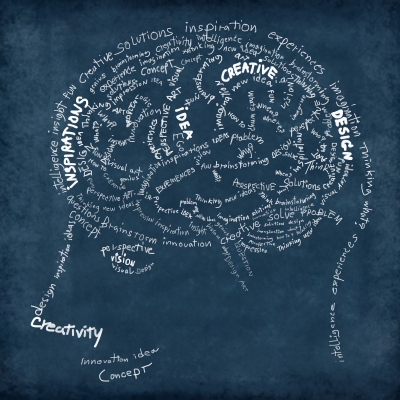
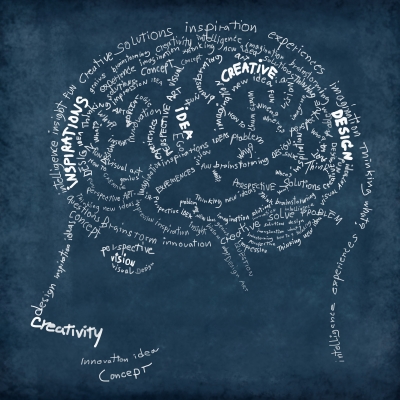
Annie Murphy Paul raised the question earlier this year with her article: Your Brain on Fiction posted in the New York Times Sunday Review. As readers and writers, we need to know the answers to the questions raised by her article.
In this day of instant gratification, with our children and grands fixated on computer games and other digital distractions, is reading dead?
According to Neuroscience’s findings on how reading affects the brain, perhaps we should encourage the old-fashioned virtue of reading stories.
Or should we?
For further research, I ordered first one book and then another.
Keith Oatley’s Such Stuff as Dreams, Brian Boyd’s On the Origin of Story, Tilottama Rajan’s The Supplement of Reading, Lisa Zunshine’s Why We Read Fiction, Lewis Mehl-Madrona, D.D., Ph.D.’s Healing the Mind Through the Power of Story
To read Keith Oatley’s blog go here.
While waiting for the books to arrive, I printed out 50 pages of web articles on the subject. I searched the brain’s known language regions, like Broca’s area and Wernicke’s area. Fascinating stuff for me, it brought back memories of pouring over Dad’s medical books as a child.
It was worth it. Now to compress all this information into a 500-word blog post.
Can you say brain overload?
#1. Does reading fiction affect the brain differently than reading non-fiction?
#2. If so, is reading fiction . . . safe?
#3. Will reading fiction turn men into sissies?
Neuroscience shows the Broca’s area and Wernicke’s area of our brain affect how the mind interprets written words. Other parts of our brains are involved as well.
No wonder the experience of reading can feel so alive. (At least for those of us who love novels.)
While words describing smells like “apple pie” or “vanilla” or “vomit,” cause a response from Broca and Wernike, the language-processing areas of our brains, these words also affect the parts that process smells and scents.
Anne describes using brain scans to reveal how stories stimulate the brain and can even change how we act in life. I’ve condensed and paraphrased her content.
 Volunteers read while scientists scanned their brains with a functional magnetic resonance imaging (fMRI) machine. As the readers looked at the words cologne, bacon, and eggs, their primary olfactory cortex lit up. The words describing objects such as car, or building, left this part of the brain dark.
Motion words activated sections of the brain other than those for language processing. Participants read sentences like “Gritting his teeth, he ran after her” and “He grabbed her forearm.” Interestingly enough, these scans showed stimulation in the part of the brain which coordinates body movements. When the action described was arm-related, the stimulation was concentrated in one part of the motor cortex and in another part when the action concerned the leg.
Fiction, in the form of a novel, examines the social and emotional world of mankind through created characters. We have documented how the brain responds to words of smells and textures and movements as if they were the real thing.
While we read, our brains treat the interactions among fictional characters the same as if we, or someone in our real life, has experienced them.
Which leads us to the next question, “Is reading fiction . . . safe?” What are your thoughts? I will discuss the answers in my next post.




 WordServe Water Cooler