Facing Your Fears as a Writer

Photo/TaraRoss

Write down for the coming generation what the Lord has done, so that people not yet born will praise him. (Ps. 102:18 GNT)

I’m always looking for ways to encourage people to tell the stories that matter most. As a writing instructor, I’ve often observed the need for others to tell their stories.

Passing along our faith and family stories helps us make sense of some of the crucial issues that we face in life. When Christians begin telling the stories that matter most, lives change and hearts heal.

But fear silences the voices of many Christians, preventing them from telling their stories. And if you’ve considered writing for publication for any length of time at all, you’ve probably faced the emotion of fear in your work. Many obstacles keep us from telling our stories—personal insecurities, writer’s block, or a variety of excuses.

Excuses. I can think of so many examples through the years when I just sat back and waited on someone else to do something that I knew I needed to do myself. And I can always come up with an excuse about why I can’t do something.

Before my own children became independent, I often reminded them, “Delayed obedience is disobedience.” I never wanted Adam and Tara to be afraid of me, but I knew delayed obedience might be dangerous and harmful at times. But even though my instructions were motivated out of my love and concern for them, they often resisted. Yet I persisted in my discipline. I prayed that they would learn obedience as children, so they would obey God and their God-given authorities as adults.

I even offer myself excuses now, when I don’t want to do something, like making my bed. What does it matter if my husband Dan does that? It’s his bed, too! And our unmade bed obviously bothers him more than it does me anyway.

But what about the things that God calls me to do? What kind of excuses do I use to attempt to justify my disobedience?

  • That’s not my “gift.”
  • I’m not trained to do that.
  • What do I have to say?
  • I’m not a “good” speaker (writer, teacher, blogger … whatever).

Insecurities. As I searched the Bible to try to find some answers to my problem of fear, I discovered that I was in good company.

In fact, when God called Moses to lead His people out of bondage, “ … Moses protested to God, ‘Who am I to appear before Pharaoh? Who am I to lead the people of Israel out of Egypt?’” (Ex. 3:11 NLT).

Moses knew that this assignment was way out of his area of expertise and experience. And Moses knew that he couldn’t do this impossible task in his own strength or with his limited wisdom. But his awareness of his own limitations proved to be one of Moses’ greatest leadership qualities. It forced him to become totally dependent upon God.

Do you think that God was shocked by Moses’ questions and concerns? I don’t.

Promises. In fact, God responded to Moses with the assurance of His presence, not His judgment. “God answered, ‘I will be with you’” (3:12).

I don’t believe that my questions surprise God, either. God still promises to always be with us today. “… And be sure of this: I am with you always, even to the end of the age” (Mt. 28:20).

And He also promises to provide all that we need to do what He calls us to do.

“And I am certain that God, who began the good work within you, will continue his work until it is finally finished … ” (Phil. 1:6).

What’s keeping you from telling the stories that matter most to you?

Photo/TaraRoss
YouTube/JoshWilsonVEVO (“I Refuse”)

Three Requirements for Christian Writers to Consider

Photo/KarenJordan

… The right word at the right time—beautiful! (Prov. 15:23 MSG).

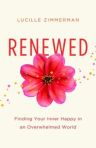
I opened the book package at my mailbox and read the title, Renewed: Finding Your Inner Happy in an Overwhelming World

Renewed. I need to read this book today, I mused. 

But my “to do” list interrupted my daydream of relaxing in my recliner, enjoying a tall glass of iced tea, and reading Renewedby WordServe author, Lucille Zimmerman.

Renewed

I placed my copy of Renewed on the end table next to my chair and revisited my checklist. Speaking engagement? Check. Four Bible studies for newsmagazine? Four checks. Blog post? Maybe tomorrow. Three book proposals? Question mark. Post for WordServe Water Cooler? Oops. Just breathe … I guess the book proposals go on hold again. Drat.

Responsibilities. After a few minutes of brainstorming about my WordServe post, the phone rang. “Mom, do you have two large suitcases that the boys can borrow for next week?”

Next week? I cringed with this pressing reminder of my commitment to keep my youngest two grandchildren in Texas, while my daughter attended church camp with two of her older boys.

Requirements. When I return to my computer, I’m drawn to Renewed again, desperate for a word of encouragement and a sense of renewal. As I read the first chapter on self-care, Renewed offered the exact words that I needed for that moment. Later, a reference to Micah 6:8  reminded me of a question that I had failed to ask earlier as I struggled with my other commitments.

And what does the Lord require of you? To act justly and to love mercy and to walk humbly with your God. (NIV)

Did I read that right? Only three requirements? 

  1. To act justly.
  2. To love mercy.
  3. To walk humbly with God.

Maybe I should check out another translation. 

But he’s already made it plain how to live, what to do, what God is looking for in men and women. It’s quite simple: Do what is fair and just to your neighbor, be compassionate and loyal in your love, and don’t take yourself too seriously—take God seriously. (MSG)

Relief. I breathed a sign of relief, as I read the answer again. Then, I whispered a prayer of thanks to God for the healing power of His Word, the encouragement of my writing friends, and the gift of His call to be a writer.

In all my prayers for all of you, I always pray with joy because of your partnership in the gospel from the first day until now, being confident of this, that he who began a good work in you will carry it on to completion until the day of Christ Jesus. (Phil 1:4).

Lord, give us the courage to listen and obey Your Word.


Photo/KarenJordan

YouTube/CastingCrowns (Courageous)

What recent encouragement have you received from God’s Word or gleaned from another writer’s work? 

Four Promises for Facing Self-Induced Pressure or Deadlines

Photo/KarenJordan“And you will know the truth, and the truth will set you free” (John 8:32 NLT).

Sometimes I feel like I can’t breathe because of self-induced pressure or someone else’s expectations of me. And at times, I get tired even thinking about trying to follow through on all of the commitments that I’ve made as a freelance writer.

But I know that “God didn’t go to all the trouble of sending his Son merely to point an accusing finger, telling the world how bad it was. He came to help, to put the world right again” (John 3:17 MSG).

So, when I finally sit down and bring my feelings to the Lord, I remember His promises of freedom, strength, provision, and peace.

Freedom from judgment. Romans 8:1-2 reveals the promise that there is no condemnation to those who are in Christ Jesus.

With the arrival of Jesus, the Messiah, that fateful dilemma is resolved. Those who enter into Christ’s being-here-for-us no longer have to live under a continuous, low-lying black cloud. A new power is in operation. The Spirit of life in Christ, like a strong wind, has magnificently cleared the air, freeing you from a fated lifetime of brutal tyranny at the hands of sin and death (MSG).

Strength for our weakness. God also promises to give me His strength in my weaknesses. In 2 Cor. 12:9-10, I read,

My grace is enough; it’s all you need. My strength comes into its own in your weakness. Once I heard that, I was glad to let it happen. I quit focusing on the handicap and began appreciating the gift. It was a case of Christ’s strength moving in on my weakness. Now I take limitations in stride, and with good cheer, these limitations that cut me down to size—abuse, accidents, opposition, bad breaks. I just let Christ take over! And so the weaker I get, the stronger I become (MSG).

Provision for our needs. And did you know that God also promises to provide all that you need in Christ Jesus? “And this same God who takes care of me will supply all your needs from his glorious riches, which have been given to us in Christ Jesus” (Phil. 4:19 NLT).

Peace through prayer. So, if you’re struggling with self-induced pressure or fighting a battle with judgment or condemnation, I encourage you to stop what you’re doing for just a moment and voice your fears and needs to God. He promises to provide His peace through prayer.

Don’t fret or worry. Instead of worrying, pray. Let petitions and praises shape your worries into prayers, letting God know your concerns. Before you know it, a sense of God’s wholeness, everything coming together for good, will come and settle you down. It’s wonderful what happens when Christ displaces worry at the center of your life. (Phil 4:6-7 MSG)

How do you deal with your self-induced pressure as a writer?

Memoir Writing: Scene, Summary, and Musing

Photo/KarenJordanWhat is a memoir? “I had to look up the definition of a memoir before I wrote my entry for this contest,” one writer confessed to me.

“Congratulations!” I responded, acknowledging her award.

This writer’s research paid off. Plus, she chose an inspiring, true story from her life, and she engaged her readers with a meaningful message using creative nonfiction techniques.

Being a judge of the contest entries, I also noticed that some of the other aspiring and experienced writers needed to do a little research before they wrote a memoir. So, I’m sharing here some of what I’ve learned as a memoirist.

My road to memoir writing started with enrolling in a class on writing for publication while in college. But I really didn’t hear the term “memoir” much until I took nonfiction writing classes a decade later.

One of my favorite professors at the University of Arkansas at Little Rock, Dr. Sally Crisp, recommended a very helpful book on that subject by another writing teacher, Judith Barrington. Barrington describes her book, Memoir Writing, as a “practical guide to the craft, the personal challenges, and ethical dilemmas of writing your true stories.”

Defining memoir. Since I’m knee-deep in writing a memoir with my daughter Tara, I needed a refresher course. Here’s my own memoir checklist.

  • Focused theme or topic. William Zinsser discusses the memoir in his book On Writing Well. “Memoir isn’t the summary of a life (like autobiography); it’s a window into a life, very much like a photograph in its selective composition” (136).
  • Narrative. Memoir tells a story about certain people, places, or events from the writer’s personal life.
  • Reflection. The writer’s thoughts and beliefs about the events are a vital part of  the memoir.
  • Conversation. The narrative voice reflects on her thoughts and feelings in an intimate, conversational, and honest manner.

Creative NonfictionThe memoir tells true stories using creative nonfiction techniques.

  • Contains all the elements of fiction.
  • Moves back and forth in time.
  • Requires believable dialogue, based on truth.
  • Switches from scene to summary to musing.

Photo/KarenJordanScene, Summary, and Musing. Musing takes a vital role in the memoir. But scene and summary provide two useful ways to move through the narrative.

Judith Barrington describes the memoir’s characteristics of scene and summary in cinematic terms. I’ve often used photographic terms to describe the editing process.

  • Summary. Here the writer focuses on the panoramic view. This may include numerous details, but examines the person, place, or event from a distance. For this viewpoint, I imagine myself taking a photo of a sunset or sunrise over a lake with my long-distance camera lens.
  • Photo/KarenJordanScene. For this macroscopic view, you zoom in for a closer look at your story and focus on a particular point of view or incident. Consider using some dialogue to illustrate your scene or another descriptive device to describe an intimate detail of that moment. In photography, I change my lens and focus for a closer view of a child or the reflection over the lake.
  • Musing. I visualize this characteristic of a memoir as the microscopic view, zooming in on the writer’s intimate feelings and thoughts. The reflective voice of the writer expresses her feelings and thoughts at the time of the event. She might choose to express her current understanding or the wisdom that she gleaned from her personal experience. For instance, I love to capture the memories by the lake close to my home–the awesome sunrises and the poignant moments with my grandkids. It reminds me to record the stories that matter most to me as a gift for the next generation.

Storytelling. In memoir, the writer tells a true story from her life, using her best creative nonfiction skills. As you examine your memoir for revisions, focus on your areas of strength and weakness. Do you tend to focus on summarizing your story rather than zooming in on some important scenes? Have you reflected on what a certain person or event means to you or what you’ve learned from this experience?

I challenge you to work on the weaker elements of your memoir. Your story will become stronger and even more meaningful, as you examine your scene, summary, and musing.

Photos/KarenJordan

What helpful insights could you offer about memoir writing?


Perseverance: Keep Moving and Writing!

Photo/KarenJordan

He gives strength to the weary and increases the power of the weak … those who hope in the LORD will renew their strength … they will run and not grow weary, they will walk and not be faint” (Is. 40:29-31 NIV)

My legs quiver as I step onto the sidewalk in front of my home. How can I launch out for a walk feeling so weak? I take a second step, determined to go forward with my plan to regain my health by exercising.

Obstacles. My motivation to exercise overpowers my temptation to stop. I gain strength in each additional step, as I begin my lesson in perseverance. But it will not be an easy journey. There are obstacles to overcome and goals to reach. Can I make it? 

Resistance. Exercise, like other worthwhile endeavors, demands strength and stamina. The first morning I attempt my new exercise program, everything within me resists it, like opposite poles of two magnets. I would rather do just about anything other than exercise. So, on my first day out, I let temptation win. I stay home, and I feel guilty the rest of the day.

Failures. By the next morning, my previous day’s failure serves as my primary motivating force. So, I lace up my walking shoes, purchased just for this occasion, and jog slowly out of my garage. My first goal has been accomplished. And the next thing I know, I’m crossing the street facing the next block.

Intimidation. Okay, this is going to be a breeze, I think. But by the time I turn the corner, another fear presents itself, as if to try to stop me in my tracks. An all-male construction crew building a house nearby alarms me because of the recent crimes in my neighborhood. I’m fearful of walking in front of them. But I hold my breath and walk on. I move this obstacle out of the way, as I change my route and proceed in another direction.

Distractions. As I walk uphill, I become short of breath. When I slow down to breathe, a gray squirrel catches my attention. He’s busy burying an acorn in my neighbor’s yard. I watch him as I walk by. When I look up, I’m already at the end of the street, about to turn the corner to complete another block.

Goals. I continue to accomplish small goals as I walk. In a short while, I’ve gone far enough, and I decide to return to my home. My mind is cleared by the fresh air, but my body is affected by the exercise.

When I arrive home, I’m exhausted, but surprisingly refreshed. As I sit down for a cool glass of water before I shower, I recall the distance I’ve covered. I feel good about myself, and I’m grateful that I resisted the temptation to quit.

Strength. I find strength as I face my weaknesses each day. In 2 Corinthians 12:8, Paul tells us that the Lord’s “power is made perfect in weakness.”

Writing. I’m forced to face my fears and weaknesses in many other areas of my life, especially my writing life. Writing for publication also demands strength and stamina. So, we can expect to face resistance, right? With each new project, goal, or idea, we’re reminded of some past failure, rejection, intimidation, or distraction.

Survival Tips. How do you endure setbacks in your writing life? I’ve learned a few survival tips on the walking trail and on my writing journey  And as I face my fears and take one step at a time by faith, I’m able to go the distance

And now, … one final thing. Fix your thoughts on what is true, and honorable, and right, and pure, and lovely, and admirable. Think about things that are excellent and worthy of praise.  Keep putting into practice all you learned and received … Then the God of peace will be with you. (Phil. 4:8-9 NLT)

Where have your faced resistance in your life? How did you overcome it?


Photo/KarenJordan
YouTube/mrnmrsyounger (MercyMe – “Move”)

Voice Recognition

Photo/KarenJordan “… My sheep recognize my voice. I know them, and they follow me.” (John 10:26 MSG).

As I listen to the birds singing their songs every morning, I wish I could distinguish one bird from another. I identify the honking geese as they fly over the lake, and I hear the woodpecker as he raps for his meal. I can see the difference between a robin and a sparrow, but I can’t tell them apart by their voices.

My husband Dan can recognize the voices of several birds. He knows the robin’s sweet song, and he is familiar with the squawking blue jay. He can even point out the mimicking mockingbird. So, I’m trying to learn a few voice recognition tips from him.

I’ve also discovered a few tips for recognizing God’s Voice, since I struggle with the same issue in my spiritual life at times. Is this the voice of conviction or condemnation? Will I let faith lead me, or will I be confused and distracted by fear? Does this voice speak life or death to my heart? Does it give me direction or cause me to dwell on the impossible mistakes of the past?

1. Communicate with God. “Don’t fret or worry. Instead of worrying, pray. Let petitions and praises shape your worries into prayers, letting God know your concerns” (Phil. 4:6).

First, I must remember to communicate with God. Sometimes I get so focused on the worrisome distractions around me that I forget the power of prayer and praise.

I’ve also learned that I can’t focus on many tasks at the same time. And if I try to multi-task, I don’t do anything well. So, I must find some way to silence all the voices around me, so I can hear God.

2. Examine God’s Word. Jesus says, “I am the Good Shepherd. I know my own sheep and my own sheep know me” (John 10:14).

What if you don’t think you can recognize God’s voice?

God’s Word promises, “(His) sheep recognize (His) voice. (He knows) them, and they follow (Him). (He gives) them real and eternal life … No one can steal them from out of (His) hand” (27-29).

Sometimes all I can do is hang on to God’s promises—even when everything around me doesn’t seem to agree with His Word. Often my circumstances cause me to panic, because I can’t see how something can work out. My logic and my emotions resist the truth that I see in God’s Word.

3. Allow God to Examine Your Heart. I don’t want to pray about that! What if you really don’t want to pray about something? That can be a big red flag that we might have a little attitude going on.

I can remember when my kids would avoid talking about something with me—like a report card or a visit to a friend’s house. I would eventually force the issue if they continued to be silent, because I knew my kids well. If they were quiet, something was up.

Investigate my life, O God, find out everything about me; Cross-examine and test me, get a clear picture of what I’m about; See for yourself whether I’ve done anything wrong-then guide me on the road to eternal life. (Ps. 139:23-24).

Photo/KarenJordan4. Embrace the Power of Christ in You.      Sometimes I become distracted from God’s voice by the worries and stresses of my everyday writing life. Yet when I choose to focus on God’s Word—listening for His still, small voice—I find rest and peace for my troubled heart and mind.

… Those who enter into Christ’s being-here-for-us no longer have to live under a continuous, low-lying black cloud. A new power is in operation. The Spirit of life in Christ, like a strong wind, has magnificently cleared the air, freeing you from a fated lifetime of brutal tyranny at the hands of sin and death. (Rom. 8:1-2 MSG).

Many times my prayer is for God to just show up. And at times, He shows up in the strangest places—like this morning, as I listen to the chorus of birds singing again. I realize that I still can’t tell one species from another. But in my spirit I know that I’m listening to a symphony of praise to our Creator.

“Let every living, breathing creature praise GOD! Hallelujah!” (Ps. 150:6).

What distracts you from hearing God’s Voice?

A New Year’s Revelation

Photo/KarenJordan

“If you don’t know what you’re doing, pray to the Father. He loves to help … Ask boldly, believingly, without a second thought” (James 1:5-6 MSG).

“You know what killed that squirrel?” my husband Dan mused as we drove through our Arkansas neighborhood.

Duh, I thought, a car ran over him.

“Indecision,” he explained.

Dan always seems to think in black or white terms, no grey areas. “If you don’t like carrots, don’t eat them. If you hate working as a secretary, find another job.”

“Indecision?” I exclaimed. “Wait a minute! Are you comparing me to that squirrel?”

Dan and I are living proof that opposites attract in relationships, especially marriage. But after 41 years of marriage, I think I’m finally learning a few decisive tricks from my husband—like how to organize my office and how to follow through on my dreams.

Confusion. For example, every year I make several New Year’s resolutions. But I’m usually like my friend, the squirrel—before he became road kill. My mind darts around as doubts and fears plague me. Is this plan even possible? What about my failure to follow through on all those other resolutions? Will this just be another waste of my time and resources?

Matthew 6:27 asks, “Who of you by worrying can add a single hour to his life?”

Could my worry and indecision close the doors to many of my dreams and my plans?

Revelation. Jeremiah 29:11 promises, “For I know the plans I have for you…plans to prosper you and not to harm you, plans to give you hope and a future…call upon me and come and pray to me, and I will listen to you” (NIV).

Can I discover God’s plans for my life as I seek Him in prayer? Could it be that simple?

God’s Word says, “You will seek me and find me when you seek me with all your heart. I will be found by you…” (Jeremiah 29:13-14).

Resolution. What have I resolved for 2013? Well, I’ve decided to not worry about making another New Year’s resolution. In fact, I’m still not sure about some of those projects that I’ve been dodging. And I know that I can’t do anything about my failures in the past.

But I am certain of one thing–if I seek God’s Kingdom above all else, He promises to give me everything I need (Matt. 6:33).

Have you made a firm decision to do or not to do something this year? 

The Power of One Word

“… Words are powerful; take them seriously …” (Matt. 12:36 MSG).

I noticed a small typo within a comment that I had posted on a friend’s blog. Instead of the word “power,” I had typed “poser.”

A minor mistake? Not for a writer! And especially not in this case!

My tiny error distorted the entire significance of this scripture: “But we have this treasure in jars of clay to show that this all-surpassing power is from God and not from us” (2 Cor. 4:7 NIV).

One word shifted my focus and the potential attention of my readers. All I could see was my mistake. I lost sight of the message and power of God’s Word. And my readers may have missed the entire point of my comment.

How many times do we let one word spoil things for us? We speak a single word of profanity in the heat of an argument. Or we whisper a little white lie as we try to cover up a mistake. We often regret the unexpected consequences that result from our words. One negative comment or careless thought voiced in frustration or anger can blind us from seeing God’s blessings in a situation.

As a writer, I cringe when I discover one insignificant word choice that turns a powerful point into a grammatical disaster. And I wince when I read an offensive term that will repel an audience of would-be readers.

As a writing instructor, I notice many writers resisting the editing process. They focus on the goal of finishing their writing task, instead of fine-tuning their grammar and mechanics. They get offended if anyone calls attention to one tiny mistake or unclear point, or someone suggests meaningful change. Then, they get angry or depressed when they receive a lower grade for their work, or the piece is rejected for publication.

As a Christian, I’ve also experienced the power of God’s Word. One word of encouragement can pull me out of the deepest pit of despair. A single promise from God’s Word can offer hope to me, when my circumstances seem overwhelming. My simple confession of faith can produce peace in my heart and mind “which exceeds anything (I) can understand.” (Phil. 4:7 NLT).

So, does one word matter? God’s Word answers this question. “In the beginning was the Word, and the Word was with God, and the Word was God” (John 1:1).

Photo/KarenJordan

Have you experienced the power of one word?

Facing a Fickle Crowd?

When Jesus finished telling these stories, he left there, returned to his hometown, and gave a lecture in the meetinghouse. He made a real hit, impressing everyone. “We had no idea he was this good!” they said. “How did he get so wise, get such ability?” But in the next breath they were cutting him down: “We’ve known him since he was a kid; he’s the carpenter’s son. We know his mother, Mary. We know his brothers James and Joseph, Simon and Judas. All his sisters live here. Who does he think he is?” They got their noses all out of joint.

But Jesus said, “A prophet is taken for granted in his hometown and his family.” He didn’t do many miracles there because of their hostile indifference. (Matt. 13:53-58 MSG)

Do you ever want to run and hide from criticism or rejection? If you’ve ever spoken to a crowd, taught a small group, written for publication, or communicated your faith in any way, you may have faced a fickle crowd. And you might identify with this story from Matthew 13.

I noticed a few helpful truths in this passage.

  • Jesus used stories to communicate.
  • People praised Him at times.
  • People also criticized Him.
  • Jesus stayed in tune with His audience.
  • Jesus moved on, when criticized.

Facing criticism and rejection. Reading the account of how Jesus handled this crowd reminds me of an event from my past.  

When my close friend, Sara, invited me to her Sunday School class, I hesitated, uncertain if I would fit in. But since her friend, Glenda, taught the class, I agreed to visit.

Hoping I found the right place, I slipped in the door and scanned the room for a familiar face. No one seemed to notice that I had entered. I found a seat close to the door, in case I needed to make a quick exit. I fiddled with my purse, hoping my insecurity would not be obvious.

I got up the nerve to survey the room again, and my eyes met Glenda’s cold stare. I looked back down at my purse, pretending to search for something, as I questioned myself. Am I in the right place? Is this a closed group? Have I done something to offend her? Maybe I’m reading her wrong.

As I fought the urge to escape, I gripped the edge of the cold, metal seat and leaned forward just as Sara walked in the door. Her warm smile calmed my nerves. And as she sat down in the empty chair next to me, I found the courage to stay.

Pleasing people? After several painful interactions with Glenda over the next few months, I listened to some sound advice from my husband Dan: “Some people just aren’t going to like you.”

What seemed to be common sense to Dan, took me by surprise. Up to that time, I believed that I could always find some way to make people like me. I had been successful at pleasing people most of my life—until I met Glenda. She decided that she wasn’t going to like me. Why? Who knows? I could do nothing, but forgive her and move on.

Facing a new year. I realize that I will always face fickle crowds. And I am still tempted to try to make them like me. But the Bible assures me of God’s unconditional love.

For I am convinced that neither death nor life, neither angels nor demons, neither the present nor the future, nor any powers, neither height nor depth, nor anything else in all creation, will be able to separate us from the love of God that is in Christ Jesus our Lord. (Rom. 8:38-39)

I also hope to remember the example that Jesus gives us in Matthew 13 the next time I face a fickle crowd. So, as I prepare to meet the challenges of a new year, I plan to …

  • Continue to tell the stories that matter most.
  • Offer thanks for the praise I receive.
  • Ask for God’s help to deal with criticism.
  • Stay in tune with my audiences.
  • Move on, when criticized.

 What helps you, when you face a fickle audience? 

A Lesson from Nature: First, Do No Harm

Just ask the animals, and they will teach you.
Ask the birds of the sky, and they will tell you.
Speak to the earth, and it will instruct you.
Let the fish in the sea speak to you.
(Job 12:7-8 NLT)

Observing the wild animals near my home in central Arkansas this past summer reminded me how powerful maternal instincts can be in animals and in humans. And as I watched a doe with her fawn in my backyard, I shot  several awesome pictures.

I also spent several days with my daughter when she faced emergency surgery. As she recovered, I helped her care for her four small children.

First, do no harm. As a writing instructor, I’m often reminded of the Latin phrase Primum non nocere, which means “First, do no harm.” I’m well aware of the risk that my intervention might do more harm than good to the writer and to her work, as I wield my red pen. I also see the value of this truth in other areas of life.

… Have you watched as deer are born in the wild? Do you know how many months they carry their young? Are you aware of the time of their delivery? They crouch down to give birth to their young and deliver their offspring. Their young grow up in the open fields, then leave home and never return. (Job 39:1-4)

I captured a video of a doe hovering over her fawn in my backyard. But I watched from a distance to avoid disturbing their peace. During the hottest part of a summer day, the doe nudged her fawn along the property boundary of my backyard.

I peeked out the window several times that day, and I noticed the ears of the fawn twitching under the brush. I didn’t realize until later that evening that the doe was just a few feet away out of my view behind a tree, watching over her spotted little one.

What did I do to help this doe protect her fawn? Nothing. Any movement toward her would have been perceived as a threat by the fawn and her mother.

As I tiptoed out on my deck later that day to capture this scene on my camera again, the doe did not run away. She turned her head toward me with her ears perked up and tail twitching. She stomped one hoof and snorted to see if I would move. But while she was watching me, she kept a watchful eye on her fawn. And the fawn stayed close to her mother, watching her body language for direction.


Watch my words.
 I understand that my presence disturbs the peace of a doe with her fawn. But often, I’m not aware of my unwelcome intervention, even with my own family. I may believe my helpful advice is needed and even expected. But sometimes my unsolicited verbal support may do more harm than good.

As I related my observations of nature to my own life experiences, I recalled the many times that my own mother gave me unsolicited help or advice. Most of our conflicts came as we faced our unreasonable expectations of each other, our undefined boundaries, or our personal limitations.

Will I ever learn this lesson and stop reacting with my emotions when I see a need with my own adult children? I hope so. But often it takes a crisis to get my attention.

How many of us does it take to put together a toy basketball goal?

Reap a harvest of blessing. As I celebrate this season, I’m grateful for the beautiful examples of God’s creation all around me—the landscape, sunrises and sunsets, and even the wild animals. But I’m most thankful that God continues to reveal the truths I need, so my words and actions can be a blessing, instead of a curse, to my family.

Observing my children and the lessons in nature around me, I’m reminded once again that sometimes it may be best to choose not to do something, or do nothing at all, than to risk causing more harm with my actions or words.

“So let’s not get tired of doing what is good. At just the right time we will reap a harvest of blessing if we don’t give up” (Gal. 6:9).

Have you ever chosen to do (or say) nothing at all, rather than cause harm by doing (or saying) something?