Hello? Who’s Calling?

Businessman talking on cell phoneOne of my favorite stories in the Bible involves hearing a call, but not knowing where it came from.

Young Samuel is learning the ropes of serving God when he hears a call in the night and assumes it is Eli, his mentor. Obediently, he runs to the old man and says, “Here I am; you called me.” (1 Samuel 3: 5) Eli denies calling Samuel, and only after it happens a third time, does Eli realize that God is the one doing the calling, at which point he tells Samuel how to answer. Following Eli’s instruction, Samuel responds to God and enters into conversation with the Lord.

There are three reasons I love this scripture so much: 1) like Samuel, I don’t always recognize who is calling me;  2) it reassures me that I get more than one chance to get it right; and 3) when I finally do get it right, God doesn’t hold my slowness against me, but launches into conversation.

I’ve also learned that this is a great way to understand my writing career – it takes discernment, effort and openness to write what God gives me, and thankfully, He’s very, very patient with my slowness!

Discernment can be a journey in itself.

I’ve always been a writer. But it wasn’t till I was pursuing my master’s degree in theology that I felt the urge to write books, and specifically, fiction. I remember telling one of my instructors about this new desire, and how odd it was for me, a trained journalist and researcher, to suddenly feel like I should write a novel. Her response was that I should not dismiss the urge, that God speaks through fiction as well as nonfiction. I tucked the idea away, thinking it was momentary insanity…until three years later, when another instructor told me I should write a book.

“But I don’t know what to write – I have so many ideas I’d like to explore,” I confessed to him.

“Then pick one and get to work,” he told me.

I chose the concept of vocation, and wrote my first book, a short theological reflection on Christian vocation. I enjoyed the work and the book was published. It felt right, and it felt safe. Nonfiction, I could do.

But I still felt the draw to write fiction. One day, I decided to give it a try when a friend told me I told great stories about my kids. Since I loved mysteries, I chose that genre, and surprised myself with how immersed I became in the writing. I felt like it was what I was called to do.

In my experience, God does speak to us through others, even when we’re not listening very well. Samuel was lucky – he had Eli to help him discern God’s voice.  In our lives, I believe we have help, too, but we have to be open to those messengers of discernment, because they can come in many forms and voices, and they can be very persistent (thank goodness!). After all, it took Eli three times to recognize God’s call for Samuel.

Who helps you discern the call of God in your writing life?
The Joy of NOT Going Solo

RHere’s the truth: I love the solitude of writing. I crave feeling on my own shoulders all the responsibility for crafting a story, and I’ll resist anyone’s attempts to try and share the task.

Which makes it rather ironic when I tell you that the best writing move I made in the past twelve months was to join a writers’ group.

In particular, this group – the WordServe WaterCooler authors.

This is not to say that I meet up with my colleagues for coffee to toss book ideas around or offer each other critiques on working manuscripts. Since we are scattered around the country – even the globe! – the Starbucks club isn’t even a possibility. Yet, in the past year, I have found invaluable support from these new associates of mine, and their very concrete contributions to my writing development and opportunities have boggled my mind, especially since I’d imagined my involvement with these authors would be limited to seeing my name listed among theirs in the sidebar on the site. Instead, I’ve made friends with whom I share an abiding passion, a mission, and a whole lot of experiences. They’ve shared ingenious tips and simple ideas that kick-start my own creative and marketing efforts. I feel like I’ve been swept five years ahead in my career development, instead of my typical solitary slog of a year at a time.

So, okay, you get the picture. Enough kissy-kissy, “I love you” comments.  The point I want to make is that every writer – EVERY WRITER – can benefit in amazing ways by being a part of a group of writers.

The key, however, is being a part of the RIGHT writers’ group, and this is the really tough part, I believe: finding the group that fits you. Here are things to consider as you search for your own writing pals:

  1. Look for peers. Teaching new writers how to create characters, plots, book proposals, and research markets is a generous and good thing to do, but if you want to move forward in your own writing career, you need to find writers who are at the same stage of the journey as you are. If the local writers’ club is all about getting that first article published while you’re working on building a platform for your next book, you won’t stick with the group.  Find writers with the same needs as yours.
  2. A writers’ group isn’t necessarily about crafting your manuscript. Think of it as your emotional and spiritual cheerleading squad and be sure to take turns leading the cheers, and shedding the tears, for everyone in the group. In a way, a ‘writers’ group’ is almost an oxymoron – a bunch of solitary authors who open up to each other.
  3. You don’t compete with your group members. It isn’t a class where you’re vying for top scores. Your group should be a resource for information, ideas, experience and motivation, not a standard of comparison.

Are you a part of a writers’ group?  

Awaiting the Unexpected

Christmas star“For to us a child is born, to us a son is given…” Isaiah 9:6
What a joyful event we will celebrate in just a few more days! As I have every year for as long as I can remember, I’ve spent these December weeks busily preparing for Christmas. I bake the holiday breads and Christmas cookies my family loves. I deck the halls with our traditional decorations, hang the stockings, trim the tree, wrap the presents. I spend extra time in prayer, stash bills in the bellringers’ buckets, and listen for the cherished carols that herald the day of our Redeemer’s birth.

I know how to prepare because I know what to expect, and what a blessing that is!

But the Israelites to whom Jesus came were expecting a different kind of messiah. Instead of a baby in a manger, they were waiting for a political leader, a king who would rally the troops, drive out the Roman overlords, and establish an earthly nation. Only the shepherds in a field were privy to a miraculous birth; summoning the courage to open their hearts to the words of angels, they followed a star to go to Bethlehem, where they found the Lord himself. Instead of a political ruler, they adored a Child who assures us, “Behold, I make all things new.” (Rev. 21:5)

I think that’s what births are about – making things new. Whether it has been the literal birth of one of my own five children, or the beginning of a new phase in my life, these events change what I have previously known, and often have shattered the expectations I had beforehand of what the birth would bring. I’ve learned that the richest – and holiest – experiences result when I’m open to whatever God brings me, and that, thankfully, God will never be limited by my own  expectations of what I think should be.

As a writer, this same courage to open my heart to God’s leading has shaped my writing career. I studied and trained to write scholarly works of spirituality, but instead, I’ve found a niche in humorous cozy mysteries, of all things! The journey and the rewards I’ve experienced have far exceeded anything I could have imagined, bringing me a rich new life I hadn’t anticipated. I’ve learned to toss out my own expectations, and instead, enjoy what God creates anew for me.

In these final days before Christmas, as I wait again for Jesus to be born in that stable, I pray that each of us will take a moment from our well-loved rituals of preparation to courageously open our hearts, and, without any expectation, receive what God has in store for us.

“…And he will be called Wonderful Counselor, Mighty God, Everlasting Father, Prince of Peace.” Isaiah 9:6

May your Christmas make all things new!

Do your expectations prevent you from seeing something totally new and unexpected?

Deep into NaNoWriMo

Every author knows that it’s National Novel Writing Month – thirty days dedicated to flexing our writing muscles and whipping out 50,000 words of an original manuscript. The idea is to give ourselves permission to pursue our writing passion with all our hearts, minds, and laptops in a frenzy of creative expression and production.

What a great idea!

What unfettered freedom to write!

What joy!

What planet are these people from?

Like most authors I know, writing a novel gets sandwiched in between a part or full-time job, parenting, spousing, volunteering obligations, pet maintenance, cooking and cleaning, and – oh yes! – occasional opportunities to sleep. So, at least for me, while NaNoWriMo sounds like a fabulous idea, that is, unfortunately, all it will ever be for me – an idea, not a reality. During the month of November, while other lucky authors suspend every claim on their time and energy to immerse themselves in writing bliss, I’m still teaching college sophomores how to construct a grammatically correct sentence, walking the dog at least twice a day, cooking dinner for my husband and me, doing laundry, answering emails, and maintaining personal hygiene. Until I can figure out how to do all that AND write at the same time, NaNoWriMo will continue to be an elusive dream, and I will go on wondering what it would be like to write a novel in thirty consecutive days.

Note that I wrote ‘consecutive’ days.

That’s because I do write a novel every year in thirty days. The days are just not back-to-back, or consistently eight hours of effort, but all in all, it ends up being around the same amount of ‘work.’ In other words, I write when I can. Some days, that ‘writing’ may actually be hours of mental plotting while I’m otherwise physically engaged (can you spell ‘spring cleanup’?) or it could be an uninterrupted ten-hour words-pouring-out-of-me marathon when I forget to eat (easiest to do when hubby and kids are out of town). I have, at least twice, written the first chapter in a methodical manner, sitting down to my laptop for four hours a day. But then it’s been weeks, or even months, before I get back for Chapter Two. As I often excuse myself to those who ask, I was trained as a journalist, and I work best under pressure, but as an example of writerly discipline, I stink.

It works for me, though. I find that downtime between chapters, or even mid-chapter, gives me time to play with my story, working out different arcs or conflicts. My writing breaks allow my characters to form more completely in my mind, often without my interference. And sometimes, my story takes turns I never would have predicted, thanks to the people or events I encounter while I’m in the middle of slowly, erratically, crafting a story.

Write a novel in a month?

If you can do it, go for it.

Me? I’m simmering stew, along with story plots. The really good stuff takes time, you know.

How’s your NaNoWriMo going?

The Best Advice I (finally!) ‘Got’

I always hated it when writing instructors told me to 1) write what you know, and 2) follow a formula.  How, I wondered, could I write what I knew when I didn’t know anything interesting, and when the only formulas I remembered were from high school math class? I was pretty sure that wasn’t going to be much help in writing anything other than a final math exam.

Now, having finally decoded those two pieces of cryptic advice in the course of my own writing career development, I have only two words to share with would-be novelists: read and outline.

Read books (all kinds!), but also read everything you can get your hands on: newspapers, magazines, the backs of cereal boxes, newsletters, church bulletins. I even read vanity license plates, which inspired me to give one of my series characters distinctive car plates that have played into more than one mystery plot!

The purpose of all that reading is twofold: 1) you accumulate a storehouse of information about the world; and 2) you never know what word, image, or idea will catch fire in your writing process.  Reading feeds you with new material – like ongoing brainstorming.

As for reading books in all genres, I find it’s a great way to broaden my experience. I may not be an expert on scuba-diving or anti-matter research, or know one end of a knitting needle from the other, but if I’ve read about it, I at least have some familiarity with it. And if it might fit into something I’m writing, I can go back for more reading or research.

It wasn’t until I figured this out – that I didn’t have to be an expert about something to write it into a story – that I finally really understood why my teachers insisted you had to ‘write what you know.’ Write what you know – not necessarily what you yourself have experienced. What a relief to know I didn’t have to commit a murder to write about one!

The most important thing I ever did when I was writing my first novel, however, was to outline. And I’m not referring to the outline of my book, either (though I do work from a rough outline when I write). The outline that I found most helpful was the outline I made of my favorite author’s best-seller.

Yes, you read that right – I outlined a book by my favorite author.

It was a tedious task, to be sure, but by the time I finished that chapter-by-chapter outline, I knew more about pacing and plot development than I had ever learned from any teacher or class. My secret was to use a different color marker for each subplot, so that by the end, I had a notebook in which I could visually trace how story threads flowed together and how the notorious ‘red herrings’ of successful plots operated. Deconstructing a best-selling novel taught me how to write my own ‘formula.’

What are you reading/outlining today?

How to Stage An Online Blitz

After spending five days eating, drinking, and sleeping (well, maybe not so much sleeping as lying awake with the brain on overload) the promotion of my free Kindle download last week, I’ve come up with what I call ‘Jan’s TIP’ for any writer planning a similar online marketing blitz.

T is for Timing.

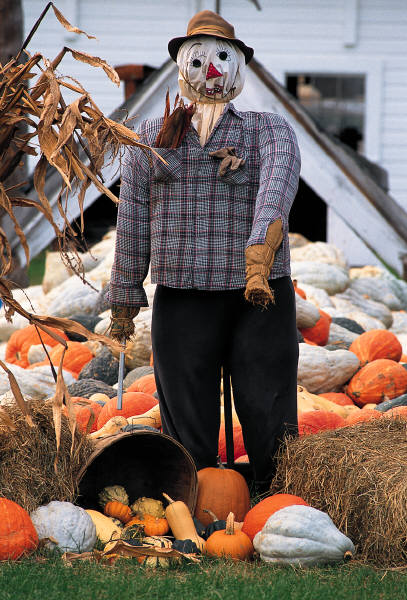
Choose your campaign dates carefully. My book, A Murder of Crows, takes place in October and opens with a scarecrow display; picking an October date for the promotion was an easy choice. It also afforded me lots of tie-in opportunities: I could mention the book in response to any blog, Facebook or Pinterest item that was about Halloween or scarecrows. Think seasonally!

Timing is also about when you post on social networks. I read blogs on Social Media Examiner and subscribe to Rob Eager’s marketing posts, and I’ve learned the best days and times to post to get the most fan engagement: Wednesday through Sunday. I kicked off my promotion with announcements on Sunday and pushed hard with posts Thursday and Friday.

Finally, timing is about you, and how much time you can devote to managing your promotional campaign. I spent at least four to five hours a day online posting, emailing, commenting on blogs, updating lists of contacts and prospecting for new ones. I spent two more hours each day strategizing what to do the next day, exploring new markets and tracking sales/download data. If you want to run a successful campaign, it’s a full-time job!

I is for Images.

Research has shown that images are the keys to social network sharing. To keep posts fresh and continually attention-grabbing, you need to switch up the images you post. I developed six images to use during my five days of promotion, and changed the images I posted every day, with different short text messages. By the end of the week, I’d seen all six images reposted on different networks. It kept my message alive in the universe of Facebook and Pinterest, where the typical ‘life’ of a post is only three hours.

P is for Preparation.

I spent weeks – years, actually – preparing. I made solid contacts in my target audiences over the last few years and asked for book reviews and assistance in promoting my free Kindle deal. I put together a team of fans, reviewers, bloggers, and key influencers to help me focus on getting the word out the week of the promotion, and supplied them with my prepared images and text to use on their own networks. My list of websites and FB pages to contact during my promotion week numbered over 100 (and in the course of the week, it continued to grow as I stumbled on new connections – which are now part of my data base for future book promotion).

So that’s ‘Jan’s TIP.’ Take it for what it’s worth. For me, it was worth around 4000 Kindle downloads in five days…and a bump in the sales of other books in my series.

Do you have a tip for free ebook promotions?

What the Well-Dressed Writer Is Wearing

Actually, the title for this post should be “What the well-dressed writer is wearing in public.” In private, while we writers are slaving over our manuscripts, I know what we wear – anything from running shorts to old jeans to pajamas and robes, and everything in between. When we’re lost among the words, who cares what we look like?

But once you become a published author, that changes. Suddenly, what you look like matters. You have to meet the public. You sit in bookstores, sign books, and attend events. You speak at luncheons and dinners. You do a television spot.

You need to rethink the old sweat pants that have seen you through your book’s creation. You need to glam up a little and give your readers your best side. They are, after all, rooting for you, and you want to do them proud. So, yes, it’s time for a writer’s make-over! (Cue the fanfare!)

Unfortunately, I’m lousy at make-overs (fanfare goes flat), so instead, I’ll just share with you what I’ve found works for me when it comes to making public appearances.

  1. Find a simple haircut/style that is flattering and stick with it. Shell out the money for an experienced stylist and ask him/her for suggestions and instructions. My hairdresser is a lifesaver; not only does she give me a great color and cut, but she shows me how to get different looks with it, so I always look fresh at events. It was her advice before my first book launch that continues to guide me: “Your fans deserve to see you at your best.”
  2. Put together one or two complete outfits that you can grab and wear at a moment’s notice. If you’re chic-challenged like me, get help. Go to that clothing store you drool over and ask for help in assembling a professional ensemble. Yes, it might cost a bit more than you’re used to spending, but to have one ‘go-to’ outfit for anything book-related that comes up will, in the end, save you money, time, and mental energy. I love my ‘go-to’ clothes; I know I look great in them, and that boost of confidence really comes in handy when I’m facing a roomful of strangers. Polyvore, a website often pinned on Pinterest, has some great ideas for various outfits, too.
  3. Use accessories! Okay, I sound like a women’s magazine, but I think this has made a big difference in my presentation. Normally, I don’t wear jewelry, scarves, or jackets, but when it comes to looking polished, they add the icing to the cake – especially when your accessories go with the outfit. (See #2 again.) My favorite goofy earrings? Not so much.
  4. You may want to consider dressing in ‘costume.’ A friend of mine writes several series under different pen names, and she dresses differently for each author persona: one is eccentric, another is business professional, and the third is romantic. She has a ‘go-to’ outfit for each, so her clothing reflects her brand, which means that her clothing is marketing.

What are you wearing?

The Warp and Woof of Weaving Stories

When I was in college, I went on a retreat. One of the skills I learned during the weekend was basket weaving. It was a lovely art, both in what I ended up with, and how I got there. In other words, the process led to a product I was proud of: a tightly woven basket with an intricate design of my own creation.

Writing a novel, I find, parallels that experience. The warp of my story is the primary structure, and the woof is the way I hold it together by weaving in and out of the structure with the scenes and details that make it distinctly my own design. Sometimes, I make an impulsive change in the course of the weaving of my tale, which then affects the entire design, and I end up with a different – but even better – story than I had anticipated; sometimes, I find the change is a mistake, which means I have to unravel back to that point and make corrections.

Unlike crafting a basket, however, the task of weaving a story gives me a dimension of creativity the basket doesn’t allow: I can add in even more layers – more woof – after my initial story is complete.  When I finish a basket, the weaving is of one piece – I can’t cut out a section of threads and replace it, or expand it, and expect the basket to hold together.

With writing, though, I find the extra woof is what gives the story its defining success. In revision, I can add a new character to further complicate the plot or add comic relief. While the main structure of the work doesn’t change, that new character can help breathe more interest into interactions with, and between, other characters. In the case of my mysteries, I often create a character in the revision process who can help move my story through spots that are weak or slow, especially when I need some red herrings thrown in to mislead my readers. I created one such character in my first book as a last-minute thought to complement one of the subplots, only to have readers so enjoy the character, that they repeatedly asked me to bring him back in a later book!

Adding in subplots that reflect the primary plot is another trick to elaborating on my initial story design. When revising, I try to give almost every character some personal issue that can tie into another character’s. Doing so not only makes the characters more real – who, in real life, doesn’t have problems to deal with? – but it affords me more opportunities to weave in conflict, which adds to the story’s pacing. My solution to keeping track of the characters and subplots is the creation of a master flow chart that follows each element of the story from beginning to end. That way, I accomplish every weaver’s goal: no loose ends.

Happy weaving!

What are your favorite threads to add to the warp and woof of your writing?

Hello, Fellow Publishers!

I’m a publisher.

I thought I was just an author doing some social marketing, but thanks to what I’m learning from Beth Hayden’s book Pinfluence: The Complete Guide to Marketing Your Business with Pinterest, my whole perspective on my writing career is changing. Yes, I write mystery and suspense novels, but in support of that endeavor, I need to be creating and presenting content online that is meaningful and valuable for my customers. I need to give my social media friends and visitors what they are looking for, or as Hayden explains on page 61 of her book, “You need to make sure that every piece of content you publish either solves a problem for your audiences, or entertains them – preferably both.”

That’s a big responsibility. Every piece of content. We’re talking about images, information, links, comments – anything you publish anywhere on the internet that has to do with your writing. It’s all part of your ‘company.’ The really exciting part of using Pinterest as part of your company is that it allows you to get creative with visual content, which, psychologists tell us, can evoke emotional responses in a viewer. The bottom line is that by publishing the right images, you can build enthusiasm and loyalty in your viewers, which will help sell your product (books).

Culling through whatever is already on Pinterest boards, however, is not the way to find the ‘right’ images for your viewers, Hayden points out, just as consistently using someone else’s words doesn’t make your work original. Instead, put together your own content. That doesn’t mean you have to take a hundred photos or hire a graphic artist. It means you have to collect compelling images that represent your unique brand. (Be very careful of image copyrights.)

Do you write historical romance? Pin beautiful images of the places where you set your stories, or sketches of period clothing, or the flowers of the region – anything that helps your reader connect to your book. Think of it as publishing a behind-the-scenes guide to your story.

Do you write motivational memoirs? You could pin pictures of famous people who have overcome hardship, or framed inspirational quotes, or maps that trace incredible journeys. Think of it as pulling together an illustrated companion piece to your book.

The possibilities are limited only by your time and imagination, but if you keep focused on your ‘company,’ it will help eliminate some of the time-draining wandering we all do when we get online; if you’re collecting images of old barnyards for an Amish board, it will be a lot easier to not get distracted by all those cute animal pictures that pop up in the blogosphere. (If all else fails, put a sticky note on your computer screen that reminds you “No puppies!”) Make your publishing goals as specific as possible, pin appealing and evocative images on your boards, and Pinterest can become a great billboard for your books on the global internet highway.

Enjoy your publishing!

What are some examples of images that you have been pinning lately? Do you have any creative ideas for pins besides those I mentioned above?

The Bookstore Blues

If you want to induce an anxiety attack in me, take me into a bookstore.

I’m not talking about doing a bookstore book signing, either. I’m talking about walking into a bookstore to browse, to wander aimlessly among the shelves, to read titles on spines and admire book displays. I stroll through the aisles, suddenly paralyzed by the enormity of talent that lays before me between book covers.

I’m terrified.

The reason for my reaction is that walking into a bookstore brings me face-to-face with what I am attempting to do with my writing career: competing with all the other authors out there for readers. It unleashes a storm of insecurities inside me.

Why would someone choose my book to read over all those others?

What value does my book have in comparison to the other thousand on the shelf?

Did I write a good story?

Did I write an adequate one?

Can anyone even find my book amid everyone else’s?

Who would be willing to pay money for it?

What was I thinking?!

And then I recall a pivotal conversation with a dear friend of mine, my mentor and an accomplished author in his own right. “You should write a book,” he said.

“I know,” I replied, voicing the nagging desire I’d felt for years. “But why would anyone want to read what I have to say?”

“Because no one else can say it in the same way as you will,” he assured me. “Every one of us experiences life in a way unique to us, and that’s what you’ll bring to the table. Whether it’s fiction or non-fiction, no one will tell it like you will.”

Encouraged by his confidence in me, I took the plunge and wrote a non-fiction book about personal spirituality. The first publisher who was interested in the manuscript wanted me to change the perspective to reach a different audience than I had originally intended; I wrote the book for adult Christians, but he wanted to revise it and aim it at adolescents. I did something that I now (as a much more experienced author!) marvel at – I told him “thanks, but no thanks.” I believed in the value of what I had written and for whom I had written it, and even if it meant I had to continue looking for a publisher, I would do it. Eventually, I did find the right house and the book was published.

And then I learned, the hard way, that I was almost solely responsible for marketing it.

I had no idea what to do. The book never took off, although it sold enough copies for me to savor being an author.

I vowed if I ever wrote another book, I would do it differently.

Differently may be an understatement.

Now I write fiction – both humor and suspense – and market aggressively. I love what I do, and I know that if just one reader enjoys my book, I’ll be glad I wrote it.

But I still try very hard to stay out of bookstores.

What keeps you writing when you think of your book afloat in a sea of competition?