God Has the Plan, Not Me!

Chess pieces on chessboardI’m a planner.

In the days before I go on a trip, I make a list of everything I need to take, so I won’t forget something in the actual process of packing. I mark items off the list as I pack them. When I close the last suitcase, I tuck the list into my purse, so when I return, I can use the list again to be sure I don’t leave anything behind.

The fault with my method of preparation is obvious, though – while I can control what I bring on the journey, I can’t control what actually happens on the journey. Sometimes the weather is much hotter than I expected, and I end up wearing the one sleeveless shirt I brought for the whole trip. Or the opposite occurs, and I wear the same sweater nonstop because everything else I packed was perfect for the 75-degrees that had been expected, but got pushed aside by an unseasonably cold weather front.

Again and again, I think of the Yiddish proverb: Man plans, and God laughs. And while I appreciate a good laugh – I’m something of a humorist, you see – it can get very tiresome when I’m trying to apply my planning penchant to my writing career.

Here was the plan: Choose a niche, write a great book, get an agent, get a publisher, write more great books in the series.

This is what happened: Wrote a book tailored to the niche (cozy mystery), wrote second book, got turned down by every agent for three years, not a word from any publisher, began writing third book in series, began writing another series in a different genre (supernatural thriller/romance) to see if I could do it and since the first series was getting nowhere, why not?, and finally found a small regional press for the mystery series four years after finishing the first novel.

Encouraged by that success, I pitched the thriller/romance to an agent, who snapped it up. That was five years ago, and that series now has two books in it, but no bites from any publisher. In the meantime, I’ve had five books in the cozy series published by the regional press, and my agent for the thrillers has now sold a humorous spiritual memoir I wrote six months ago (which grew out of several blog posts) to an international publisher.

From mystery writer to memoirist. I never could have planned that, not to mention the wonderful community I’ve found here to share the journey with at my agent’s company. It’s funny to see where my ‘plans’ have taken me, even though they haven’t taken me where I had planned.

They have, however, taken me exactly where God wanted – I just didn’t know it at the time. So every time I feel God laughing at my plans, I know the laughter is with me, not at me, and I know I’m not alone in this very human experience, for as the prophet Isaiah declared:

“For my thoughts are not your thoughts,
neither are your ways my ways,”
declares the Lord.
 “As the heavens are higher than the earth,
so are my ways higher than your ways
and my thoughts than your thoughts.” Isaiah 55:8-9

So go ahead and plan all you want for your writing career. Then let God show you the higher way.

What I learned from Leo Kottke

GuitaristLast month, my husband and I enjoyed an evening concert at Big Top Chautauqua outside Bayfield, Wisconsin. Leo Kottke was the featured performer, and while I wasn’t particularly familiar with him and his music, he has long been a favorite of my husband’s. The concert took place under a big tent on a beautiful September night, very near the shore of Lake Superior, and Kottke did not disappoint, either as a guitarist or an entertainer. I came away a fan…and with a new perspective on what I do when I give a book talk.

I realized that the key word is entertain.

While the need to entertain my audience remains uppermost in my mind when I write, I haven’t always kept that focus during speaking engagements. Sometimes, I get too bogged down in the details of crafting a narrative when I talk with writers’ groups, or my presentation begins to sound stale when I answer the same questions over and over from audiences of readers. If I’m getting bored with repeating the same “this is my book, why I write, how I write,” then I expect my listeners are getting bored with the same old book talk they hear from every writer.

Enjoying Kottke’s performing style convinced me I needed to think of myself as a featured entertainer when I speak, not as the featured author. Yes, the man could play amazing guitar pieces, but it was his in-between chatter that tied it all together into a neat package of entertainment. Too much chatter and it would not have whetted my appetite for his music; too much music and I wouldn’t have formed a connection to the man. Instead, he balanced the two pieces and sold me on his entertainment value – which is exactly what I need to do to find new fans of my books.

After our evening at Big Top Chautauqua, I revamped the way I approach and present a book talk.

Instead of focusing on what goes into the book when I speak to groups, I now read short selections from several of the books – selections that are particularly meaningful or funny for me – and explain where in my own life those passages came from (and I always tell it with humor!). The result has been increased active engagement with my listeners, and they become more intrigued with the books, which results in more sales after the presentation concludes. I’m getting more comments about how enjoyable/entertaining the talk was, which not only makes it fun for everyone, but also leads to a greater number of speaking referrals for me! After all, if you’ve enjoyed an event, you’re likely to come back for more – whether it’s another book by the same author, or a CD recording of a musician – because you want to tap in again to that source that gave you an entertaining experience.

Authors need to think of themselves as entertainers – both in print and in person – and then present themselves that way, too.

How do you craft your talks for entertainment?

When Marketing Ideas Go Bad

http://www.centurynovelty.com

One of the benefits of trying a variety of marketing strategies is that you learn what works.

You also learn what doesn’t.

Here’s a list of my worst marketing ideas. I share it with you so you won’t be tempted to make the same mistakes!

1. Order 1000 very simple business cards with just my name and website. That way, I could customize additional information on it to every person to whom I gave it. What a brilliant idea – I could use it for everything!

And I do – for store lists, reminders to me, store drawings (you know the type – you drop your business card in a big glass bowl), and when I want to write down a new acquaintance’s phone number. I quickly realized that I was spending so much time writing other info on the cards, that it was much easier to just hand out my book series book mark, since everyone wanted to know the names of the books and where they could be found.

Lesson learned: make every marketing piece targeted for what you need it to do. All-purpose pieces are wasted money. (Added benefit of book mark: it’s harder to lose than a little business card!)

2. Have a t-shirt made to wear to festival book signings that features the cover of your book. I could be a walking billboard!

But only once, I found out. The t-shirt shrank too much in the wash to be worn again. I did donate it as a door prize at a later festival, but marked the size as “Child.”

(Related story: I’ve seen authors wearing shirts that read “I’m the author” with the book on the back. Mistake here is that if readers don’t want to talk to the author, they can readily identify you and avoid engaging in conversation, which is how you make sales. The stealth approach can be a good thing at festivals, I’ve found.)

Lesson learned: let your book covers represent themselves and you dress professionally.

3. Try to show a different side of yourself. I thought readers would appreciate my expertise about birds in literature (since I’m both a college literature instructor AND I write about birding), so I gave a talk at a festival on that topic.

Yes, I had a large attentive audience interested and engaged! We talked about myths and legends and literature. But I didn’t sell any of my books.  My books are humorous, not academic. I wasn’t there trying to land a teaching job – I was there to find new readers.

Lesson learned: Stick to your brand and deliver what your books promise.

4. The giant inflatable gorilla that I put out in my front yard when my neighbors have garage sales.

Just kidding! I haven’t made that mistake…yet. Although car dealers have used it for years, so it must work for someone. I know!  A flock of pink flamingos…

Thank You, Doctors

compassI have a secret to share with you.

When I create characters for my novels, I often call on the expertise of two renowned psychologists. Their names are Carl Jung and Isabel Briggs Myers. Many of us know their work in the form of the theory of psychological typology, or the personality inventory called the Myers-Briggs Type Indicator (MBTI). I’ve found that once I start developing a character, I can turn to the Myers-Briggs personality types to fill out the outline of a character with true-to-life traits and behaviors using the four categories of personality type. In short, it’s like a cheat sheet for character creation.

Let’s look at an example using the first piece of the four-part MBTI.

I’ve got a rather demanding physicist I want to cast as my reluctant hero. As an academic, he fits the Introvert (I) type, rather than the Extrovert (E): he prefers private time, doesn’t do well in crowds, and is sometimes so wrapped up in his thoughts that he’s oblivious to what’s happening around him. I’d say that’s a good description of a physicist who loves to work long hours in a research lab. However, since I want him to come across as blunt and insensitive, I’m going to throw in a little Extrovert: he tends to act first, and reflect later, in social situations he finds challenging.

Here’s the scene I’m working on: After finishing a 20-hour stint in the lab, the physicist is awakened from a deep sleep by an insistent knocking at his front door.

Here’s the question I have to answer as the author: Is he going to greet the visitor with a smile, because he can’t wait to share the big discovery he made during that lab marathon? Or is he going to roll over and refuse to come to the door?

I decide he’s going to roll over and pull the pillow over his head in true Introvert style.

But the knocking continues. He has to do something to make it stop because it’s infringing on his solitude, which he craves.

Grudgingly, he drags himself out of bed; he’s not going to be a happy camper when he opens that door. Nor does he want to talk with anyone (this is an awkward social situation, remember!), but because of that bit of Extrovert quality (act first, think later), he ends up jerking open the door. When he see’s it’s his least favorite colleague from work, he blurts out a rude, “What are you doing here?”.

By using the MBTI as my guide, I’ve accomplished several things, such as giving him consistent character traits, motivation for his actions, and even the beginning of a conflict with another character.

By the time I identify the other three parts of his personality type – Sensing (S) or Intuitive (N), Thinking (T) or Feeling (F), Judging (J) or Perceiving (P) – I’ll have the keys to his actions in any situation my plot throws at him.

How do you make your characters come to life?

Roll the Stone Away

http://creativecommons.org/licenses/by/2.5/

One of my favorite scenes in the New Testament is when Jesus raises Lazarus from the dead in John 11: 38-44. “Roll the stone aside,” Jesus tells those around the burial place, a cave cut into the hillside. After the stone is moved, Jesus calls out in a loud voice: “Lazarus, come forth!” The dead man obeys, and Jesus then commands that Lazarus be freed from his burial linens and let go.

Aside from the brilliant drama of the moment, the undeniable demonstration that Jesus is the Lord of life, I am especially fond of this passage because I heard it proclaimed in church at a pivotal time in my own life when I was struggling with direction.

My fifth child was almost a year old, and I knew it was time to move on from having babies.

But move on to what?

As a full-time stay-at-home mom, I’d devoted fifteen years to raising my children. About once a year, I managed to produce a Christian magazine article, which satisfied my desire to write. (All my other desires were to get more sleep.) Since I still had a young child, I knew I wouldn’t be heading back to outside employment for at least another five years until she entered kindergarten, and even then, I’d need summers off to be home with my kids. What kind of work could I do, other than answer one of those ads in the back of magazines for someone to stuff envelopes as their own home business?

That’s when I heard the Scripture proclaimed at church.

And it immediately struck me that I needed to roll a stone aside in my own life – the stone of my own excuses that prevented me from committing myself to developing ALL the gifts God had given me.

Because excuses aren’t the same as authentic obstacles.

I didn’t have an enormous, heavy rock to literally push away like the friends of Lazarus had. Yes, I had important demands on most of my time, but I realized that some of those demands were also self-imposed – stones I had placed in my own pathway. With two teens in the house who doted on their baby sister, there wasn’t any reason I had to be the only one to mind the baby for an afternoon, yet I hesitated to lay that responsibility (stone) on my older children. Once I did, though, it was good for all of us – my teens learned new skills in carrying that particular stone, and with it removed from my path, I had several hours a day to develop my writing skills.

One by one, I worked at rolling away the stones of excuses so my writing talent could come out of its cave.  When my fifth child left for college last fall, I was sad to see the end of that phase of my life, but so excited to greet the new one waiting for me.

What stones do you need to roll aside to answer God’s call to new life?

The Best Advice I Could Have Given Myself

SignatureCountry artist Brad Paisley released a song in 2007 titled “Letter to Me,” in which he gives his teenaged self advice for the future. It makes me think about what I would have advised myself thirty years ago when I began my freelance writing career. So, with a tip of my own cowboy hat to Brad, here’s my letter to my younger self!

Dear Jan,

I am you thirty years from now, and I want to give you some advice about writing.

  1. Get a day job. You are never going to be on Oprah talking about your bestseller. (Oprah is a person with a very influential talk show in the future. She has a book club, and Tom Cruise jumps on her sofa. Enough said.) Accept the fact that your writing habit will never financially support you. Fortunately, your husband will, so be sure to say “Yes” when a guy named Tom proposes to you. You’re going to think he’s just trying to cheer you up because your car’s water pump broke down, but he’s serious. DO NOT LAUGH IN HIS FACE, because he will never let you forget it. (Although it will make a great blog post. A blog is …never mind. You’ll find out later.)
  2. No matter what you think, your first and second book manuscripts are trash. Really, they are. It would be nice to just skip writing them altogether to save time and effort, but if you don’t write them, you won’t write your third book, which will find a publisher. Just thought I’d let you know.
  3. You’re going to meet a woman named Belinda. Don’t ever tell her you’ve written a book, because even though she’s going to be one of your best friends, she’s going to drive you crazy with her constant stream of ideas for books SHE wants to write. If she ever brings up that she’s thinking about writing a book, immediately change the subject. (You can thank me later.)
  4. Write a YA romance series about a vampire and a high school girl. Believe it or not, it will sell and launch a publishing trend. I’m serious.
  5. Speaking of serious – stop taking yourself so seriously. There are many, many writers out there. The bad news is that you have to compete with them for contracts. The good news is that the writers you meet will absolutely enrich your life, if not your pocketbook. (Reread #1 above.)
  6. Don’t give up writing. You will get published. You will also get rejections, but that’s part of the package, so get over it and get it out of the way. It will give you more time to write and more confidence in your writing. Writing is your gift, so enjoy it, develop it, invest time and effort in it, and it will reward you in ways you can’t even begin to imagine.
  7. Finally, if you ever have a chance to buy stock in a company named Apple, you might want to do that.

Love you!

Jan

What advice would you give your younger self?

Get Thee to a Conference, Writer!

I want to be alone...photo from www.fanpop.com
I want to be alone…photo from http://www.fanpop.com

Like many writers, I work at home, which means I spend much of my day alone. To force myself to get out of the house and interact with living, breathing, real people, I set a goal of attending at least two conferences in the course of the year.

They’re not writing conferences, however.

They’re pre-writing conferences.

In other words, I go to conferences to do research for my books. In particular, I go to events that have to do with birding, nature, and spirituality, since those are my book topics, and I’m always looking for new ideas and the latest developments in the field.

But last month, as I promoted my second free Kindle offer on amazon.com for my Birder Murder mystery series, I realized a marketing benefit to those research conferences: the stuff I bring home – the hand-outs, the programs, the lists of attendees – are invaluable marketing tools.

Influential contacts

You meet a lot of people at any kind of conference, but you might not get the chance to meet them all, especially if they are keynote speakers who typically are surrounded by a crush of people at the conference. If you keep the program, though, you can usually track them down again on the internet, and make contact by sending an email and thanking them for their presentation. Then, when you would like to notify them of your book release or promotion, you’ve got  influential contacts in your target market. Even if you haven’t previously corresponded with them, just naming the conference in a subject line will ensure your email will be read by the recipient. Ask them to share your promotion, and you’ll reach new readers through their cooperation.

Potential readers

Every person who comes to a conference is a potential reader of your work. I recently went to a conference on the therapeutic effects of nature, and chatted with other attendees about my interest in nature and birds. When I mentioned I was an author, I was asked for the names of my books, so I got to do a little promoting to a market I hadn’t previously considered. At a birding event, email addresses of all the attendees are sometimes included (because birders like to email each other about bird sightings), so I have a ready-made email list for special book promotions that I think they might appreciate. Never underestimate the personal touch of addressing individuals!

Creative approaches

Being the packrat I am, I keep all the hand-outs and advertising materials from conferences, too, thinking I might be able to set up a speaking date or promotional opportunity with one of the sponsors. For example, I never thought of wildlife photographers as a market until I met a camera rep at a birding event; now it’s a part of my target audience. As a result, I’ve found that thinking about the ways sponsors connect to conferences is a fertile field for marketing development.

What kind of conferences do you attend and what are the marketing benefits you find?

“Would You Like to Meet the Author?”

"Soapdish" photo from www.lazydork.com
“Soapdish” photo from http://www.lazydork.com

There’s a funny scene in the movie “Soapdish” that depicts a depressed soap opera actress, played by Sally Field, getting her recognition fix. She goes in dark sunglasses to a shopping mall with her best friend, who suddenly shouts “Is that who I think it is?”

Everyone around them stops, the actress removes her glasses, and she is immediately thronged by fans, all wanting an autograph. She smiles, graciously greets her admirers, coos at babies, and regains her self-confidence.

This has never happened to me. Not the depression part–every writer gets the blues in the face of the enormity of the writing endeavor. But I’ve never had crowds of people clamor for my autograph–not in a bookstore, and certainly not in the middle of a shopping mall.

I did have a moment recently, however, that brought this scene to mind in a good way.

My husband and I were playing hooky, taking a weekday afternoon to stroll through the Minnesota Landscape Arboretum, which happens to be about five minutes away from our home. The Arb has carried my books for several years now in its gift shop, and I’ve made a few book signing appearances there, but I’m by no means an author who is recognized by the general public. After touring the gardens, my husband and I headed into the gift shop for our usual browsing, and while I inspected some lovely sweaters and ceramic dishes, he went into the book section to see my books on display.

A moment later, I heard his voice from across the aisle.

“Would you like to meet the author?” he asked a woman who was standing in front of the display, one of my books in her hand. “She’s my wife.”

Say no, I willed her. Sporting my heavy parka, my hair doing its dry electricity bush thing, the last thing I’d expected was to be called upon to meet a reader.

“I’d love to,” she replied, turning in the direction he was pointing out to her, which was straight at me.

I slapped on my ‘meet-my-reader’ face and smiled as my husband ushered her over. We shook hands and I introduced myself, then asked her if she’d read any of my books.

“No, but I’ve heard about them,” she told me. “So I thought I’d give one a try.”

We chatted a bit more, I offered to sign the book in her hand, and after a few more minutes, she left to pay for her book at the register.

“Do you feel like the actress in the shopping mall?” my husband asked, referring to the movie we’d both enjoyed many times over.

“Yes and no,” I replied. “Yes, in that I was recognized, thanks to you,” I added, punching him lightly in the arm, “and no, in that I wasn’t feeling the need for attention to refuel my artistic career. But it was fun to give a new reader a nice surprise she didn’t expect.”

Actually, I hope I do that every time readers pick up one of my books: I want them to get a nice surprise.

Without the dry electricity hair bush thing, though, thank you very much.

Monkey Read, Monkey Should Do!

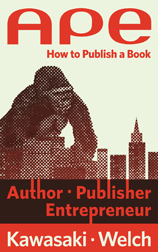
apeDoes the acronym HARO mean anything to you?

It should, because it just might be your ticket to free publicity, extensive exposure as a writer, and the means to grow a national reputation as an expert in your field.

HARO stands for Help A Reporter Out, and it’s a website where you register as an expert and news source. There is no fee to register, and while there is no guarantee that you will get tapped for information, it’s a chance you don’t want to miss. For nonfiction writers, it can become one more piece of a marketing plan to become known for their unique expertise, while fiction writers might consider their own research in specific topics as fodder for story ideas. According to HARO’s website, 30,000 members of the media have turned to HARO for assistance in developing stories; is there any reason you shouldn’t be one of those folks helping out a reporter?

Learning about HARO was just one of the things I learned from recently reading APE: Author, Publisher, Entrepreneur-How to Publish a Book by Guy Kawasaki and Shawn Welch. While I have no desire to publish my own books, I still found the book informative and helpful, especially as I’ve grown from an author-wannabe to someone with five years of publication experience. The first section of the book was a good reminder that writers come in all shapes and sizes, with a range of motives, and that’s okay. It made me consider again the tenacious nature of writers who want to publish and gave me a new understanding of why people choose self-publishing. (It also made me realize that if I did decide to do a short ebook as a promotional opportunity for my other books, I could probably pull it off using APE as my guide.)

What I especially appreciated, though, was the book’s insistence that there is no escaping from the truth of today’s book business landscape: authors need to take responsibility for their books’ success, no matter how they are published.  APE gives valuable insight into the entire publishing process, which I’m convinced every author needs. Publishing is a business, and the sooner authors accept that, the more successful they will be! As an early publishing mentor of mine insisted, if you’re going to succeed, you better know how the business works. Kawasaki and Welch have done a fine job in giving readers the essentials of publishing.

Seeing as I’ve spent the last year trying to educate myself about platform and marketing, I found the last part of the book packed with practical suggestions and resources, like HARO, that I can play with as I continue to polish my marketing skills. The authors even include their own list of what they did to publish/market APE itself, providing readers with a basic outline for promoting any book, and offering links to learn more.

What are you APE-ing these days?

(Special thanks to Lucille Zimmerman, my agency-mate, who gave me the book to read!)

What Does Your Reader Look Like?

What does your ideal reader look like?Woman Reading a Diary

When I first read this question in a marketing article, I wasn’t sure how to answer or even why it was important. Recently, though, I had a promotional opportunity that made it very clear to me why this question is a key to marketing success.

After three years of trying to get on the guest list, I was interviewed on the Larry Meiller Show on Wisconsin Public Radio in late January. I knew that Larry was interested in nature, among other things, and so I thought it would be a good spot to reach potential readers of my birding-based mystery series.

Judging from the hits on my website that day, which recorded an all-time high of visitors, I was right.

What I hadn’t appreciated, though, was the fact that my target audience listens to a lot of radio. Duh – birders drive in cars to find birds, which means they listen to radio.

And that’s when I understood why I needed to think of what my ideal reader looks like…and what he does in his spare time…and what she values…and what he listens to…and what she reads…and, well, you get the idea. I needed a very detailed description of my ideal reader so I would know just where and when and how to reach as many of them as possible.

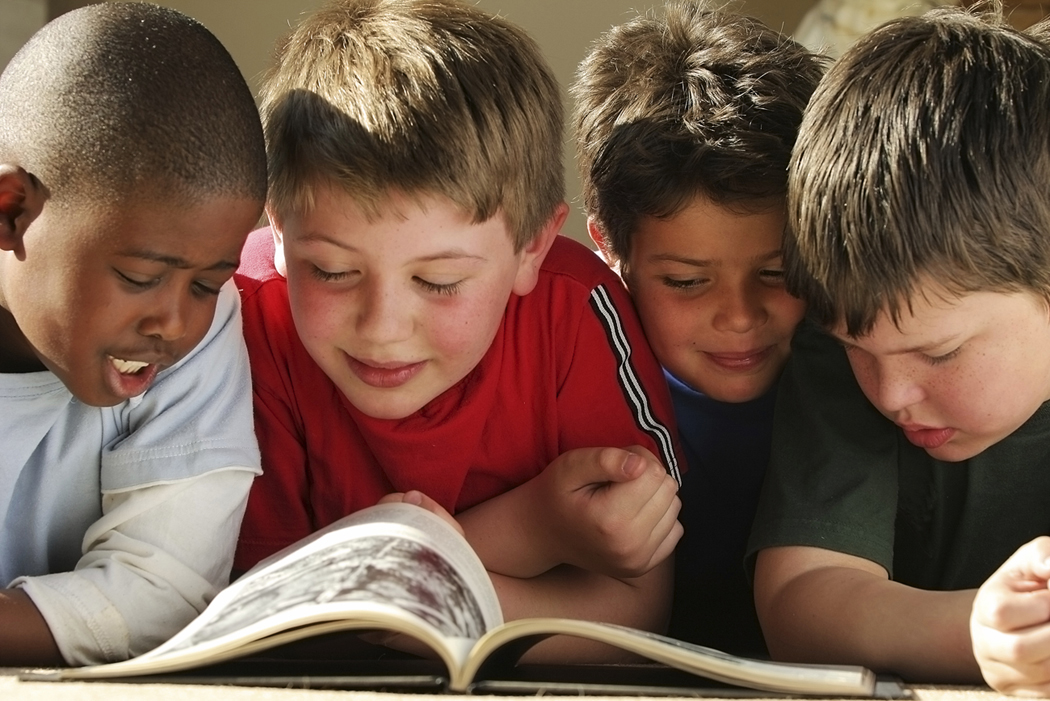
reading boysSure, we all have a general idea of who our readers are – literate, male or female, teens or adults, seniors or little kids – and we probably have some ideas about what they like to do. After all, if I write self-improvement books, I would assume my readers are interested in that topic; if I write medical thrillers, I would think that my readers are interested in medical science to some degree. But would I automatically know that those seeking self-improvement are more likely to watch ( or record) an afternoon talk show on television than listen to a morning news show on radio? Or vice-versa? And how many readers interested in thrillers use Facebook to find book recommendations, rather than read the Sunday newspaper book section?

All these habits and traits and proclivities are key to understanding your audience so that you can make the most of your time, effort, and promotional dollars; the challenge is finding reliable sources for building your ideal reader’s profile, which may take a lot of trial and error on the part of an author who takes on the responsibility of designing and implementing effective marketing.

My best suggestion? Get to know your readers. Ask them what they like to do (when they’re not reading), what media they favor, where they shop, the names of their favorite (other) authors.  The time you invest in putting together a profile of your ideal reader is not wasted, but will result in increased sales and more effective writing as you zero in on who’s reading your work.

Do you know what your ideal reader looks like?bulldog wearing eyeglasses sleeping over a good novel