And the Tweet goes on…

Red HotA few months ago, I enthused in this space about a book I’d read at my agent’s suggestion. Now I’m going to give you a follow-up, because reading Red Hot Internet Publicity has truly changed my marketing game; unlike a lot of books that sound great and helpful while I’m reading them, RHIP is proving itself to be one of those books that truly make a difference in my career. In other words, its tips WORK and you can actually DO them.

(Or am I the only person on earth who finds it difficult to implement ‘great ideas’ that use apps I can’t understand, or require more financial investment when my writing income is already in the red, or simply involve too many steps to even remember?)

This is what I’ve accomplished since my post “Learning New Marketing Tricks” appeared here two months ago: I’ve more than doubled my Twitter followers from 217 to 500+ by discovering new audiences on this one social network, and my exposure (impressions) has increased tenfold!

twitter-bird-light-bgs.pngThe route I’ve taken involves the RHIP suggestion to engage in group chats, which has introduced me to new contacts with similar interests. Even just a few Tweets back and forth produce new followers, and sometimes that generates ideas for writing posts on other networks. Perhaps even more significant is my new habit of scrolling every day through the topics that are currently trending on Twitter. I find a few to which I can contribute original Tweets, and then comment on others in that stream. Again, it only takes a few minutes, but it always generates new followers.

Finally, I’m insistent on using hashtags with every Tweet I make, and the more hashtags, the more likely it is that I’ll reach into new markets. Before I started focusing on Twitter, my tweeting impact was dismal – maybe making only a couple hundred impressions (read that as ‘your name showing up in the Twitter universe’) a week. These days, I’m getting a thousand impressions a day – that’s a lot of times my name is showing up in the Twitter stream, and that connects me to large groups of people I might otherwise not have encountered. Some of those people have now subscribed to my newsletter and bought my books; by following them back, I’ve found more threads of conversation and topics in which I can engage. Throughout it all, I constantly remind myself of my brand – of my unique voice – and make sure my Tweets reflect that. So far, I’m delighted with the results.

Hourglass --- Image by © Royalty-Free/Corbis
Hourglass — Image by © Royalty-Free/Corbis

So delighted, in fact, that I’m thinking I should double my time on Twitter…from 30 minutes a day to 60 minutes.

That’s right – 30 minutes a day have yielded me a breakthrough in exposure, and since getting my name and brand ‘out there’ is so important for making sales, those 30 minutes pack more of a marketing wallop than any other 30-minute marketing I can do.

Isn’t it great when something you try really works?

Don’t ride . . . DRIVE the train!

trainAbout fifteen years ago, while taking a graduate course in Spirituality and Leadership, I had a professor who presented me with one of the most motivational sayings I’ve ever encountered: “Don’t just ride the train, be the engineer!”

Okay, maybe not the most theological statement I heard in the course of my graduate program, but it lit up my brain in ways I’d rarely experienced since finishing my undergrad degree decades earlier. Knowing myself to be an introvert and nonconfrontational, I’d always preferred to have someone else take the lead in projects at work; the only role in which I felt confident enough to be in charge was as a mother to my children. (Looking back, I can only say that ignorance was truly bliss, but that’s another post or two or a thousand.)

But the moment my professor uttered that directive, I had an epiphany that any writing career I wanted to pursue was going to demand that I drive the train, and not just ride along on whatever might come my way. As a result, I began to view writing as a vehicle I would steer, and, when necessary, refuel with energy and hard work. I also accepted that no one else cared as much as I did whether that train finally arrived; not even the support of spouse, family and friends (as important as that is!) would bring that train into the station if I didn’t commit myself to being the engineer.

I share this story with you because every writer needs to know that writing requires you to make that train your own: if you want to be successfully published, you have to learn the business, and these days, that means EVERY aspect of the business: writing craft, understanding your audience, marketing, platform building, travel requirements, publishing trends. Gone are the days when your publisher says, “Thanks for writing this swell book. We’ll take it from here.” Even your agent – if you’re fortunate enough to land an agent – can’t hold your hand through every stage of book development, because she or he is swamped just trying to navigate a path to publishers through all the layers of the industry – layers which can shoot down a book proposal for reasons of marketing or audience or numbers of your social followers, which may have nothing to do with the actual value of the book you’re creating.

You have to take ownership of your career. You have to drive the train to where you want it to go.

And that may be the biggest plus of being the engineer – you can CHOOSE where you want your career to go. It will take hard work and learning from the experience itself, but if you find you’re being called to write romance instead of devotionals, or humor instead of profiles, or politics instead of fiction, you can steer that train of your writing career onto different tracks, and see where it takes you. Maybe it will only be a short detour and you’ll end up at your original destination. That’s great! Then again, it may be a whole new journey on the writing rails.

Are you ready to drive the train?

How to make your readers SUPERfans!

supermanWhen you have a book published – be it in print or ebook – you want to get as much publicity as possible to sell copies, right?

Right!

Do your fans know this?

Well, yes, I think they do.

You THINK they do?

Here’s my suggestion: tell them you need their help to generate that publicity. You need their word-of-mouth to help your book get launched amidst the thousands of books that are available.

You need to give them the 3 Rs of superfans: Read, Review, and maybe most importantly, Rave!

With the launch of my newest suspense novel, Heaven’s Gate, I put together a launch team of thirty readers who agreed to read and post a review on amazon.com and whatever other social networks they had, along with any word-of-mouth recommendations they might be able to give. Like many writers, I’m not especially fond of online marketing because it takes a lot of my time, but the fact is, writers in the 21st century need to cultivate their presence on it. (I, personally, have had varying success with different networks, but I continue to learn and work at it because I’ve seen its value at different times. Let’s face it, if there’s a gathering of readers anywhere – even online – don’t you think an author would be remiss to ignore it?) What I’ve discovered since my book debuted last month, however, has added another piece to my formula of reading and reviewing: you need readers to RAVE about a book to influence others to buy.

So far, maybe this seems evident to you, but this next comment might catch your attention: I learned that you need to tell your readers what to write. I don’t mean give them a script – you  want their honest reaction. But what you need to do is empower your readers to write raving reviews, which result from two things: an awesome reading experience (which you have crafted with your book!) and a vocabulary that will reinforce what you want them to say.

Simply suggest key words you’d like your reviewers to use.

At first, I felt odd suggesting words to my readers to use in constructing their reviews. Then I realized that key words are…well…key. Keys, actually, to triggering the all-important call-to-action that every author needs to make to potential readers: You Need To Buy This Book Now. And guess what? Your reviewers are often very grateful to have your suggestions, because they want to write a strong review for you, but are often lacking in promotional experience and don’t know how to best help you with their review. I asked my reviewers to use the words suspense, supernatural, Archangels series, faith and science, String theory, fast ride, and thriller. They did, and as a result, the reviews for Heaven’s Gate present a consistent rave of being a book you can’t put down, which has cued new readers to order the book.ebook

Remember, your fans want you to succeed. Making it easier for them to help you is the least you can do!


How to write REAL dialogue? Listen up!

listenI have a secret weapon when it comes to developing authentic, convincingly real dialogue in my novels: my ear.

That’s not to say that I am an eavesdropper. I do not lurk around others at cocktail parties (Cocktail parties? Do those even exist anymore in our online-saturated world?), nor do I silently sidle up to people talking on their cell phones. The fact is, when I am involved in a conversation, I try to listen very consciously and pay attention to how ideas are expressed, how a dialogue moves from beginning to end, and what it actually sounds like.

And when I hear a particularly memorable line, I steal it.

The result?

My characters say the same things that living, breathing, people actually say.

I know this is one of the keys to my success in creating characters because I always have readers enthuse to me about how “real” my characters are.

“I swear I know your characters,” a reader tells me. “They talk just like my friends do. If I didn’t know better, I’d think that you’d been secretly recording our conversations!”

Confession: I actually considered carrying around a small recorder early in my writing career to capture great lines of conversation, but decided that was too creepy. Instead, I developed the habit of repeating a line in my head until I had it memorized to copy down later. Almost miraculously, the rest of the conversation comes back to me for use in scene development, and that’s when I apply artistic license and my own imagination to craft it into my plot.

Until recently, I thought that was the way every writer developed dialogue: relying on your own ear. But then my daughter shared with me an experience she’d just had with readers of her fan fiction.

“I had so many readers comment on how much they loved this one line from a character,” she happily told me, “and it was verbatim what a friend said to me when he tasted some brownies I made. Seriously, all the best lines come straight from someone’s mouth! Forget struggling to come up with zingers – all you have to do is listen to the people around you.”

That simply confirms what I tell my audiences when I speak about my writing. I can’t take credit for some of the best dialogue in my books, because I didn’t make it up. I just recorded what I heard someone else say. In so many cases, the real world provides much better, more authentic material than I could ever dream up. Not only that, but listening carefully to conversation helps you develop pacing and timing that mimics real people, which is a huge benefit when you’re working with fictional characters.

The next time you’re stumped for dialogue, give your keyboard a rest, and instead, go talk to someone and put your ear to work. It really is surprising what people might say, and what you can do with it.


Learning new marketing tricks

dog shaking handsI am living proof that even old dogs can learn new tricks.

Except that I’m not a dog and the tricks I’m referring to don’t have to do with “shake” and “roll over.”

As an author who came to the book publishing game in her mid-fifties, I realized I had to embrace the internet and social media marketing if I was going to play in the marketplace. As a result, I’ve read a lot of books over the past few years about online marketing and tried to apply that knowledge. But the book I’m finding the most instructional and helpful is Red Hot Internet Publicity because it gives you simple ideas you can implement easily and see immediate results.

twitter-bird-light-bgs.pngFor instance, I’ve never quite been sure how to leverage my Twitter activity into growing my audience; twice-daily tweets and random retweets of those I follow can only do so much in attracting engagement when you consider the enormity of the Twitter universe and its competing attractions. After taking just one tip from RHIP – participating in a group chat sponsored by one of my influential Twitter contacts – I picked up five new followers and at least one immediate book order. “Gee, this really works!” I thought. (Well, duh – the book’s title is Red Hot Internet Publicity, not Mediocre Marketing Online.) As a result, I’m now devoting effort to finding chats EVERY DAY hosted by key influencers in my book topic areas and being sure to participate with tweets and retweets. Yes, I know – it’s called a social network, and that means you’re supposed to be interacting with others, but somehow, actually “chatting” online had seemed a waste of time. No more.

facebook_circle_color-128Likewise, thanks to the book’s advice, I’m streamlining my Facebook involvement to make my time on it more productive. Sure, I’d read before that you need to have your marketing message in front of you every time you post, but I’d gotten lazy. After reviewing my message and tightening its focus (another recommendation from the book), I’ve been more vigilant about making EVERY post count with a comment that somehow reflects that message. The result has already yielded me new followers on my author page at Birder Murder Mama, which had stalled out in the last three months.

Those are just two of the ideas that have already made a difference for me in internet marketing. Being the perennial student that I am, I made a list from each chapter in RHIP of items to try out. Fortunately, I’m gearing up for a book release in May, so the timing to fire up my social media marketing is perfect, and I’m finding lots of opportunities to practice what I’m learning. And that – immediate practice of what I’m learning – is key. Too often, my ideas sit in a file for that magic “sometime” when I’ll get to it. But thanks to the simple presentation of RHIP, AND the timely suggestion from my agent to download and read this new book, my magic “sometime” is right now.

I guess my new trick is “shake” after all – shake up your marketing and see what happens!

Take it with you when you go

moving dayMy husband retired from his job last December in Minnesota , and within a month, we were unpacking our worldly goods in our new home in Texas. Having relied heavily on my local readership for growing my book authoring career, I was faced with a choice: retire from my own career as a writer, or start it all over again in a new place.
Actually, there was no choice for me: since I can’t NOT write, here I am, back at square one. Except that this time around, I have eight years of experience and a track record as a published author behind me as I begin to cultivate my new area; my task is more transplanting than seeding. For any of you facing a geographic move, here are some of the positive and negative aspects of taking your authoring with you:

A fresh audience!

Positive: You have a fresh audience, which forces you to remember why you write, why you’re excited about what you write, and how what you do can serve readers in your new community. It’s a wonderful opportunity to look at your work from new angles and refresh your own enthusiasm for what you do. And with books already in print, you have product ready to promote in your new area – no waiting around for publication to happen – yet you can re-use the promotional tools you used the first time around, saving you the time and effort of developing new marketing strategies.

Negative: You have a fresh audience, which means you have to start over making connections with bookstores and other venues. Back to phone calls and building relationships (sigh).

A track record as an author!

Positive: You’ve got a track record as an author! Yes, you’re making phone calls, but you’re going to get farther faster in booking events because you’re a proven entity. Your past experience makes you smarter about ways to reach decision makers, adding to your credibility as a published author with new contacts. Since this is your second time around, you won’t waste money and time on the ideas that didn’t work when you were just starting your authoring career.

Negative: You have to put the time in again on building key relationships.

New sales!

Positive: You have a new geographic market to add to your original readership, potentially doubling sales for both old books and anything new to come. Just because you’re no longer physically available doesn’t mean your loyal readers from your old location will abandon your future releases – those fans need to be kept in the loop as you move forward, so be sure to continue communications with them (Facebook, author newsletter, etc.).

Negative: You will lose some readers who only enjoy local authors. Hopefully, though, the gains in your new area will outweigh the lost readers.

Can you add to these experiences/insights of taking your authoring career into new territory?

How to find your best influencers

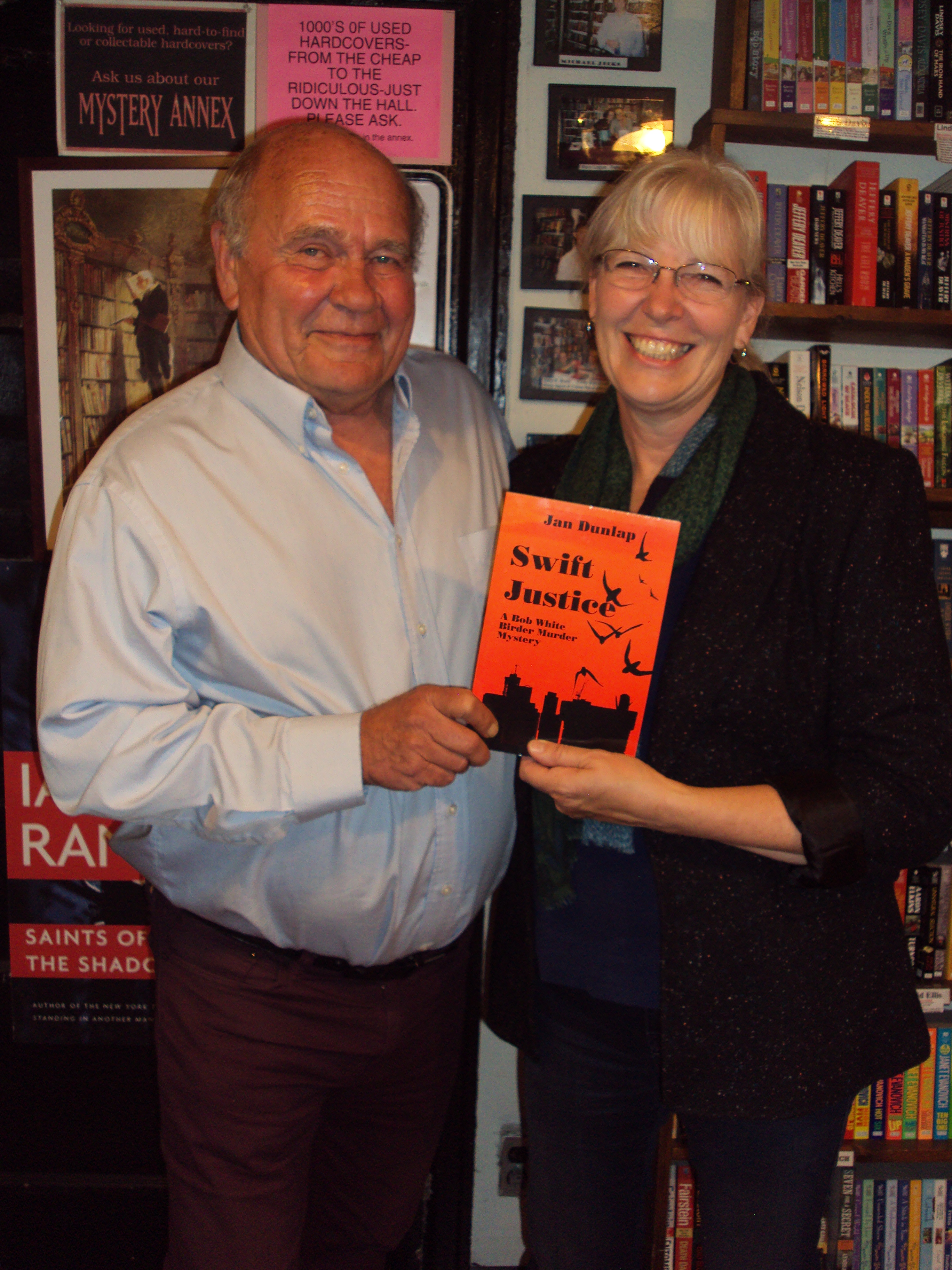
Jan and Ron vertThe longer I’m in the writing business, the more I appreciate the importance of influencers in helping me build my audience and increase sales. What’s tricky for many writers, however, is figuring out just who and where those influencers can be found.

Unfortunately, after eight years and eight books of being a published author, I still don’t have a magic formula for identifying and recruiting those valuable assets for my marketing efforts. All I can offer you is my own experience and insights, so here goes:

  1. It’s great to have known experts or writers give you an endorsement for your book, but unless they are truly excited about your book and independently give it exposure in their own networks, the endorsement is just nice copy for your back cover, and won’t produce momentum in sales. Those experts are busy with their own marketing and projects, and the truth is, they give endorsements widely as a courtesy, rather than out of commitment to your publicity goals.
  2. The best influencers have a stake in your sales. Although my books sell around the world, my strongest sales come from a local gift shop because the store owner enjoys my books so much, she talks them up to customers and regularly features them in store promotional materials. Because of her enthusiasm, I’ve had more press coverage in local media than I could procure by my own efforts and a consistently growing word-of-mouth readership. As an influencer, she’s one of my best!
  3. You need to continually cultivate relationships with potential influencers. This means reaching out via social networking and/or physically traveling to meet people in your field of interest who might find your books of value in their own professional goals. To market my girl-meets-dog memoir, I make a point of connecting with animal rescue groups/animal humane societies online, and when possible, I attend their conferences/events as a vendor. I often give free copies to keynote speakers or other passionate animal lovers I meet, in hopes they will read and enjoy the book so much, they will mention it to others. Yes, this is basically a hit-or-miss method, but so far, I’ve always made a few excellent contacts and found one or two awesome influencers at such events. It’s well worth my time and money to break into a new group of potential reader-buyers.
  4. Connect with bloggers with big audiences in your target market and ask to send them a copy of your book in return for a review. Offer them additional copies to use as giveaways when they publish a review of your book, or whenever they might have a contest going on. Doing this gives you a reach well beyond your own social networks and local geographic area. I’ve met several significant influencers in this way, and they continue to give me promotional value with each new book.

What tips do you have for identifying and recruiting influencers for your marketing efforts?

Do You Want to Change The World?

signing declarationWriters can be agents of social change.

I was reminded of that truth after hearing a keynote address at a conference for animal humane workers. The speaker, Amy Mills, CEO of Emancipet, discussed the importance of social change to transform communities in order to improve our treatment of animals. But her words could also be applied to what traits writers need to cultivate to do their job well; in fact, I felt that Amy’s characteristics of social change makers accurately described many of the writers I know. Here are Amy’s six key traits; do you see yourself in any of them?

Social change makers:

  1. Collaborate across sectors. In my own writing, be it the fiction of the Birder Murder Mysteries or my best-selling memoir Saved by Gracie, I draw from many fields of expertise. My sources are birders, dog owners, psychologists, trainers, sociologists, scientific researchers, conservationists, biologists and historians, to name just a few. To be effective, writing has to draw from the world of knowledge.
  2. Are inclusive. Writers want their message to reach wide audiences. To do that, we keep an open mind about who might benefit from our work, and we rejoice when a new market presents itself as one that we might engage productively.
  3. Build empathy. For any piece of writing to succeed, it has to appeal to the heart of the reader. Having something meaningful to share is the first step of the writing process.
  4. Choose curiosity over judgment. The best writers try to see the world with fresh eyes to uncover what is true. Judgment can shut down avenues of investigation that might just lead to new revelations that will transform myself and my readers.
  5. Check assumptions. Writers make careers out of questioning assumptions. Sometimes, we even turn them upside down in the course of our creative process and/or production. The result is new perspectives and new ideas that can often improve readers’ personal or public lives.
  6. Learn from those they serve. Whether it’s hearing about new conservation efforts to protect bird habitat, or effective approaches to increasing animal adoption, or the need for more transparency about mental illness, every bit of research I’ve done for my books has not only taught me more about the world and the people and creatures in it, but how I myself can better connect with and serve my readers by passing along what I have learned. On a regular basis, I hear from readers about the ways my writing has affected them, and it guides me as I plan my next project. Without that feedback, my writing lacks focus, not to mention effectiveness.

Given these shared characteristics of writers and social change makers, I find myself considering my own work as a potential agent for change in the world; I won’t be the first author to do so, nor the last. “The pen is mightier than the sword,” may have come from the pen of English author Edward Bulwer-Lytton in 1839, but it expresses a timeless truth.

What will your pen accomplish today?  

How to Make Offers They Can’t Refuse

clapping peopleI’ve learned a terrific lesson about social networking this summer.

If you offer, you receive.

Recently, I’ve turned my LinkedIn contact list into a fertile field of opportunity for spreading my brand by offering help to others. Sometimes, the offer is to write a guest post for a contact’s blog, or to be a last-minute guest for a radio show, or to send a free copy of one of my books because of a mutual interest. I don’t make the offer until a person I’ve invited to connect with me accepts the invitation, and then, instead of just filing their acceptance email away, I take the time to compose a personal note making my offer as a service to them.

That means I only look to connect with people who share an interest of mine, and if they accept my invitation, I then think of a personal way I might contribute to their goals. By asking first how I can help, it reminds me that my writing is my ministry, my God-given gift, and that when others succeed with my help, I’ve made a difference for them. It helps make writing not quite the solitary endeavor it tends to be, and it allows me an avenue to actually build relationships with my contacts. In an age of electronically linking up with people all over the country and the globe, any personal interaction stands out; suddenly that contact in my address book has a personality and we have a tiny bit of shared history. That’s good for people and good for business.

But the big surprise I discovered was how easy it is to offer help, and how grateful people can be. Thanks to my offers, I’ve found new ways to reach larger audiences:

  1. Though I stopped writing my own blog years ago for lack of time, I’m now providing occasional guest posts for three bloggers in the pet dog category. Each time I guest, my host includes links to my website and mentions my best-selling girl-meets-dog memoir Saved by Gracie. I interact with blog readers and expand my brand as they in turn learn more about me. Sweet!
  2. I tell every radio host I connect with that I am happy to fill in last minute if they need a guest. I’ve gotten two interviews that way – with only a day’s notice! Both programs were recorded and played to large markets. I publicized air dates on my social networks, and since they were podcasts, my – and the hosts’ – audience can continue to access them. Score!
  3. Likewise, I offer to speak at any service group’s weekly gathering (think Rotary Club) about my new project to encourage people to #getoutsidehappy! While my message promotes getting outside for greater health and happiness, it also heightens awareness of my books. I make a few sales at the gathering, but what means even more to me is spreading useful information to help people improve their lives. Win-win!

Do you use social networking to offer help?

All Things Come to She Who. . .

gray coneflowerCome this September, I will have been a published author for nine years.

I’m still not a household name, and I don’t expect to ever be one.

But, I can say with complete assurance, my writing career is beginning to bloom into what I had once only imagined.

In the last two months, I received my first Kirkus review, which is, according to my agent, a “big deal.” Not only that, but it was a positive review, and it’s already generating advance word of mouth among readers thanks to shares on social media. I also finally landed a review with a major magazine in my (fiction) subject area of birdwatching, which will generate the nationwide publicity for me that I’ve yearned for since my first Birder Murder Mystery book came out. Both of these reviews are for the seventh book in my series, titled The Kiskadee of Death.

Yes, it took seven books for me to land on these reviewers’ radar.

Seven books.

Another first in the last month was receiving a request from a magazine editor to write an essay for them. In my entire writing career, I have never had an editor approach me for an article – I was always the one doing the pitching. To have an editor seek me out to author an essay was a huge boost to my career confidence; knowing that I’ve made an impact on publishing professionals is worth the months I’ve spent cultivating readers and developing my brand.

The final mark, for me, of having my feet firmly planted on my writing path is the number of guest posts and speaking engagements I’m now booking with relative ease. Whether my new-found success in that arena is due to my hard-won lack of fear of rejection, the persistence I’ve practiced, or just a matter of time, I don’t know. And at this point, I don’t care what has generated these new opportunities; I’m just very grateful to have them.

Coincidentally (or not), I recently read an interview with Kate DiCamillo, the celebrated children’s author. Before her first publication, DiCamillo recalled meeting Louise Erdrich, the award-winning author, who asked DiCamillo how long she’d been writing. When the budding children’s author said “Four years,” Erdrich advised her to hang on, that her own book career had taken six years to get off the ground.

It made me feel better that even some of the author superstars of the publishing world know what it’s like to have to wait for success.

The bright side of all that waiting is that when success does finally come, a writer can look back over the years that have gone before, and see that without that waiting, that revising, refining, re-imagining, and all those countless hours of learning a craft and business, the achievement would not taste as sweet as it does. Because the truth is not that all things come to she who waits, but that all things come to she who works while she’s waiting.

Have you begun to see some signs of success in your own writing journey?