
 Every writer wants to believe that he or she can write a bestselling book.
I’m here to tell you there’s nothing wrong with believing that. I have no doubt that many times, my belief in that idea is the only thing that keeps me pounding out words on my laptop. To be completely transparent, I’ve never had a book reach the NYT bestseller list; the closest I came was learning that my memoir of dog adoption, Saved by Gracie: How a Rough-and-Tumble Rescue Dog Dragged Me Back to Health, Happiness and God, was a bestseller – at one point in time – for my publisher. Whether that one point in time was a week or a month, or even three hours, I honestly don’t know. And actually, it doesn’t matter, because the terrible truth of best-selling-ness is that it’s truly a transitory thing, as well as completely unpredictable.
As a reader, I also find that “bestseller” doesn’t necessarily predict my own evaluation or enjoyment of a book. I read plenty of books on the bestseller lists that leave me cold, to say the least. Other books I stumble across are amazing, but languish forever in No One’s Heard of It Land.
As a result, I’ve decided that I probably know as much as anyone about writing a bestseller, which is to say, no one really does know why some books win the lottery and others don’t. So the next time you’re struggling with your belief in your ability to write a bestseller, here are my tips(laughs?) to keep you moving forward:
- Sit down and write. Or you can stand up and write (I’ve been reading a lot lately about the health benefits of sit/stand desks). Either way, actually writing seems to be an uncontested avenue to producing a bestselling book. (Caveat: unless you’re famous, in which case you can pay someone else to do the writing and still put your name on it and get even more famous, although I think that’s kind of cheating, don’t you?)
- Write short sentences. Really. Bestsellers have short sentences. Like this one. If you want to write a literary novel, though, you can make the sentences as long as you like because the people who read literary novels generally read at a higher reading level and more assuredly appreciate the sheer beauty of the written language, even if they don’t have the market clout to send your book’s rating skyhigh.
- Use active verbs. (They even tell you this in graduate writing programs. I just saved you a ton of money and two years of your life. You’re welcome.)
- Put a dog on the cover of your book. Even if it’s not about a dog. Books with a dog on the cover sell better. Even the latest statistics show that dogs get more internet time than any other animal. Want attention? I’m telling you, put a dog on it.
In closing, I want to share with you the writing advice of a bestselling author named W. Somerset Maugham: “There are three rules for writing the novel. Unfortunately, no one knows what they are.”
Happy writing!
 Value-added describes the enhancement a company gives its product or service before offering the product to customers. Value-added applies to instances where a firm takes a product that may be considered a homogeneous product, with few differences (if any) from that of a competitor, and provides potential customers with a feature or add-on that gives it a greater sense of value….
 One of the things I enjoyed most about writing my cozy
  What makes a book a great read?
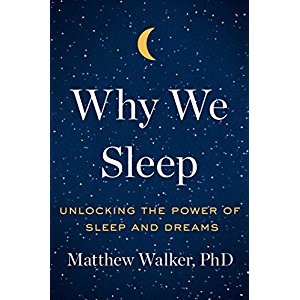
 But if you asked me why they were the best books of the year for me, I would have specific reasons for each. I choose Walker’s book because it literally changed my behavior in two ways: I now try to get more sleep to improve my health, and I refuse to drive a car if I’m in the least bit tired (yes, he scared the heck out of me with statistics!). Moore’s book impressed me deeply with its story of women who suffered terribly, yet fought industry to make it responsible for employees’ health on the job. Be Strong in the Lord deepened my faith for both my children and myself, and Picoult’s novel gave me new eyes and a new heart to confront racism in America.
 Well, this is embarrassing. I thought I’d write a post about writing resolutions for a new year by reviewing my resolutions for 2017 and noting how I did.
 ‘Tis the season to be thankful! As every writer knows, the writing life is filled with ups and downs, yet it’s a blessing to claim writing as a career/passion. So while this is too long a list of items to share in a Thanksgiving prayer before digging into the holiday turkey, you might want to take a few minutes on your own to make these observations food for thought and thanks!
 Eddy is my editor. His sharp eyes don’t miss much. In fact, he may be the most demanding editor I’ve ever had. After I’ve slogged and wrestled with a
  Michael is my personal trainer. He knows that too much sitting stagnates the body and mind, so he insists on frequent breaks from writing to both tone my muscles and clear my thoughts. There’s nothing like a competitive game of tug-of-war with a 75-pound dog to take your mind off character development, and Michael makes sure I sweat through several rounds every day. Afterwards, I’m more than ready to bring a focused mind to my writing project. Or else I take a nap.
 And finally, there’s Otis, the perfect project manager. When I’m stressing about a deadline, he calms me down by modeling relaxed behavior, reminding me that too often, I’m the one putting pressure on myself to perform. His easy-going nature encourages me to take my career with a proverbial grain of salt – or in his case, with a couple of Purina Kitty Treats – because in the big scheme of things,
  Would you like to have an editor on hand 24/7 for all your blog posts? Does the idea that you could make every post a writing gem (even those you compose at 2 am as you desperately try to meet a deadline) appeal to you?
 WordServe Water Cooler