Overcoming Your Speaking Fears to Market Your Books

Overcoming Speaking Fears
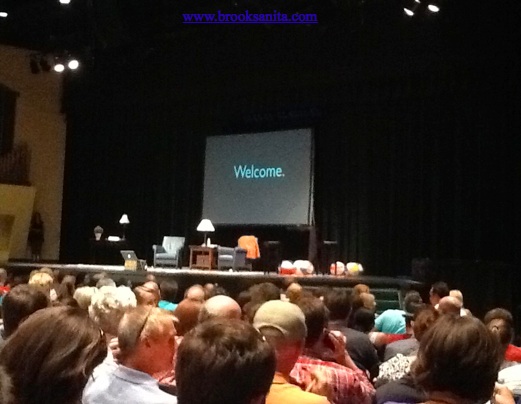
Writers as Speakers — Welcome Your Audience

Does terror of speaking in front of crowds threaten to paralyze your writing career?

Imagine a large stadium filled to capacity. The announcer introduces the main speaker. The audience claps and cheers. Adrenaline pulses in a flood through your veins. You approach the podium in slow-motion, while your legs beg to run away as fast as they can.

You arrive at the center of the stage, open the presentation slides on your electronic tablet, even as you pray you don’t make a fool of yourself. Your mouth opens, at the same time the heel of your hand brushes the edge of the tablet, knocking it on the ground. The clatter echoes across the hushed platform. Your fingers tremble as you lift the darkened screen. You scan the crowd in front of you; noticeable fidgeting causes a contagious rustle. You clear your throat, offer a half-smile, and scramble to remember what your notes said.

Once again, your lips part, but instead of a greeting, a guttural growl boomerangs through the microphone. 

Is this a nightmare for anyone but me?

These days, whether writing non-fiction or novels, authors need to work twice as hard as public speakers to market their books. 

But why do our minds threaten to sabotage us when we stand in front of smiling faces, in a sea of expectant people clamoring to hear the messages we’ve waited to share? Are we doomed to fail when panic replaces our passion? What goes on inside our brains?

Though I agree with most people who rank public speaking in their top five worst fears, there are tips I’ve learned to help reduce my anxiety.

1Study your material intently.

2Practice in front of a mirror.

3Read the Bible. This simple answer saved me in the past, when anxiety medication, panic inhibiting techniques, and other methods failed to help me move past fear. I discovered that immersing myself in God’s Word calmed my frazzled nerves.

4Follow sound advice. The Anxiety Coach offers practical instructions to settle emotions that threaten to keep you from spreading your message.

5Wear comfortable clothing. Function along with your fashion.

Water -- How Input Affects Output

6Get serious about laughter. Humor relaxes emotions, body, mind, and spirit. Watch a funny program immediately before leaving to speak. Read a riotous book or article. Listen to a comedic CD or download on your way to the presentation.

7. Thirty minutes before speaking, drink water to hydrate your vocal chords, brain cells, and emotional sensors. Water is a miracle drug. (Thirty minutes should allow your body time to shed waste, so you can visit a restroom before taking the stage.)

8. Prior to walking onto your platform, breathe in slowly through your nose, count to ten, and release slowly through your mouth. Repeat twice, so you follow the process a minimum of three times.

9. Prayer walk to the front of your audience.

10. Don’t make a big deal out of flubs. Remember, most audiences won’t recognize mistakes, so carry on, or make light of it. Besides, mess-ups make us more human to observers.

Speaking is part of the modern writing model, but no need to worry. You can overcome and share with confidence.

How do you take courage in the face of public speaking fears in order to promote your books?

Overcoming Fear to Market Your Book
Promote Through Speaking

Ten Sources to Spur Promotion Ideas

Promoting Artists
Concert Promoters Get Creative

Authors are expected to do much of their own marketing. Been there, heard that — you can keep the tee-shirt.

So what’s a writer with little or no marketing experience to do? Research.

And get started early. Though my first book is almost a year from publication, I’m working on a Promotion Plan now. Naturally a strategic thinker, I’m thinking ahead. (If you haven’t yet sold a project, this is prime brainstorming season.)

In a previous job, I worked sales and marketing for a clothing manufacturer, where my biggest account was Nike. They are marketing masters.

A minimum of eighteen months out, they plan the launch for any new apparel line. Nike knows the investment in time and energy pays back with interest. They study competitors. Survey customers. Review totally unrelated products. And sometimes, try things that fail.

But in the thinking stage, they don’t toss any crazy idea.

As a new author, I don’t have a mega-marketing budget like Nike. But their basic principles work with two hundred dollars like they do with two million. If you’d like to peek at some of their aggressive 2013 marketing strategies, click here.

Taking what I learned from past experience, here are ten sources I’m using to brainstorm a unique Book Promotion Plan:

1. Read creative thinking books. Some of my current faves are: The $100 Startup, The Four-Hour Work Week, The Power of Full Engagement, The Well-Fed Writer, Red Hot Internet Publicity, The Wealthy FreelancerPlatform, and Shameless Self-Promotion and Networking for Christian Creatives.


2. Hunt for colorful partnering alternatives in the everyday. Look around you with fresh eyes. Is there a marketing marriage in the making?


Spur Book Promotion Ideas
Creative Ideas Under Your Nose

3. Study other author websites for promotional ideas. In the following examples, it’s the concept, not necessarily the content, that interests me:

4. Observe projects, organizations, or businesses of different styles, to spark unique promotional ideas. i.e. Concerts, chambers of commerce, beauty salons, amusement parks, hardware stores, talent shows, and more, are marketing fodder.


Promotional Ideas at Salons
Observe what Different Businesses Do

5. Create a line of products to complement the book’s message. Brand image magnifies with diversity — and promotional products spread your message further.


6. Target different personality types, genders, ages, and regions to reach a wider audience. Never discount a potential demographic in the brainstorming phase.


7. Ask for ideas. Get your brave on. Ask the checkout person, waitress, plumber, even employees of places you visit on vacation. They may offer fresh perspectives. But don’t fail to tap into your professional networks as well.


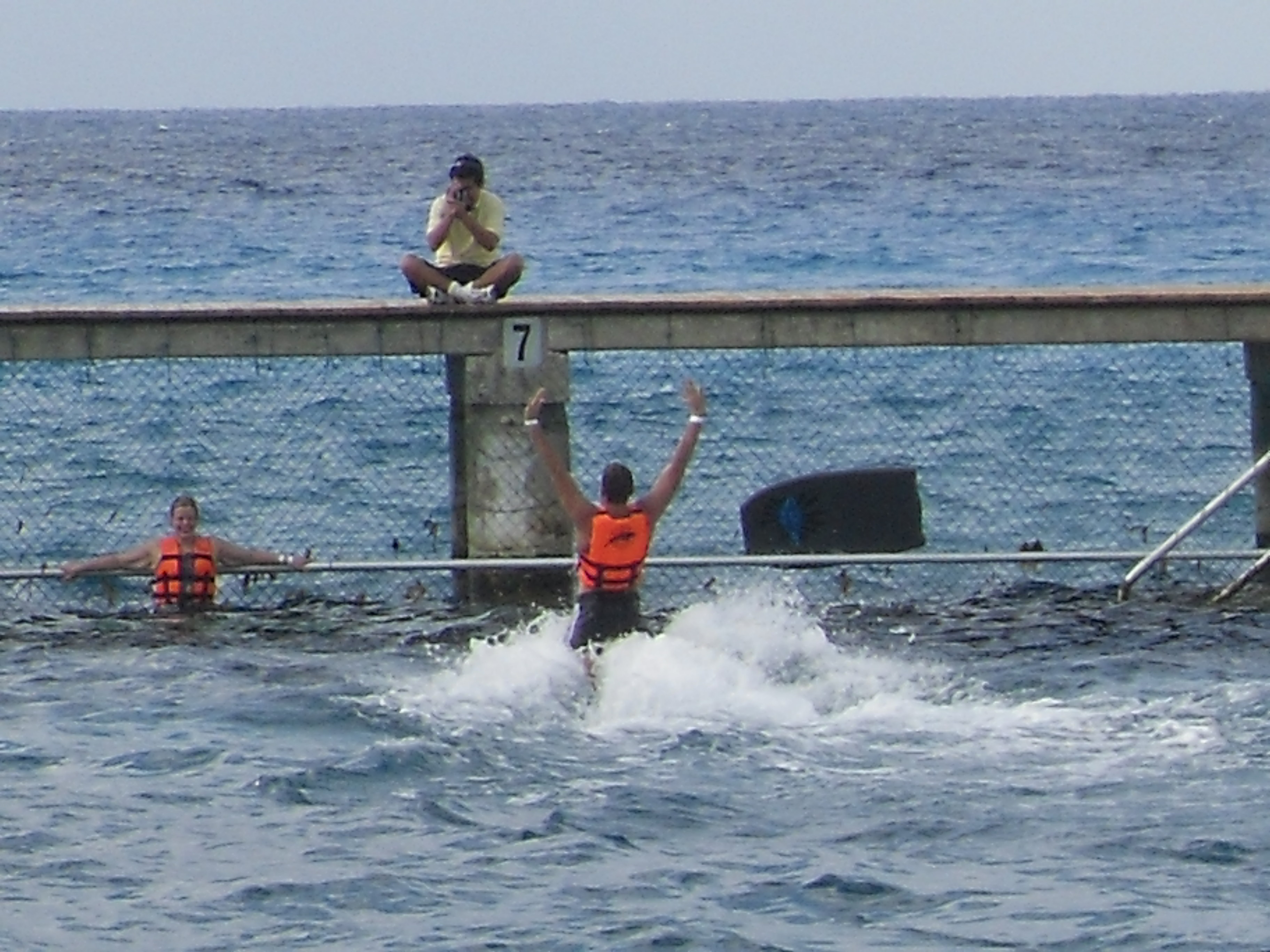
Adventure Sports Spur Creativity
Riding Dolphins Promotes Adventure

8. Help others with pure motives. I believe we get what we honestly give.


9. Stay true to the title. I use this as an editing tool, but it works well with brand marketing also.


10. Consult the Master Platform-Builder. God constructs the sturdiest and sometimes strangest ways to display our messages. Trust Him to know the end in your beginning.

What spurs your book promotion ideas?

Behind the Gate

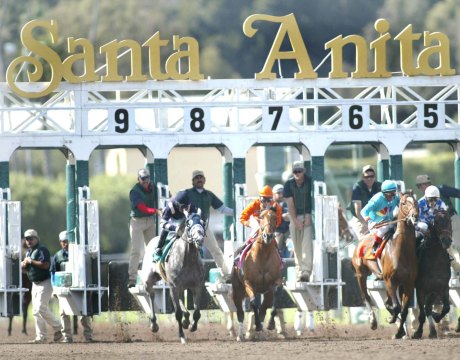
Santa Anita Horse Racing
Behind the Gate

Nostrils flare, eyes bug, while clouds of dust rise from impatient hooves. The feisty thoroughbred bends her regal head in a failed attempt to nudge the gate open. Her hot-blooded demeanor quiets as the Jockey calmly holds her reins and whispers gentle encouragement.

The bell rings. The gate lifts. And she shoots out like a pent-up cannon ball. Her spirited gait promises bold results. Her agile movements belie powerful muscles, honed to skilled perfection. At the right moment, and at the Jockey’s urge, she extends her stride in the home stretch. Her eyes fixate on the finish line before her, ears attuned to her Master’s call, and the two blend into one. Her nose touches invisible tape.

This paints an image of the Christian writer’s life. Like thoroughbreds, we are designed to run the race set before us.

But sometimes, our impatience grows as we wait behind the gate to run our God-ordained course. We assume we’re ready, yet our Trainer holds the gate’s release until our maturity is complete.

Training Thoroughbred Horses, by Preston M. Burch, offers tips that mirror undeniable patterns in the way God trains us for Christian writing.

  • Burch said, “Owners set thoroughbreds apart, before birth, to be racers. Carefully crafted breeding is designed to create a winning horse.” Just as horse owners carefully consider which mare and stud to breed, our Creator planned our DNA with qualities uniquely designed to make us writers.
  • “Successful training of any thoroughbred starts with a quiet lead pony that walks in front of the young yearling as they circle round and round.” We need wise influence. The Lord sends mentors who walk in front of us. Often, we must circle back to a place visited before. In hindsight, we see the need to round similar circumstances, until walking in God’s direction becomes second nature.

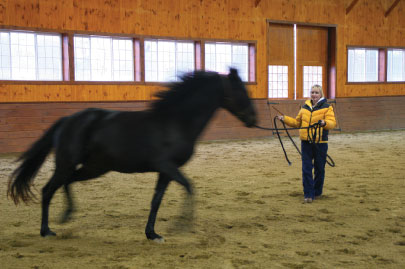
    Horse Training Round and Round
    You Must Circle Round and Round
  • “After they learn to follow quietly as a good follower, then they are allowed to trot.” Our enthusiasm often makes the pre-requisite to follow first easy to miss.
  • “Proof of advancement comes with ability to figure-eight trot by the pressure of reins on the neck, versus the pull of a bit on their mouth.” Pressure creates character. First, by the surprise grind of teeth against metal when someone tells us our words run rampant. Over time, we learn to respond to a gentle tug on the neck — where it takes less pressure to generate a pattern of grace, diversity, and style in our sentences.
  • “Once bridle-wise training is accomplished, next comes jogging, and then cantering. The horse continues to be accompanied by the pony to this point. By this time they should be fit and well-behaved.” Here, our writing muscles are small, but growing. Diversity improves with practice, but like the thoroughbred, we still need guiding influence.
  • “If you try to hurry them onto the track before they know what the bridle is for, they are hard to control and will easily hurt themselves, another horse, or a boy.” Our desire to race can drive us to foolishness. Believing we are ready too soon, we break for the track. In our uncontrolled urge to publish, we can hurt ourselves and others.
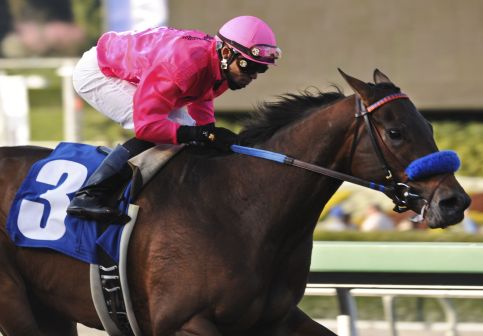
Jockey Encouragement
And You’re Off

You and I are God’s thoroughbreds. Jesus is our Trainer, and the Holy Spirit is our Jockey. Waiting behind the gate is hard, but with perseverance the day will come for us to run the track laid out especially for us.

When we are fully prepared, the gate will lift. The crowd will roar. The air will surge with electricity. The bell will ring. And then…you’re off!

Are you waiting for a gate removal so you can launch?

I Once Was Blind

Dr in Lab Coat

“Your eyesight may not return.”

In a haze of blurred white, all I could make out was a fuzzy outline of the optometrist’s lab coat as he held the door knob.”I’ll be back shortly; I need to confer with my colleague.”

The door closed, and I was alone. I didn’t mean to whine, but when you’re a writer facing permanent blindness, a few whiny words slip out.

Saline tears raced over my cheeks, and met at the center of my chin. They waterfalled into my lap. I raised my face toward the ceiling. “Why is this happening? How can I write without my eyesight?”

Sterile silence answered my questions.

When the doctor returned, he placed a piece of paper in my hand. “Get this prescription filled. Put one drop in each eye every two hours, even throughout the night, and come back to see my colleague tomorrow.”

“But tomorrow’s Sunday. You aren’t open.”

“He’s coming in for you.” His gentle hand assisted me out of the chair and led me toward the door by the elbow. It would be a very long, miserable night.

By the next morning, thousands of invisible pins pricked my body. My head ached, and walking outside turned sunbeams into fiery branding irons that seared my corneas. My husband drove me to the eye doctor.

When I shuffled into the office, the physician’s voice did not reassure me. “Let me take a look.” He clucked as he prodded, not bothering to hide his concern. “I’ve never seen anything like this. I don’t even know where to refer you. This is serious.”

Fresh tears careened rivers off my face. I could hear him rifling through papers.

“According to these reports, your eyes are worse than yesterday. I want you on complete bed rest when you get home. Come see me Tuesday. I’ll try to figure out what to do by then.”

I went home, crawled in bed, and cried out to God. A voice whispered in my mind, “What verse do you claim?”

“Though You slay me, yet will I trust You.”

“Then trust Me.”

“But how can I write if I can’t see.”

“Trust Me.”

In that moment, I decided to obey, and my whole perspective changed. I knew that if God wanted me to write or do anything else, He’d make a way. Others had authored in spite of blindness. Helen Keller, Jennifer Rothschild, and Jim Stovall came to mind.

Several days later, I met with Dr. Malhotra, a cornea specialist, who quickly identified the problem. He diagnosed me with Cogan’s Dystrophy, or Map-Dot-Fingerprint Dystrophy.

It took almost five weeks for the torn skins over my corneas to heal. My sight slowly returned. It was September, 2009.

Supplements for Map-Dot-Fingerprint Dystrophy
Supplements for Clearer Vision

Flash forward, three years. Though my vision challenges me from time to time, I’m able to see, and I write nearly every day. To maintain my sight, I take fish oil and vitamin supplements, use lubricant drops daily, and put salt ointment in my eyes at night to keep the skins taut and smooth. I’ll do this the rest of my life, and hope for few corneal flares.

Meds for Map-Dot-Fingerprint Dystrophy
Lubricant & Salt Ointment

Cogan’s Dystrophy makes it appear as if a fingerprint has been left on each eye, hence the more common name. I choose to believe God branded me with His own fingerprints to fulfill His special purpose in my life.

I once was blind, but now I see. And whether I’m to do it with my eyes or not, I will answer His call to write.

What obstacles have you overcome to fulfill your call to write?

God's Fingerprint
God’s Fingerprint


Crafting a Writing Goal

Book Proposal Image

Words aspiring writers want to hear.

“Send me a proposal on your idea.”

When it happened for me, at a writers conference, I first went off to a private place and cried happy tears. Then reality set in.

I hadn’t written a thing. I only had an abstract idea, a desire to write, and a nudge from God. The publisher didn’t offer any guidance on how to format a book proposal; he simply told me to send one.

When I got home, I got to work. The situation called for a marriage between prayer and practical actions. Shortly after I said, “Amen,” inspiration hit.

I wrote my goal on a piece of lined notebook paper. “I Will Read 100 Books on the Craft and Business of Writing.”

I practiced while I studied. It took me almost two years to accomplish the task, but when I finished the one hundredth book, I was able to look back and see the transformation in my work. Only then did I gather enough courage to submit a few queries for articles. And though there were rejections, there was also success.

Article Queries

After focusing on the craft of writing, I invested in the business of writing. If I wanted to author books, I needed help. I networked with other professionals and listened to their advice. I attended more conferences. I hired an editor to critque my work. And I continued reading beyond my first 100 books.

Michael Hyatt
How to Write a Winning Book Proposal

I wanted to create a stellar proposal. After gleaning the best information, I practiced on my first topic numerous times. By the time I ran across Michael Hyatt’s e-books on Writing a Winning Book Proposal for fiction and non-fiction, I was ready to finalize my project.

It took another year before I harvested any fruit from my labors, but harvest I did. WordServe Literary signed me based on that original topic. The hard work of crafting a writing goal and meeting it helped my agent sell my first book, scheduled for release in 2013.

I’ve now lost count of the number of writing books I’ve read. But there are a few I refer back to time and again:

10. On Writing Well — William Zinsser

9. Story — Robert McKee

8. The Art of War for Writers — James Scott Bell

7. Bird by Bird — Anne Lamott

6. Stein on Writing — Sol Stein

5. Writing Down the Bones — Natalie Goldberg

4. Self-Editing for Fiction Writers — Renni Browne & Dave King

3. Finding Your Voice — Les Edgerton

2. Writing for Story — Jon Franklin

1. Screenplay — Syd Field

I’m a lifetime learner. Without the help of many willing to share what they learned through their books, I probably wouldn’t be writing today.

What are your goals, and what are you doing to meet them?

One of the One

Unseen Journey to Publication
Curves Ahead

It was not an encouraging statistic.

On a cool fall day, the speaker stood at the front of the seminar class and eroded my confidence with his authoritative words, “About one percent of writers succeed in getting published. Because most give up and drop out of the race.”

I’d waited until my forties to do anything with a secret desire to become a writer, so his gloomy prophecy almost made me run from the room. Thankfully, I didn’t let his statistical shadows deter me.

A Shadowy Path
Shadows Crowd the Writing Road

Instead, I silently inquired of God, whom I believed had brought me to this place, and asked what He thought about the publisher’s statement. The answer came as a whisper, “With Me, all things are possible.”

At that starting line in my writing career, I vowed, “I will allow God to make me one of the one percent who succeed.” Little did I know how I’d need my early resolve to navigate past future bumps in the writing road.

Writing Path with Obstacles
Obstacles Litter the Road

Practical applications were required to pave the way.

  • I devoured books on the craft of writing, the business of publication, the magic of marketing, and the art of building a loyal readership. (I’m still studying these necessary parts of the process.)
  • I turned off my television, powered up my computer, and started practicing what I learned.
  • I created a Writer’s Cave and pursued my passion.
  • I faced my Fears and wrote in spite of them.
  • I followed God’s lead when I wasn’t sure where to invest my talents.

    Hard to Know Where Your Writing is Going
    The Road to Writing is Often Unclear

I determined to follow and not race ahead of God.

  • When impatience threatened to devour my energy and time with tangled emotions, I took a deep breath and reminded myself that God controls my dream.
  • I sought God’s kingdom first, before the allure of writing success. Each day, I committed to read my Bible before I wrote anything.
  • I submitted my desires and said, “Not my will, but yours be done.”
  • I trusted God, as the Creator of Time, instead of sweating it when I couldn’t accomplish as much as I believed I should.
  • I wrote down encouragements, so when hardships threatened to swallow me, I had factual reminders that God created me to write. I kept the list close and read His positive reinforcements as needed.

Over time, the hours of study, priority-driven choices and submission to God smoothed the course. But I endured many personal trials along the way.

One shocking revelation brought the news that my dad isn’t my biological father. My youngest sister faced life-threatening illness. My grandson was hurt. Every day, circumstances fought to distract, but in between the upsets, I tenaciously wrote one word at a time. While I traveled tough terrain, I held onto my God-given mantra — I will be one of the one.

Cloudy Writing Days
A Straighter Road Under Cloudy Days

Eventually, the road to becoming one of the one straightened. My portfolio of articles grew, my speaking platform rose, and my writing improved. As I obeyed His voice, God cleared the way.

I’m steering toward my goal of being in the one percent of writers who succeed at their craft. My first book releases in 2013. Growth will span my lifetime, but I refuse to give up. If God says I can be one of the one, then who am I to argue? After all, He put me on the road to writing.

What gives you the gumption to speed ahead in pursuit of your dreams?

Mentored by The Best Selling Author

Best Selling Author - Anita Brooks

I had no idea what I was doing.

I went to my first writers conference with zero expectations. I simply wanted to explore this crazy dream God had planted in my heart.

At my allotted appointments, I sat across from editors, agents, and publishers and said the same thing, “I don’t have anything to pitch. I just came to learn. Can you tell me what you think I should know?”

Every person demonstrated gentle patience and gave me a huge boost of encouragement. One discussion, spurred by a workplace pet peeve, kept me awake most of the night jotting down notes.

On the last day of the conference, I knew my life would never be the same. And I was right.

I flew home feeling overwhelmed. My mind swirled with a mix of anxiety and anticipation. A professional thinks I have potential. A professional believes my differences are a good thing. A professional requested a book proposal. I don’t know how to write a book proposal.

I was a long way from being ready to submit anything, and I knew it.

When I arrived back at normal life, I needed help. But where do you turn when you live in a tiny town in the Midwest? What kind of education can you get when there’s no college close? How do doors open when you have no degree or credentials in writing?

You ask the Best Selling Author of all time for help.

Wanting to do nothing less than excellent work, I got on my knees and asked God to personally mentor me. I figured since His book, the Bible, had sold more copies than any other book throughout history, I should try to learn from Him.

My schooling took months, even into years. I turned the television off and got to work. I spent hours soaking up assigned books on the craft of writing. I practiced with devotions, articles, and blogs. I listened to the professionals He sent to help me develop better habits. Then I re-wrote my devotions, articles, and blogs. Sometimes it took many copies to get the words and punctuation just right.

I graduated to the study and practice of book proposal writing. I wrote at least three dozen drafts while my Mentor patiently encouraged me to keep trying. All the while, prayer and a listening ear helped me maintain a teachable heart.

Only three years later, I signed with WordServe. Recently, I signed a book contract for the original non-fiction idea I’d had at the conference. This may seem like a long time, but in publishing years, it’s pretty fast.

Today, I still need my Mentor. He’s guiding my mind and hands as I finish my book for publication. Because of Him, I hope to write many more.

If you’re an aspiring or experienced author, I encourage you to call my Mentor. He’s available 24/7/365. His name is God, and he turns good concepts into strong books. There’s no better Muse than the one who created your mind.

Do you have a mentor? Where do you go for guidance and encouragement?

Anita Brooks - Best Selling Author
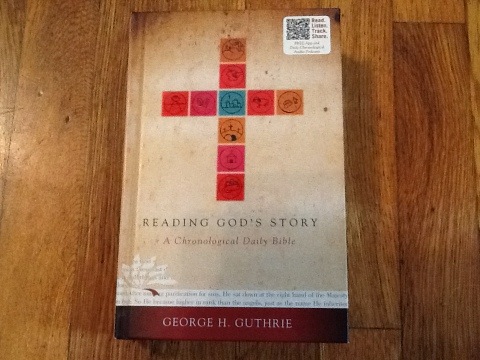
God’s Story – The Best Selling Book of All Time

How Input Affects Output

I felt it sneak around the edges of my concentrated efforts. My lashes blinked faster. My lids now fought when I struggled to lift them off my eyes. A light sheet of brain-fog settled over my mind.

Afternoon fatigue had arrived. And it threatened to keep me from writing the scene on the screen before me. How would I finish without falling asleep?

Too often, I fight a common battle when I finally get a few snippets of time to write. But instead of grabbing a caffeine loaded, sugared up, fattened calf kind of snack, I’ve found a few quick solutions that allow me to treat my body with the respect it needs to function at optimal efficiency.

1) Eat nutritious vegetables or fruit. In particular, I’ve found the following have fabulous energy boosting properties for my body chemistry. Literally within seconds, I can feel a renewed focus and am able to write well. My faves include, red, orange, or yellow peppers, V-8 juice, grapefruit, oranges, watermelon, tomatoes, sweet potatoes, cucumbers in vinegar, cantaloupe, and celery.

Fruits & Veggies Energize Writers
Fresh Veggies and Fruit Energize

2) Get out in the sun. A few minutes of vitamin D rich sunlight is just the ticket to get my blood pumping and my thoughts racing.

Vitamin D Wakes Writers Up
Sunlight – Natural Inspiration

3) Drink water. When writing, we often don’t want to interrupt our thoughts, so dehydration is a big problem for many writers. Most people assume they need caffeine when exhaustion strikes — in reality, dehydration is often the culprit behind your fatigue. Science shows that water wakes us up.

Hydration Hydrates our Brain Cells
Water Wakes Writers Up

4) Take a nap. Though I fight it, sometimes a ten minute nap works miracles. A few moments of shut-eye gets me going again. (I find I need to set the alarm on my phone, so I can actually nod off. Otherwise, my fear of over-sleeping keeps me from getting the rejuvenating rest I need).

Naps Help Writers
Nap Time for Writers

5) Go for a walk. I plan this powerful method of staying alert into my writing schedule. It’s part of the formula I follow to get words on the page. Having an intended break gives me something to look forward to and pushes me past the humps. A good walk gets my blood flowing, my muscles heated, my cells active, and my thoughts fired up.

Walking Wakes Writers Up
Walking Stirs Creativity

6) Take prayer and Bible reading breaks. A few minutes spent with the Master Author infuses me with energy and inspiration. Nothing like purpose to light me into action.

Prayer and the Bible Inspires Writing
Pure Inspiration

Before fatigue wraps itself around me like a constricting serpent around its prey, I need a plan to fight back. I find the list above gives me exactly the input I need to affect my output in positive ways.

Here are some other great tips to help you battle afternoon fatigue.

What ways do you battle exhaustion when it threatens to hinder your writing?

Print on Demand: Edison Style

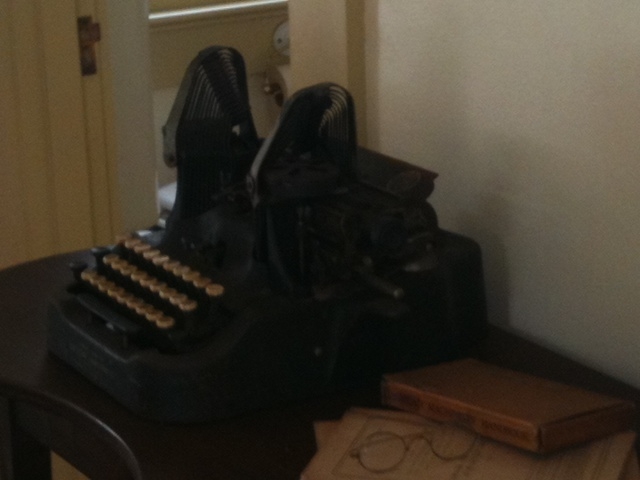
Thomas Edison Typewriter
Edison’s Keyboard

Steam swooshed onto the platform as the metallic black-horse eased to a stop in Detroit. 

The clunky train rocked The Grand Trunk Western Railway passengers in their seats. Cargo slid in the holding bays.

A twelve year old boy steadied himself against precious equipment, secured in the baggage department. Coins jingled in his near-full pockets. The odor of hot ink and ironed paper mixed with burnt coal.

And the train wasn’t the only thing rocking. The innovative boy smiled while he tallied sales of The Grand Trunk Herald. Demand for his real-time newspaper was on the rise.

Thomas Edison birthed a fresh era of news publishing in 1862. He sold the voice of his original publication by the copy, or for a mere eight cents per month, by subscription.

In the volcanic and news-hungry climate of Civil War America, Edison hit on a popular niche. For the first time ever, passengers could devour the contents of a paper written on a moving train. A pre-pubescent Thomas couldn’t know he would soon change the culture of a publishing world.

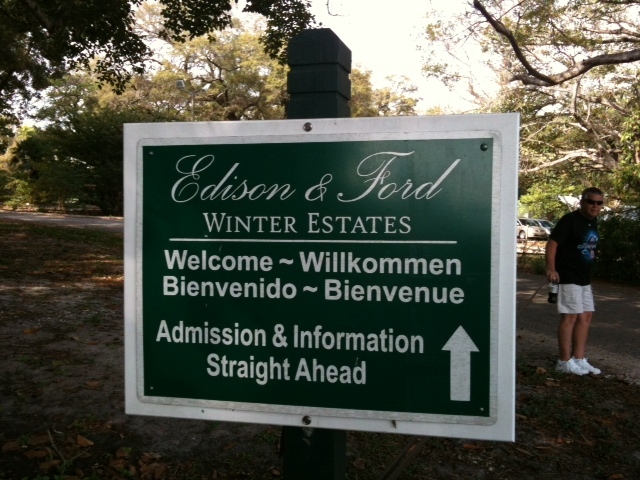
Recently, I visited Thomas Edison’s Winter Home in Fort Myers, Florida. It was there I learned the factual details of my embellished account above. But it made me think about the culture of American publishing during that time of war, financial upheaval, and emotional decision-making. Not so different from today.

Edison & Ford Winter Estates
Edison Winter Estates Entrance Sign

So it makes me wonder, if we were to rewind time, how would people in Edison’s time react to things we take for granted today? Could the folks living in that era have imagined CNN, the Internet, texting, social media, online videos, and other forms of immediacy news?

But I also reflect on those businesses who felt threatened by the young, creative upstart. They probably didn’t appreciate what they viewed as infringement on their market. Did they make changes in their own processes, as a result of the Edison transformation?

And how does all of this affect us as professionals, and the aspiring, in a writing world today?

What does the future hold for those of us impassioned to share a message through words? I believe young Edison provides a stellar example of how to face adversity. Thomas didn’t bemoan the times.

He exemplified a brilliant mind who took action where others surely complained. He paid attention when people expressed frustration. He heard those who wished to know what was going on in the war and in other parts of the country.

He turned ordinary news into newsprint customers couldn’t wait to buy.

Thomas Edison refused to let a depressive environment get him down. In today’s volatile publishing market, it’s a lesson we can learn.

No one knows exactly what tomorrow’s finished books will look like. Print on demand is making waves. But Edison’s style reminds us to keep our ears, minds, and eyes open. After all, what we do today may impact people one hundred years in the future.

Like passengers in Edison’s era, we may be readers, writers, editors, or publishers. But we all ride toward the same end. The enjoyment of great books. We can bemoan rocking motions, temporary stops, and a change in the news, but we can’t prevent innovation.

We have a single choice if our destination is writing for publication–climb on, and try to enjoy the ride.

Can you hear the whistle? The train is preparing to leave the station. All aboard!

What innovative ways might our books reach readers’ hands in the future? Those of us who author, how can we help publishers invent new ways to sell our books?
My Top Five Writing Retreats

Cedar Key, Florida
A Breath of Fresh Inspiration

The great outdoors inspires me as a writer, especially in a setting by a river or lake. Water trickling over rocks, breeze-swayed evergreens, birds serenading from treetops, and rainbow-hued flowers. The scent of earth perfuming the air.

My muse comes alive in God’s created paradise. Especially for a cave-dweller like me.

Coming from a resort management background, I’m blessed with insider information about great getaways. There are affordable places around the country, to fuel a writer’s creative juices. Where magical meets practical.

So lean in close, and I’ll whisper a few secrets about my top five writing retreats.

5) Mohican Adventures — Loudonville, Ohio
Amenities & Attractions: Cabins, RV campsites, small lake, Miniature Golf, Go-Karts, Canoe Trips, Horseback riding, wooded area and hiking trails, Wi-Fi (extra fees)
Special Notes: The rolling hills around Loudonville bear the mark of Amish influence. I feel like I’m in a by-gone era when I drive through centuries-old quaint towns. And yet, the resort offers modern convenience.

4) Ozark Outdoors Riverfront Resort — Leasburg, Missouri
Amenities & Attractions: Cabins, motels, condos, RV sites, wooded hiking trails, canoe, raft, kayak, and tube trips, Wi-Fi in designated areas.
Selling Points: I love the choice of three different rivers to roam. This immaculate resort is tucked into lush Ozark hills, twenty minutes from the closest town. Bald eagles often fly overhead, nesting atop trees and massive bluffs in the area.

3) Adventures Unlimited — Milton, Florida
Amenities & Attractions: Historic rental homes, riverside cabins, zip-line, canoe, kayak, and tube trips. Wi-Fi in designated areas.
Writer’s Attraction: How can I resist rooms with names like The American Poet’s, John James Audubon, William Faulkner, Dr. Seuss. Ernest Hemingway, Margaret Mitchell, and Mark Twain? Each unit in the Schoolhouse Inn boasts books and memorabilia for the author it represents. The rocking chairs and swing, on the southern wrap-around porch, allow me to write in a setting fit for the masters.

2) River & Trail Outfitters — Knoxville, Maryland
Amenities & Attractions: White-water rafting, kayaks, tubes, near the landmark village of Harper’s Ferry, WV and the C&O Canal trail, perfect for bikes or an energizing walk.
Creative Triggers: This place feeds my hunger for history and love for America. Located near the confluence of Maryland, Virginia, and West Virginia, rich stories of our nation’s heritage wait around every corner. Access to the Potomac and Shenandoah Rivers, puts me on the same hallowed waterways our forefathers traveled.

1) Voyageur Canoe Outfitters — Boundary Waters Canoe Wilderness Area, Minnesota
Amenities & Attractions: Rustic cabins, tent camping, outfitted lake trips by canoe or kayak. Secluded areas to make you feel like you have the whole territory to yourself. A distant moose or bear sighting thickens your plots.
Magnetic Draw: Leave no trace — more than a tag-line, here it’s a way of life. I feel like Lewis or Clark, pioneering new frontiers, while watching water trickle off my paddle. Challenging portages cause blood and oxygen to pump to my brain, spurring new imaginations. I call this place Boundary Energy.

Quieter Times & Lower Prices for all resorts: April, Early May, Late September, October, Tuesday through Thursday in summer.

Writers often need quiet space, and outdoor writing retreats offer a breath of fresh inspiration. No matter where you live, there’s probably an economical resort close by. Take advantage of off-peak periods to sweeten the price. But then again, you could pitch a tent in your own backyard.

Where do you retreat to sharpen your focus? How do you concentrate on projects?

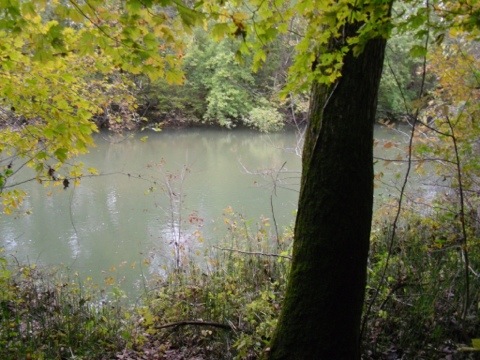
Leasburg, Missouri
Meeting the Muse in God's Creation