New Year’s resolutions…or not

Well, this is embarrassing. I thought I’d write a post about writing resolutions for a new year by reviewing my resolutions for 2017 and noting how I did.

But I can’t find my list of resolutions.

Anywhere.

So I either 1) put it somewhere I wouldn’t forget, and I’ll find it in another six months or so, or 2) the dog ate it, along with several grocery lists and the instructions for assembling my husband’s new bike, or 3) I never made a list in the first place.

I have a suspicion it’s door #3: I never made resolutions for 2017.

And here’s why:

  1. Years ago, I realized I didn’t have to wait for a new year to begin new habits or improve on old ones. Making resolutions is really procrastination, waiting for the right moment to begin a new project or make a change. Every writer I know has learned the truth – there is no ‘right’ moment to start writing. A new year is not going to magically make it happen. You just have to sit down and write. Now.
  2. Resolutions sugarcoat tough realities. Of course, a writer resolves to write a book every year. Some years, that actually happens. Yippee! Other years, that ambitious resolution gets buried by the nuts-and-bolts of marketing the last book you wrote, preventing you from even picking a topic or plot for the new book you wanted to write this year. Or you have a family crisis that demands all your attention and energy. Experienced writers know that life happens…and when it does, writing resolutions go out the window…until those same writers are ready to process what they’ve experienced and incorporate it into their next book, which may not be the next book they thought they’d be writing.
  3. Resolutions are limiting. Again, life is full of surprises, and when a writer feels tugged in a new direction, an old resolution can be inhibiting. Why keep hammering away on that novel you’ve worked over for years, when an unexpected opportunity to write (or co-write) a self-improvement book presents itself and you find yourself drawn to it? Good writers know they need to welcome growth opportunities, sometimes even before they finish old projects.

So you won’t find me writing resolutions for 2018 in the next week. Instead, I’m going to rejoice in all the satisfying things my writing life brought me in 2017: learning how to build my own website, hearing from a growing number of readers how much they enjoy my books, an unexpected nomination for a Christy Award from my publisher, invitations to speak to groups, returning to writing a blog, sharing my faith with published devotionals, and mentoring new writers.

Wait a minute. I am going to write one resolution after all. And here it is: Thank God every day for the gift of writing.

I know I can remember that. And I’ll never have to worry about the dog eating it, either…

Happy New Year, writers!

How about you? Do you make resolutions?

12 Unique Last Minute Gift Ideas Writers Can Give for Christmas

Has the date snuck up on you? Maybe you were hunkered down all of November to participate in this year’s NaNoWriMo challenge. Or perhaps you’ve got a book deadline, and the focus on your writing sphere has kept you from realizing what’s going on in the real world. Yikes!

If you are a writer who’s run out of time and you still have a list of people to get gifts for, then this post might just give you hope. I’ve compiled some unique gift ideas for writers — since we have the ability to give thoughtful words. Not only are these personalized items special, but they are inexpensive (some nearly free), and they hold the potential to make a lasting impact. So what are you waiting for? Let’s get writing and giving!

12 Last Minute Gift Ideas for Writers

  1. The Story of Us: Write a condensed version of your special moments with the gift recipient, the traits or talents you especially appreciate in them, or a shared dream. How did you meet? Did you watch them enter the world?
  2. 12 Things I Love About You: Write one for each month and print them on cardstock — if you add pictures, you can make a calendar.
  3. Crazy Love Directional Christmas: You can use the sample template here, or write your own from scratch. But however you craft the story, have your family members bring a $10 or less, unisex, wrapped gift for the game. Stand in a circle, and every time the words right, left, back, or forward are read from the story, everyone passes their gift in that direction. When right or left is said, each person should hand off to the person on that side of them. When they hear back, the gift goes back to the person who had it last. Each time forward is said, pass the gift to the person across from you. Whatever you’re holding when the story ends, becomes your gift. 
  4. Dedicate a Blog Post or Series to Your Recipient’s Favorite Cause: In honor of your loved one, spotlight a social issue they care about. 
  5. Write a Personal Tribute or Family History: Write an accolade or look up the origin of family names. Print on decorative paper, then frame for hanging.
  6. Warm Up Cold Cash With a Personalized Touch: Fold up bills and place them and coins in the slots of an empty candy box, like Whitman’s. Add a customized note, that you place on top, using monetary terms to define the way you feel about the relationship. A few lines to consider: You can’t appreciate me a quarter as much as I appreciate you. I’m ten-fold better off because you are in my life.
  7. Money Balloons: This is another unique twist on giving money. Place folded up bills, coins, and appreciation notes inside un-aired balloons, then blow them up no more than a few hours before your special someones will open their gifts.
  8. Blessing Cookies: Make your own fortune cookies with special messages just for the person you’re gifting inside. Instructions here.
  9. Willy Wonka Golden Ticket: Make up your own golden ticket based on something your recipient likes. Include a note about why you want them to have this. Research and write out economical ways to visit one of their dream vacations.
  10. Punny Gifts: Add humor to the holidays and make Christmas a little bright and funny with these delightfully punny gift ideas.
  11. 5 Things That Make Me Grateful I Know You: Write out a gratitude list specific to the person you are gifting. (Use the examples listed below or come up with your own complimentary comments.)
    1. The way you make me laugh
    2. Your kind heart in helping others
    3. Your generosity with strangers as well as friends
    4. Your talent with a hammer and nails
    5. The special way your nose crinkles when you smile
  12. Check Out More Creative Money Ideas here: Just put your special writing twist on whatever you give. The gifts of our words can be the most priceless present of all.

What’s your favorite gift idea from the list? Do you have a unique way to use writing for gifting?

Word Becoming Flesh in the Life of a Writer

 “The Word became flesh, and made his dwelling among us….” John 1:14. (NIV)

Mary, the mother of Jesus, was called to carry the Word Made Flesh. Saying “yes” to that plan involved a huge surrender on Mary’s part. Obedience brought her under scrutiny and censure, not only in the public eye, but also–initially–with Joseph, whose opinion she must have valued.

“Don’t be afraid,” the angel told her, which was saying, in essence, “You are about to be shunned and ostracized in your hometown because you are going to get pregnant with God’s son and although you have never been touched by any man, nobody is going to believe your story and they are going to whisper and point at you when you walk by and call you harlot and whore and turn their backs when you enter a room.”

Sometimes the hardest part of being a Word carrier is believing the truth of The Word and not the words others speak over us.

Yes, as followers of Christ, we too, are Word carriers. Through our lives, we demonstrate Christ to those around us.

In the book Seven Sacred Pauses by Macrina Wiederkehr, she reflects on this time in Mary’s life and asks, “What kind of surrender is happening in you? Do you ever experience being called by a Word larger than your understanding? What is the newest Word that has become flesh in you, dwelling deep in the recesses of your being?”

As a writer, I can think of three words or phrases becoming flesh in me. 

  1. Trust is a word larger than my understanding. God is in charge, I am not. Oh, how hard this is for me to remember! I get caught up in book sales and deadlines. I get caught up in numbers! Not words. Numbers! God does not ask for the numbers to get larger in me, but His words. His life-changing words. Trust needs to expand in me.
  2. Fear not are words larger than my understanding. My college writing professor always told me that the job of the writer is to write what people cannot say or are afraid to say. “To write is to take an ax to the frozen sea within us,” Frank Kafka once said and I need those words to become larger in me. Fear not.
  3. Live real words is a phrase being made flesh in me. Not just written words. Not just paragraphs in my safe little office. A writer does not create sentences in a vacuum. Writing does require solitude and space, but words don’t leap onto the page out of nowhere. Life-changing words find their way on paper after living out the Word made flesh among His living, breathing creation. Live real words are words still being made flesh in me.

Today, on your journey of faith as a writer, I pray you say yes to the surrendering, not as a defeatist, but as one who walks one more step into life larger than your understanding, as the Word is made flesh in you. 

Against the backdrop of the Sonoran Desert, Lynne Hartke writes stories of courage, beauty and belonging–belonging to family, to community and to a loving God. Her book, Under a Desert Sky, was released in May 2017 with Revell/Baker Publishing. She blogs at www.lynnehartke.com. You can find Lynne on Twitter, Facebook and Instagram.


Got a Problem? Here’s the Solution!

office-991306_640

Many years ago, our then five-year-old son trudged into the kitchen.

“I don’t wanna go back to school.” He dropped his Ninja Turtle backpack on the floor and crossed his tiny arms to emphasize the point. “Mrs. C doesn’t like questions and she doesn’t like teaching kids either.”

Surely, he’d misjudged Mrs. C. The teacher we’d just met at Open House a week earlier seemed warm, welcoming, and open to creative little spirits and their quandaries.

I knelt and met my child at eye level. “What makes you say that, honey?”

“’Cause if we wanna know something, she says ‘Not Now’ or ‘Go back to your seat.’ And…if we have a problem, she tells us to go write it on the problem board.”

Hmm.

“Problem board? What’s that?”

“It’s that big board on wheels with lots of white paper.”

Ah…yes. The one at the front of the classroom. I remembered seeing it at Open House.

“Well, did you need help with a question?”

“No. I had a problem.” My son’s face clouded. “Tommy took all my pencils and snapped them in two. When I tried to tell Mrs. C she said, ‘Go write it down on the problem board and then your problem will go away.’”

Really? What kind of nonsense was that?

“And so, what did you do?”

“I wrote my name on the problem board. And then Mrs. C laughed at me and said ‘You have a problem with yourself?’”

I cringed.

Even today, I still frown at the memory.

What I eventually deduced:

  • Most five-year-olds might be able to write their name, but very few write in complete sentences yet. Therefore, blank space on Mrs. C’s problem board equaled—well—no problem! Ever.
  • Mrs. C’s methodology for handling her classroom on a day-to-day basis was far different from what my husband and I observed at Open House. “I try to make things as easy for the students and myself as I can. The less complicated, the better,” she told a group of parents one day.
  • By easy and less complicated she meant unencumbered by demands, decisions, and anything else that required more than marginal effort.

I found that mindset disturbing, and to this day, Mrs. C’s words and attitude still resonate. It was and is so heartbreaking.

God doesn’t grant us creativity to waste, but He does set the bar high. He expects us to use good judgment when using our talents.

For writers and many other professionals, words like easy and uncomplicated rarely mesh with success.

Most of us know by now that with anything worth having (a long-held dream, goal, or career), there’s going to be work involved.

Ignoring “problems,” neglecting the obvious, and expending little energy aren’t endearing qualities. They invite complacency and undermine God’s plan for our lives.

It’s a tough climate for writers just now, but heaven help us if we come to think of our craft as not worth the effort!

If you’re new to the writing journey or if you’ve been at the process a while, I hope you’ve decided to dig in your heels and not settle for the uncomplicated.

I hope you’ll think through, rise above, and go beyond the “problem boards” of life, yet be confident enough to realize, too, sometimes, that’s where the real stories are.

Now

Go tackle some white space.

Don’t be afraid to write on it!

*This post first appeared on my blog.

Original Image Credit: MiraGregorCosic/Pixabay


Can you think of a time when you felt ignored or that your problem didn’t matter?

How did you handle it?

Writers, anything you’re tackling on your “problem board” today?

***

CH-7888 copy

Cynthia writes Heartfelt, Homespun Fiction from the beautiful Ozark Mountains. A hopeless romantic at heart, she enjoys penning stories about ordinary people facing extraordinary circumstances.

“Cindy” has a degree in psychology and a background in social work. She is a member of ACFW, ACFW MozArks, and RWA.

Cindy loves to connect with friends at: http://www.authorcynthiaherron.com/

She also hangs out here:

http://www.twitter.com/C_Herronauthor

http://www.facebook.com/authorcynthiaherron

http://www.pinterest.com/cynthia_herron/

For love, fun, and encouragement ~

Sign up for Cindy’s monthly e-NEWSLETTERS


Promises for the Writing Process

WordSwag/KarenJordanAs I worked on my first book project, I struggled with all kinds of self-doubt and fear. I wondered why I had even bothered with writing a book proposal.

I had faced several rejections in the past. And I had been unable to follow through on other book projects earlier for a myriad of reasons.

Yet I couldn’t seem to let go of my desire to share the spiritual lessons I had learned, applying God’s principles and promises to my life.

Peace. I had been praying about finding spiritual rest and peace. And I had struggled with the thought of compiling the truths I had discovered while helping others in their struggle with fear—especially with worry, anxiety, and depression.

Prayer. I had voiced a question to God as I wrestled with fear, doubt, and unbelief concerning direction for my book: How can I write a book about finding spiritual rest, when I’m still one of the most anxious people I know?

Promises. I discovered powerful promises in the Bible as I sought God’s direction and moved forward with my book. I hope they will encourage you as you work on your next writing project.

  • God will complete the work that He began in me. “[Being] confident of this, that he who began a good work in you will carry it on to completion . . . ” (Phil. 4:6 NLT).
  • The Holy Spirit will teach me all things and remind me of everything that the Lord has taught me. “But the Counselor, the Holy Spirit—the Father will send Him in My name—will teach you all things and remind you of everything I have told you” (John 14:26 HCSB).
  • Christ promises to give me the strength I need. “For I can do everything through Christ, who gives me strength” (Phil. 4:13 NLT).

What promises from scripture have meant the most to you while you labored over your writing projects?


A Writing Lesson from Clark Griswold

I am Griswold.

Clark Griswold and I both love Christmas, but we can sometimes go too far. This year I actually had our writer’s Christmas party at the beginning of November, and the festivities haven’t stopped.

Christmas Writing Group

So when my writer’s group read the book The Emotional Craft of Fiction by literary agent Donald Maass, and I was struck by the lesson on catalyst and catharsis, I looked to Clark Griswold in the movie Christmas Vacation to be my example.

Here’s Donald’s definition of the idea: Catharsis is a storm followed by a release of something inside.  It is preceded by a catalyst, an event that causes the storm to break.

Here’s Clark in the midst of the storm: Hey! If any of you are looking for any last-minute gift ideas for me, I have one. I’d like Frank Shirley, my boss, right here tonight. I want him brought from his happy holiday slumber over there on Melody Lane with all the other rich people and I want him brought right here, with a big ribbon on his head, and I want to look him straight in the eye and I want to tell him what a cheap, lying, no-good, rotten, four-flushing, low-life, snake-licking, dirt-eating, inbred, overstuffed, ignorant, blood-sucking, dog-kissing, brainless…

You get the idea.

Now when I was explaining this term to a writer’s group recently, one woman raised her hand and said, “I don’t buy it.” She doesn’t think we should encourage readers to lose their tempers.

Donald, Clark, and I are not encouraging such an explosion. Clark didn’t want to lose his temper. He tried to keep it all in. But his catalysts did not relent. The one thing that held him together was the belief that all of the hardships of the season would be made up for with the pool he’d planned to buy using his Christmas bonus. When he found out there would be no Christmas bonus, he lost it.

I’ve been there too. It’s not fun. But it’s real.

And that’s what Donald is encouraging. Writing real. In real life, our pent up emotions have to release sometime. I know mine do. In fact, I once bought China dishes from a thrift store just so I could throw them. It was going to be messy, so I went to a recycling station and smashed them into the glass bin. Then my best friend and I laughed like maniacs because it felt soo good to let out the anger.

That’s where we want to take our characters. To a feel good ending. But so often we are afraid of how messy their catharsis will be.

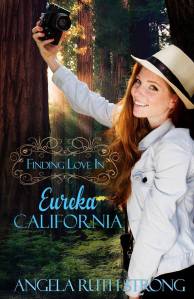
Eureka CoverAfter reading Donald’s book, I went back to my manuscript for Finding Love in Eureka–to the part where life was pressing in on my character from both sides. I’d originally had her sidestep the pressure. But life is never that easy, is it? So I rewrote the scene.

Genevieve stayed. She lost her sanity a little bit. She made a poor choice. But when the smoke cleared, she was able to see things from an objective perspective. Which created a feel-good ending that was more relatable. More genuine. More powerful.

One other tip from Donald: Make the explosion public.

Not only did Clark to blow up, but his cousin kidnapped his boss as a Christmas gift then the S.W.A.T. team swung through the windows of his house. Could Christmas get any messier?

But here’s the thing. Clark’s explosion also changed his boss’s perspective. Because Clark was honest about his feelings, and life was as messy as it could get, this made it safe for others to be honest too. There was nothing left for them to lose at this point.

If you haven’t ever experienced a holiday like this, that’s great. Either way, I’m going to encourage you to look for other examples of catalyst and catharsis in your life as well as your favorite movies. Use them to take your own stories deeper.

In the words of Cousin Eddie: That’s the gift that keeps on giving!

Santa Strong

Merry Christmas to all, and to all a good rewrite!

One Surprising Thing I Learned About Marketing

I recently participated in a marketing class taught by my former WordServe agent, Alice Crider. She gave us the tools needed to take control of our careers and the motivation to create opportunities.

Release Day

There was, however, one thing about the class that shocked me. In fact, if more writers knew about this before they got started, then they might have reconsidered their career choice. Here it is:

To sell your books, you need to be a likable character, and one of the requirements for becoming a likable character is to be polarizing.

Polarizing: to cause (people, opinions, etc.) to separate into opposing groups.

This means that if I am polarizing, then there will be people who don’t agree with me, or they could, gasp, even dislike me.

I hate conflict though. Can’t we all just be friends?

The problem with this wish is that as a writer, if I want anyone to stand with me, I have to first stand for something. I have to know who I am. I have to believe wholeheartedly in what I’m saying. And while this may push some people away, it’s going to draw those who agree with me even closer. They will become my true supporters.

For example, Jen Hatmaker recently claimed that gay marriage can be holy. You can’t get more polarizing than that in the church. She was attacked, and her books have since been banned from certain stores. But here’s the interesting part. She has endeared herself to her audience so completely that her latest book is now in the running for Goodreads Best Book of the Year.

Once I understood this, I decided to not only keep yoga in my next novel, but to use it in promotion. My editor was afraid some Christians would be offended, but I explained why I teach yoga and how it is both permissible and beneficial for me. She accepted with the stipulation that I write a reader letter for the beginning of the book.

beach yoga

I shared that letter yesterday online, and it was definitely polarizing. I received a personal message saying that I’ve been warned, and now they were going to wipe the dust from their feet and leave me behind. But I also got messages from people wanting to review the book. Besides that, one yogi reviewer told me Finding Love in Eureka is one of the best books she’s ever read. I’ve found my audience.

My point here isn’t to argue who is right or wrong. It’s to encourage writers to be strong. Of course, that’s going to include being knowledgeable and respectful. (You’re goal isn’t to tick people off but to say the hard things that you might not want to say for fear of ticking people off.)

You’re the expert. You’ve been given your passions and desires for a reason. Don’t let your message be watered down when trying to please people. You have something unique to offer that won’t resonate with everyone.

In fact, Jesus said, “Everyone will hate you because of me, but the one who stands firm to the end will be saved.” There’s probably never been a more polarizing man in all of history. And His book, you know, is a number one best-seller.