WordServe News: December 2016

wreath-1298566_960_720

It’s the last month of 2016, and exciting things have been happening at WordServe Literary!

On the final post of each month you’ll find a list of Water Cooler contributors’ recently released books along with a recap of WordServe client news.

New Releases
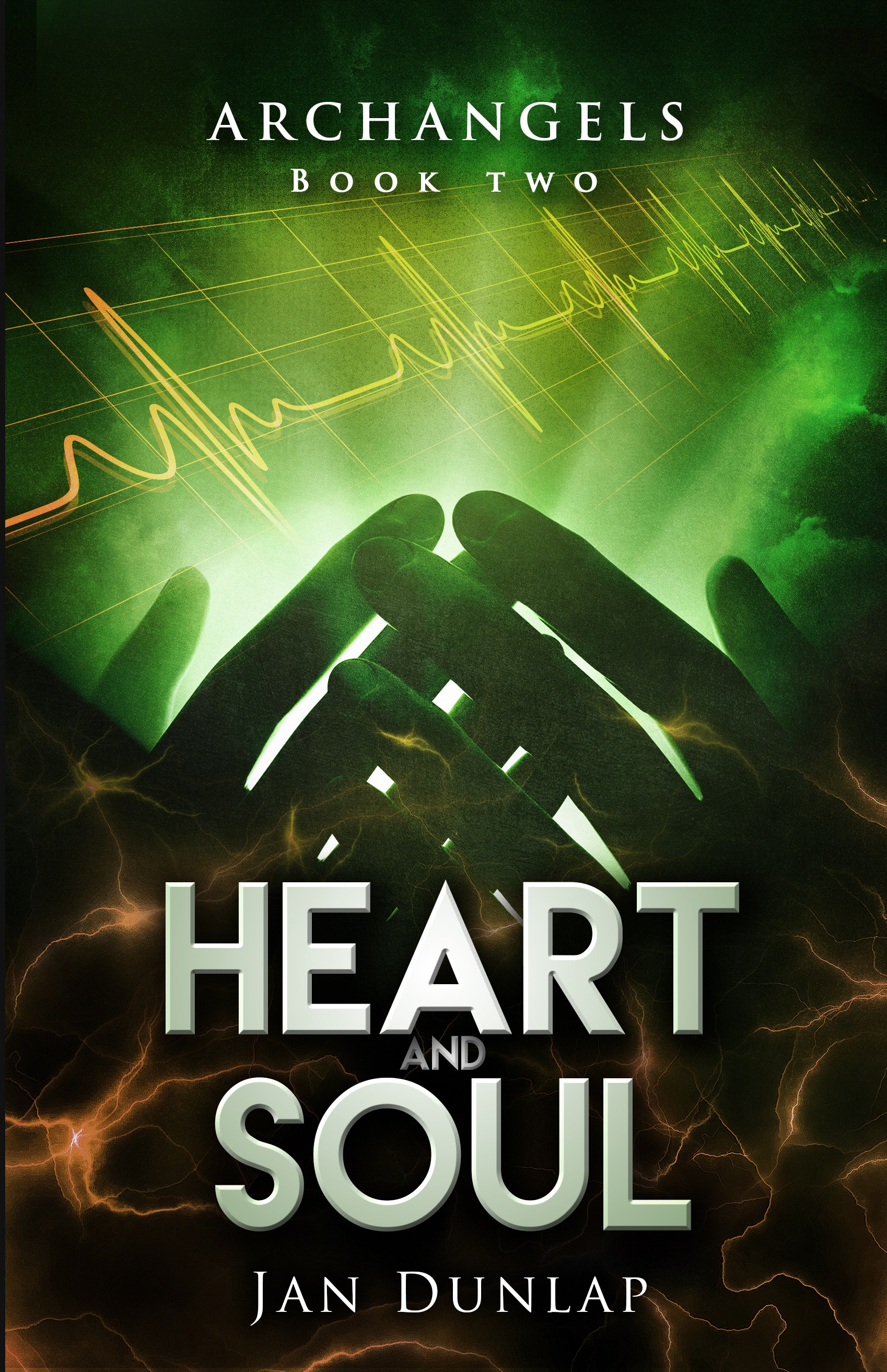
heart-and-soul-coverJan Dunlap published Heart and Soul, Book 2 in the Archangels series, with FaithHappenings Publishers. When Raphael Greene, a medic with an extraordinary gift for healing, is thrown into the role of guardian angel for cardiologist Ami Kim, he finds they share more than a mutual attraction: Ami is a gifted medical intuitive. Even more astounding is his discovery that Ami is conducting clinical trials of a therapy for heart disease that harnesses the power of prayer. Now Ami’s research has been stolen and a horrific plan to use the cure as a weapon of mass murder is underway. Can they stop it in time–and regain their faith in a merciful God?
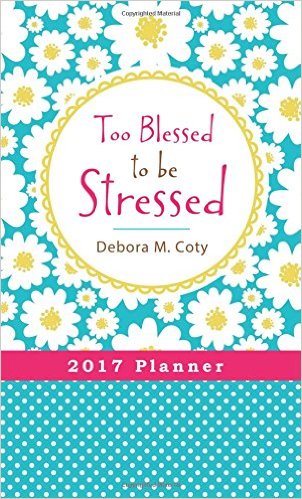
51hvrbtxhnl-_sx300_bo1204203200_Deb Coty released the Too Blessed to be Stressed 2017 Day Planner. Get organized—and transform your heart—every day of the year with this 15-month planner, featuring a refreshing blend of inspiring monthly readings laced with encouragement and gift-wrapped in humor. Featuring monthly and weekly calendars, a year-at-a-glance section, pages for frequent contacts, and more, this planner offers an important reminder: God’s grace is enough for the ups, downs, and all the in-betweens of life.

New Contracts 

Curt Steinhorst signed with Wiley Publishers for his new book, Your People Aren’t Working, for publication in early 2018.

New Clients

Jewell Johnson joined WordServe Literary this month. Welcome!

balloons-25737_640

What We’re Celebrating

All the Gallant Men hit the New York Times bestseller list for four consecutive weeks this month–first at #16, then #12, and finally #8! It was also the #1 book on both Amazon and B&N.com.

We had two winners in Christianity Today‘s 2017 Book Awards: Leslie Leyland Fields for Crossing the Waters, and Adam McHugh for The Listening Life. Congratulations!

And finally, Merry Christmas and Happy New Year to all of our Water Cooler readers. Wishing you a wonderful 2017 from all of us at WordServe!

10 Words That Change Everything

Image/KarenJordanWhat was your “One Word” for 2016?

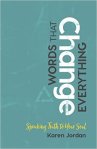
This year, 10 words changed everything for me. I focused on these words because they were the titles to several chapters in my book, Words That Change Everything, published this year by Leafwood Publishers.

I shared a little about the power of these words during an interview that Anita Brooks and I had on Bridges with Monica Schmelter on WHTN Christian Television Network.

I refocused on these 10 powerful words as I compiled the FREE 15-day devotional guide to Words That Change Everything: RESTNotes.

BookCover/WordsThatChangeEverythingBookCover/RESTNotesMy 10-word focus continued as I prepared to teach a Bible study based on my book at my church every week this fall.
I never imagined how a few words could change everything for me.

So for my last WordServe Water Cooler post for the year, I offer these 10 powerful words to you.

  1. REST. “The Lord is near. Do not be anxious about anything, but in every situation, by prayer and petition, with thanksgiving, present your requests to God. And the peace of God, which transcends all understanding, will guard your hearts and your minds in Christ Jesus” (Phil 4:5-7 NIV). This scripture offers an effective prayer strategy for speaking truth to the warning signs of worry, symbolized by the acronym REST: Remember. Exalt. Surrender. Trust.
  2. Remember. “The Lord is near” (Phil. 4:5 NIV). We take the first step in overcoming our negative thoughts by seeking the powerful presence of God in our lives.
  3. Exalt. “In every situation, by prayer and petition, with thanksgiving . . .” (Phil 4:6 NIV). Praise can be a powerful weapon for us in our battle with worry. We can enter into God’s presence through praising Him (Ps. 100:4-5).
  4. Surrender. “Present your requests to God” (Phil 4: 6). In our day, the term “surrender” often means being taken into captivity. But in God’s kingdom, “surrender” suggests a renewed freedom from the enemy of our souls.
  5. Trust. “And the peace of God, which transcends all understanding, will guard your hearts and your minds in Christ Jesus” (Phil 4:7). God promises to guard our hearts and minds with His peace. God gives us specific instructions about how to embrace His peace—by changing our mental focus and exercising our faith.
  6. Solitude. “When life is heavy and hard to take, go off by yourself. Enter the silence. Bow in prayer. Don’t ask questions: Wait for hope to appear” (Lam. 3:28-29 The Message). This scripture offers a powerful prayer strategy for stressful days. My writing life requires that I spend time alone without distractions. But at times, the isolation becomes my distraction.
  7. Silence. “Enter the silence” (Lam. 3:28). As we seek God in silence, the accuser (Rev. 12:10) always dangles threats and accusations.
  8. Prayer. “Bow in prayer” (Lam. 3:28). Prayer can be as natural as speaking with a good friend or as intimate as a whispered secret. It can occur at any time, no matter the circumstances. And God promises to listen when we call on His name: “And if we’re confident that he’s listening, we know that what we’ve asked for is as good as ours” (1 Jn. 5:15 MSG).
  9. Listen. “Don’t ask questions” (Lam. 3:29). How do you respond when someone won’t listen to you? Anger, rejection, or frustration? When Jesus instructed His disciples, He asked them on several occasions, “Are you listening to this? Really listening?” (Matt.11:15).
  10. Wait. “Wait for hope to appear” (Lam. 3:29). Waiting rooms can bring out the worst in us. Long periods of waiting hoist all kinds of emotional red flags—from impatience and worry to full-blown panic attacks. Reminders of past pain, traumas, and personal loss make our present trouble seem intolerable. The dark clouds roll in, and we can’t see the light of spiritual truth. However, waiting does not need to produce hopelessness for Christ-followers.

Do you have any “Words” that have changed everything for you?

Celebrating a Book Birthday

Not only is today MY birthday, but my debut novel came out six years ago this month. It’s my book’s birthday!

We could eat cake and ice cream in celebration, I could tell you about all the labor I went through to push this baby out, or we could look at pictures of my baby and coo. But really, what I want to talk about is dedicating my baby.

Go ahead and coo first…

love-finds-you-in-sun-valley

Feel free to grab cake and ice cream, too, if you want.

Now back to the dedication.

I love dedicating my books. They are a little piece of me, but I couldn’t have created them on my own. Seeing them come to life is a humbling experience. And I am so grateful. Unbelievably grateful.

I cry every time I write my acknowledgments. Happy tears. Giggling-all-by-myself-though-I-know-God-must-be-looking-down-and-laughing-too tears. The kind of tears we were created to cry.

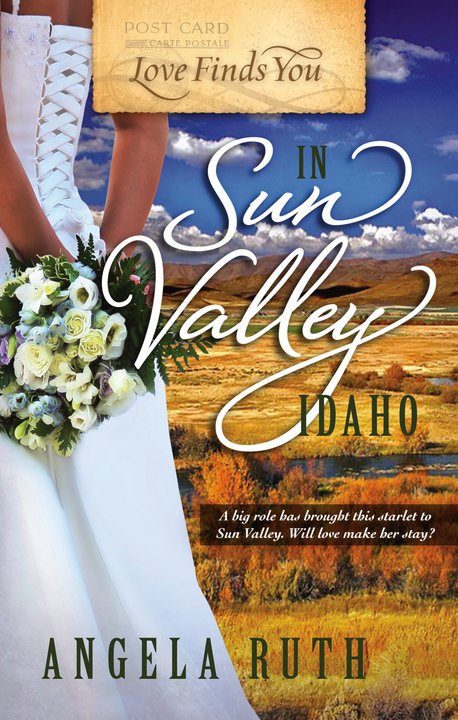
My first book I dedicated to an amazing couple in my life. The book was a romance, as you probably guessed from the pic above since the model is wearing a wedding dress. But I was crying lots of sad tears at this time I sold this book because my own marriage was falling apart. I was living in Kevin and Rebecca’s basement with my three children. I learned a lot from them while I lived there. I remember Kevin coming home and Rebecca telling him, “The kitchen drawer is broken.” Kevin said, “Okay, I’ll fix it,” instead of getting angry at her. I was like, “Oh. That’s what love is supposed to look like.”

I was so thankful God let me write a book about love even though I’d obviously failed at it. And I was thankful for Kevin and Rebecca’s love for me. At the time, the only thing I could give them in return was my book dedication. I meant every single heartfelt word.

Since then, I’ve remarried, and I rereleased that first novel.

Here’s my baby all grown up:

sun-valley-cover

This time it’s dedicated to my husband who has also shown me what love is. The first time he told me he loved me, I said, “I don’t know what that means.” He said, “I will show you with everything that I am.” He puts my heroes to shame.

Here I go talking about love again, when I’m supposed to be talking about dedications, but maybe they are one and the same. They are an expression of my affection for the people in my own life story.

I loved writing my children’s series with my kids and dedicating the books to them.

I loved writing the story of a pastor’s daughter (who can’t forgive her dad for running off with the church secretary until she falls for her own pastor) and dedicating it to my parents who are THE most merciful people in the world.

I loved dedicating my Christmas romance to my best friend who was “a gift from heaven” at a time when I felt like I had nothing left. This year she invited me to speak at a Mother’s Day brunch at the old folk’s home where she works as activities director. I got to announce in front of all her residents and coworkers that I was dedicating the book to her.

charla-mothers-day

Sometimes it’s fun to make other people cry happy tears, too.

Most recently I created a new baby with Love Inspired Suspense. This one I couldn’t have finished without the inspiration of my oldest stepdaughter. So I dedicated it to my step-kids. I was hoping to give  a copy to my stepdaughter when she was here for Thanksgiving, but the package missed her by a day. I just had to send them all a photo.

presumed-dead-selfie

I kinda wanted to make them cry happy tears, but I probably cried enough for all of us.

Dedication means both “self-sacrificing devotion” as well as “a name prefixed to a literary production in tribute to a person.” I’m able to prefix all these names to the front of my stories because of their self-sacrificing devotion to me. And there’s nothing else I’d rather celebrate on my birthday.

Though cake is good, too.

book-birthday


A Library Located in a Village of Stilted Houses by the Sea

library-story

I loved going to the library as a girl. In the summer, after chores were done, we would go to town once a week, a trip that included a stop at the library.

I would always get the allowed quota–four books. 

At home I would sit in the tire swing under the elm tree and escape to faraway places in the pages.

I never imagined in the shadow of cornfields, alfalfa, and soy beans, that one day I would travel to a library in a village of stilted houses by the sea:

Our driver parked the van at the curve of a road on the mainland, near a dirt entrance across the bay to a smaller village of sea gypsies, the gypsy part of the name being a misnomer because they don’t move from place to place. They live there, a few hundred yards from the mainland in their simple stilted homes, because the lore of their people states that if they would leave, their skin would become diseased; they would grow sick and die.

sea library 1

“Where’s the library?” we asked our host as we passed a group of boys listening to a boombox, while laundry dried outside a simple house with a satellite dish in the backyard. As part of a literacy program we had been invited to check out the library in this small fishing village in Indonesia.

sea library 7

Our host pointed in the distance, to a destination I could not see, because all I saw in front of me was a series of rough wooden planks, nailed together in a single, rickety path above the water.

Walking the plank suddenly had an entirely new meaning as the boards weaved side to side as I shuffled across one and then another. I peered at the water six feet below as it flowed back and forth with the current. What happens when cell phones get wet? I wondered, as I took step after cautious step, on planks number three, four and five.

What happens when library visitors get wet?

My husband comes across

I was thankful for the years I spent as a child balancing on railroad tracks as I imagined being a tightrope walker on my way to our no-boys-allowed fort in a culvert under the tracks, never imagining I would need those high-wire skills four decades later.

Eventually all six of us made it across, some uttering not-very-silent prayers for God’s deliverance.

When we arrived at the library in the village school, we discovered the building was closed. School testing happened that week and the kids had a half day, an education reality that is common around the world. We stood around in the 85-degree heat with 90% humidity. The circle of sweat on my cotton t-shirt widened exponentially with each ticking minute.

“We can come into this home,” our host said, motioning us into a blue house with a corrugated metal roof across from the school.

sea library 4

“Have a seat, have a seat.” The woman and homeowner directed me to a far corner. Our group of six and a dozen children trooped in behind. Candies and other snacks hung down from the ceiling. The home was also a store.

We were invited to tell a story while the woman served crackers and bottled water. My husband told a tale of another stilted house with a boy, his noisy sisters, and their cows. It was a story about gratitude. Our interpreter echoed my husband’s hand motions and side effects, adding a few of his own, while the children listened, entranced.

The homeowner smiled as the children sang a song, moving with the tempo. More children arrived on the front porch, but there was no more room inside. 

In our culture, I hear arguments about the relevance of libraries in a digital world, but those debates were silenced for me in a stilted village where children pressed against the metal screen covering the front window in hopes of getting closer to the words, while the sea and the people swayed.

Do you have a library story?

Lynne Hartke’s first book: Under a Desert Sky: Redefining Hope, Beauty and Faith in the Hardest Places is coming out with Revell/Baker in May 2017. She blogs at http://www.lynnehartke.com.

How to survive the book review blues

roses I have a love-hate relationship with book reviews.

Every time I get a good review, I’m happy. When I get a stellar review, I’m ecstatic. I feel like I’ve done what I hoped to do: I’ve connected with a reader and given them a journey they wouldn’t have experienced otherwise. When dog-lovers tell me they laughed, cried, and were inspired by my memoir Saved by Gracie: How a rough-and-tumble rescue dog dragged me back to health, happiness, and God, I feel blessed that my story reached and touched them. When reviewers rave that my supernatural thriller Heaven’s Gate: Archangels Book I made them want to stand up and cheer, I get goosebumps of joy.

All those multi-starred reviews on my books’ pages at amazon.com, Goodreads, or barnesandnoble.com reassure me that the hours I pour into my writing are worth it: my books entertain, educate, and illuminate, and, gosh darn, people like them.

wilted-roseAnd then there is the flip side of my love-hate relationship with book reviews.

When I get a review that says “this book wasn’t what I thought it would be about, so I stopped reading it after the first two chapters,” and therefore receives the lowest rating possible, I want to bang my head against a wall. “Then why did you bother to post a review?” I want to ask the disappointed reader, and then explain that because she mistook the book for something it wasn’t, my overall rating has plummeted, which will dissuade some readers from even reading the synopsis, let alone buying and reading the whole book.

I’ve also seen reviews that rate books poorly because the author’s basic premise contradicts what a particular reader-reviewer believes. Again, those low ratings may prevent the book from reaching the hands of readers who would appreciate and greatly benefit from it; because many people (and I’m one of them!) choose books based on others’ reviews, authors are at the mercy of those published reviews, even when they make no sense at all, or are based on the personal bias of the reviewer.

So what’s an author to do about that oh-so-necessary-but-can-be-disastrous need for reviews?

My answer can be summed up in one word: relax.

Then remind yourself of these three things:

  1. You wrote a book! So many people say they want to write a book, but you actually did it! AND it got published. Congratulations! Celebrate your accomplishment!
  2. You can’t please all the people all the time, and that’s especially true of readers. Some people just won’t ‘get’ it; others won’t like your writing style or your treatment of plot or subject. Some readers might be experiencing difficult life situations while they were reading your book and some of that negativity gets transferred to their reviewing. Bottom line: reviews are subjective, even when they intend to be objective.
  3. Your words will reach at least some of the people who need to read them, and they will bless you for it, whether or not you ever know it.

What do you do when you get the review blues?

How to Write a Book in 3 Months

The following post comes from WordServe author Cassandra Soars. 

notes-514998_960_720

The first book I wrote (Love Like Fire: The Story of Heidi Baker) was a ten-year process, from the day I started my research to the day it was published in April 2016. But I’ve recently discovered that writing a book doesn’t have to take that long. When a filmmaker hired me to write a book for him, I discovered some helpful tips for writing a book in draft-form in three months.

  1. Write what you know. If your project involves a lot of research, do your research first, then put it away. There will always be more to learn, and you will never feel like an expert. At some point, you need to put away the research and write from what you have learned and what you do know. Writing what you know is always easier than writing what you don’t know.
  1. Don’t try to write and edit at the same time. I have one friend who constantly studies plot and form while she’s writing, and needless to say, her process takes much longer and is much more complicated since she’s always analyzing and second-guessing her first draft. I’ve found that writing and editing are two completely different processes that use different parts of the brain, and it’s best to keep them separate. If you try to edit while you’re writing that first draft, your process will take much longer.
  1. Don’t be afraid of a bad first draft. A first draft is not going to be your best work. It probably won’t even be good. Don’t worry. Give yourself the freedom and permission to get the story down on the page, no matter how bad you think it is. After you have an entire first draft, then you can start editing. This is where you can make it shine.
  1. Give yourself deadlines. If you want to write a book in three months, give yourself a daily word count. For a longer book of around 90,000 words, set yourself a daily goal of writing 1500 words a day, 5 days a week. This will give you 30,000 words a month, and within 3 months, you’ll have written your book. For a shorter book of 60,000 words, your daily deadline is a word count of 1,000 words a day, 5 days a week.
  1. Be consistent. You don’t need to wait until inspiration strikes. If you make it a routine to sit down at your desk daily, even it’s only for an hour, you will find that there is always something that you will feel like writing about. Go with that—and give yourself permission to not follow your writing outline. Write about what you can connect with emotionally that day. Your emotion is transferred through your writing; if you feel it, so will your reader.

The best writing advice I ever got was from a college writing professor who told me that he writes a book by writing one chapter at a time. He showed me his file folders, individually marked by chapters. When he finishes writing one chapter, he puts it away in a file folder, and then starts the next chapter. Take it a chapter at a time. Don’t overwhelm yourself by thinking about the entire book at once.

cassandrasoars-201x300Cassandra Soars has published various national magazine articles on a wide range of topics, including life in Mozambique, Africa, where she lived for five years. She has a master of fine arts in creative writing from the University of Pittsburgh. She also earned a master’s degree in international development from the University of London’s prestigious School of Oriental and African Studies. Cassandra and her husband Steve recently founded a social media site for couples called iheartus.com.