Sentencing Ourselves to Pieces: Read a Whole Book!

theguardian.com
theguardian.com

I wrote an essay in my sleep last night–about books. Everyone in my dream was holding a book open, some paper books, some e-books, but all tilting their heads, reading thoughtfully. Books were not dead, the page would live on as a vital and treasured source of knowledge and experience. It was a good world. It was a good essay. It was a good dream. I kept pondering whether I should wake myself up to write it down. I did not, concluding that my slumbering self would surely remember an essay of this import.

I know what happened. I made the mistake of watching a 2010 documentary on the future of education just before bed, and paid particular attention to one interviewee’s prognostications about the book. Marc Prensky, the author of Digital Game-Based Learning, who describes himself on his website as an “internationally acclaimed speaker, writer, consultant and designer in the critical areas of education and learning,” says this about books and kids:

You don’t have to read them (books) to take in what’s in a book. . . If I said to kids, “You know, you don’t have to read all that much. But what I’d really like you to read are these few things and these excerpts, and these parts, and then I’ll tell you why you should read them. . . And no, you don’t have to pore through Silas Marner as I did in high school. There are very few books you have to have read.”

(I confess I would have been more willing to grant his pain in high school had he named The Brothers Karamazov or War and Peace. Silas Marner clocks in at a mere 200 pages.)

Let me understand this. If a writer’s work is truly important and excellent, it earns the exalted status of being pieced and excerpted. And then I wonder about the writers whose work rises to this esteem. How did they arrive at their insights, brilliance, and genius? Through an education built on carefully selected snippets?

We have forgotten why we read, I fear. We need information, yes. We need knowledge and discernment more. We need imagination far more. We need beauty and possibility even more. Without these, we are sentenced to a single spirit, a single mind, a single life.

This is what I used to say when books lay on every shelf and people at least aspired to read. We need to read whole books for far more important reasons now. College students can no longer attend to an entire lecture without Facebooking. We text through our meals, we interrupt our visits for every vibration in our shirt pocket. We finish very little single-minded or single-handed. We are sentencing ourselves to pieces, dividing our language, our hours, our very selves among multiple media, shrinking our thoughts into bits and tweets, excerpts and texts. We cannot attend. We no longer seek silence. We have lost our ground of being, and cannot remember what holds us together.

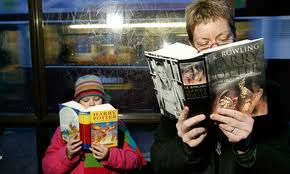
Last week I walked into a first grade classroom. The kids were sprawled on the floor, cross-legged on the carpet, leaning over their desks, all with a book in hand, faces inches from the page, intent. SSR time, Silent Sustained Reading. For twenty minutes every day. Were these the faces in my dream?

k-12news.com
k-12news.com

Maybe college classes can do the same. Maybe we can, as well. Silent. Sustained. Reading. Maybe we will remember back to first and second grade, why we read books then, from beginning to end. Why we write them. That slow immersion, that aching marinating in a world of such light, drama, and color, whose ending would bring delight, even wonder, and always an appetite for more. We always longed for more of the book, never less.

“Why are we reading if not in hope of beauty laid bare, life heightened and its deepest mystery probed?” asks Annie Dillard in her excellent book, The Writing Life. Why indeed? Why are we writing if not to do the same? But don’t stop reading with this quote. Read the whole book. Read as many whole books as you can. Sentence yourself again to beauty and whole-hearted delight.

Woman hugging page

5 Writing Rules I’ve Learned from Pixar

file0001212587536My family adores Pixar movies. Every year, we look forward to their latest release, impatiently marking time until we can immerse ourselves in whatever new world they’ve created. We’re such fans of the studio that we even have their Digital Shorts collections.

As a mom of youngsters, I’ve spent countless hours in theaters watching duds [I’m not naming names, but I just saw a new movie from another animation studio, and it was a real turkey. BTW, whoever brought the disaster called Gnomeo and Juliet onto the big screen–I want those two hours of my life back. And my money, preferably with interest.]

However, I almost always enjoy Pixar flicks. The minds that dreamed up Monsters, Inc. and Cars inspire me. Because I have the privilege of teaching writing to aspiring authors, I’ve begun to study Pixar’s methods in order to share them with my students. What have I learned?

1) Story is king.

The Pixar folks spend years perfecting the story of their movies before they ever move on to the animating process. Wow.

In my own writing journey, I’ve learned not to “tell” (relate things that happened so readers can understand how that situation changed me) and instead  “show” (include dialogue, characters, and movement). No matter what genre you write in, good storytelling is essential. Today’s art consumers are savvy, busy, and distracted. I know, because I am one. We want to be swept away by a immersive tale, not be told what we should learn from a situation.

2) Be tenacious.

Wall-E and Finding Nemo director Andrew Stanton admits that in the early years, Pixar employees created mostly by instinct and made a lot of mistakes. However, they wouldn’t give up or give in to the pressure to do what had been done before.

They also work like fiends to get the characters and settings right. I found a few stats which blew my mind. There were:

  • 3,473,271 individually animated hairs on the Lots-o-Huggin Bear from Toy Story 3
  • 2,320,413 individually animated hairs on Sully in Monsters, Inc. (It took 11 to 12 hours to animate a single frame featuring Sully!)
  • 1,150,000 individual hairs rendered on Ratatouille’s hero, Remy.

Wow again.

3) Invoke wonder.

Pixar has mastered this. The writers and animators help us feel again what we often felt as children–awe, gratitude, and joy.file0001384956880

Here’s an exercise: Think about the first time you tasted ice cream, if you can remember it. Or the first time you saw something that took your breath away. Now write about it.

Wonder is ineffable, but if we can draw on it and re-create it in a scene, we’ve captured our audience’s attention immediately. They will follow us almost anywhere we lead them.

4) Take risks. A rat learning to be a chef? Preposterous. A film about a robot from the future with no dialogue for 45 minutes? Absurd. Kids’ movies beginning with the death of characters? Totally insane.

But they work. They work because the guys and gals behind those stories make us forget we’re watching animated films. They work because–due to great storytelling–we care about the characters, and we relate to them in some way. Which brings me to my last point.

5) Do your homework.

Too many films are built on flimsy premises. While the finished products might be technically sound, their foundation is cracked, and the outside shiny-ness simply can’t make up for creaky scaffolding, bored talent, and cheap materials. Often, the stories are weak and the jokes seem more important than plot.

Audiences can tell when authors know what they’re doing and when they don’t. We don’t have to write only about what we’ve learned from our experiences, but we have to make time for research, education, and paying our dues. Even after all his success, Stanton told an audience in 2012 that he had recently taken an acting seminar to learn more about what drives characters.

I respect that. I bet you do, too.

Artist Sharpening Artist Series, Part II, Lecrae

Boasting, by Lecrae

LecraeRehab

Listen to the music here:

http://www.youtube.com/watch?v=4Ec7ofMOqVM

When I first heard the above song on the radio, it got me. I welled up and blamed it on my hormones the first time, but then it happened again. And, again.

I realized I couldn’t keep blaming it all on my hormones, or else my husband would wise up and figure out I use “hormones” as an excuse not to do the laundry and vacuuming, on occasion. I can’t have that now, because those chores suck to the 10th degree and what not.

So, no, it wasn’t the hormones. It was the truth behind the lyrics.

“If this life has anything to gain at all
I count it lost if I can’t hear you, feel you,
’cause I need you. Can’t walk this earth alone.”

Sometimes I ask myself why I strive to gain the things in this world. The question applies whether it’s with my work, my writing, or whatever else I put in my sights. Is it a gain for me and only me? And if so, at what cost? If I let my faith trickle out to garner that success, even if it’s only a slow trickle, what will the win feel like when I’m left empty inside?

empty-inside3

“So in times that are good, in times that are bad,
For any times that I’ve had it all I will be glad.
And I will boast in the cross. I boast in my pains.
I will boast in the sunshine, boast in his reign.
What’s my life if it’s not praising you.
Another dollar in my bank account of vain pursuit.”

I often ask myself, what’s more important? The money and posturing that may go along with doing things the world’s way, or just keeping who I am in check.

“Tomorrow’s never promised, but it is we swear.
Think we holding our own, just a fist full of air.
God has never been obligated to give us life.
If we fought for our rights, we’d be in hell tonight.”

Our lives, our families, and even our talents and desires have been given to us as gifts. It’s easy enough to squander the impact of that premise as we come to feel it, but I fear we often completely forget the entire premise as well. Especially when we strive to have our way with what’s been given to us.

your-unique-gifts-and-talents_t

“So now every morning I open your word and see the Son rise.
I hope in nothin, boast in nothin, only in your suffering.
I live to show your glory, dying to tell your story.”

This is pretty much all that’s needed. Doesn’t seem so hard. Thanks for putting a sweet beat to it, too, Lecrae.

The Hidden Benefits of Reading

I have a confession to make. Sometimes I read in order to avoid writing. There. I said it. I read at stoplights often enough that my children have to point and say, “Green. Green! GREEN!” in increasingly frantic tones, just before the rude non-reader honks come from the cars behind us.

I read while I wait for my children and while I brush my teeth. Just last week, I read on my daily walk. While passing my oldest daughter’s home, I understand that she pointed out the window in disbelief. “Nick!” she called to her husband, “Is that lady really reading while she’s walking?! Oh. It’s my mom. Why am I even surprised?” Once, I even read 43 pages while in the dentist’s chair.

As it turns out, my reading habit might be one of the best things I can do for my writing.

Read to Inspire

We all know there’s nothing like losing yourself in a book whose pages are so magical, they fairly turn themselves. We look up and are surprised to find it’s not raining – after all, it was pouring in the story.

Start noticing which phrases delight you. Stop a moment and think about why they do. Chances are, it’s because this book unpacked a suitcase of fresh word choices, analogies, and dialogues. The clichés have left the building and we’re thrilled!

Read to Motivate

When I read about Stephen King being able to paper his bathroom with rejection slips, I am motivated. When I recall that both Stephen King and John Grisham had wives who believed in them (the infamous Carrie was fished out of a trash can by King’s wife; Grisham and his wife self-published his first novel when he couldn’t find a publisher. They sold it out of the trunk of their car; today, they are laughing their way to the bank), I count myself blessed to have a spouse who is my biggest fan.

Knowing that 80-something publishers rejected The Wizard of Oz and that Nicholas Sparks was a drug rep, putting out juice and donuts for yet another hospital sales pitch when he got the call regarding his mega-deal for The Notebook, I am reminded that there’s something to be said for both perseverance and the chance for a modern day fairytale. Hey – it’s a book! Anything can happen.

Read to Learn

I’ve been 40 for 7 years now and I still don’t know all there is to know about anything, much less everything.  So, when I embarked upon writing my first novel (after seven non-fiction books), I began to read even more fiction. I gulped down dialogue kings and drama queens. I devoured women’s fiction, swallowed romantic suspense, snatched up crime novels marinated in mystery, snacked on current secular best sellers and wolfed down articles, chapters, blogs, and books on the art of writing itself.

I’m currently serving myself a buffet of historical fiction; my master’s degree is in American history. As a full-time high school teacher and the mother of four blessings who also love to read, I’d love to write historical novels someday. As a writer, I take note of what works and what doesn’t. As a history lover, I treasure authors whose research renders their prose not just lovely, but accurate. As a police chief, my husband does the same for authors who justly portray the world of law enforcement.

Read for Fun

Make sure reading doesn’t become just another chore. Don’t be a book snob – read because you love that author, that genre, that time period, that gift for dialogue. Curl up on the porch swing, in the hammock, by the fireplace, or at the stop light, and savor.

And remember, since books foster dreams, there’s nothing wrong with dreaming someday it will be YOUR book someone is reading just for fun!

How to Plan a Multi-Author Cross Promotion Event

Every writer I know feels pressure to build their platform. From the pre-pubbed stage, sending out proposals to an agent, then editor, to published authors working on keeping their numbers up, it can be a constant maze of hunting through websites telling you how to do it the best way.

Despite how you package promoting, be it in a contest, giveaway, or ad, there is only one thing that truly matters to determine its success. Are you giving your target audience something they find of value?

Join five mountain fiction authors with our virtual cookie recipe exchange, and downloadable Bible verse garland and gift tags.

Notice I didn’t say something valuable to a reader. There are many readers out there, but not all readers are your target audience. You need to have a deep understanding of your reader before you plan any promotional event, especially a multi-author one.

1. Start by identifying other authors who have similar target audiences or readers as yours. For cross promoting to work, the audiences must be linked by a similar interest.

2. Decide what will be the common theme for the event. You’ll need to decide before inviting the other authors to your event what the theme or purpose will be. And it is not to sell books. This is what you hope will be the end result, but the purpose of the event will be to somehow reach readers and enrich their time spent with you.

3. Send out the invites with a time frame for response at least two months before the date of the event. Expect to have some authors not be able to join you. Be gracious and thank them for considering. Move on to the next authors on your list.

4. Ask for ideas or comments on how to make the event better. Allow the other authors to have a say in the event, but be sure you have one person who is the leader. When planning the Mountain Hearth Christmas, it was my original idea to just have it be a virtual cookie recipe exchange. Amanda had the idea of incorporating the printable Bible verses for garlands and or gift tags.

5. Be very clear on what is expected of everyone. While all of the fabulous authors in the Mountain Hearth Christmas worked together, it’s best to let everyone know what you’d like them to do. For example: everyone is expected to share links on their social media pages each day of the hop, not just the day it’s being hosted on their own website. Cross-promoting only works if everyone helps.

6. Send out reminders leading up to the event. The leader should send out reminders as things draw nearer. Keep them short and to the point. Always be respectful of others’ time. Three weeks before, two weeks before, and the day before are a good time frame. You may want to have the leader send out daily emails the morning of the event with the link to that day’s highlighted article and composed social media updates for people to copy and paste if pressed for time.

Want to see a multi-author cross promotional event in action? I’m thrilled to be part of A Mountain Hearth Christmas. 

What multi-author events have you been part of? Have you attended any multi-author events you thought went well? What did you like about them?

What’s Your Point of View?

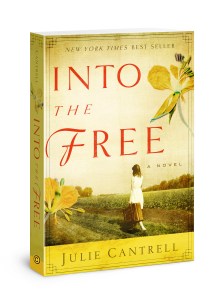
jpcoverphotoWhen I wrote my debut novel, Into the Free, I never gave much thought to point-of-view; but as the words began to hit the page, they naturally fell into first-person narration.

First-person narration tells the story from the point-of-view of one character in a novel (usually the protagonist), and makes use of the words “I” and “me.” Critics point out that this style limits the perspective because it doesn’t allow readers to access other characters in the story. While this is a viable opinion, I argue that first-person allows the reader to gain even greater perspective by viewing the universe from the lens of that one character on a much more intimate level than anything an omniscient third-person narrator can provide. (We’ll leave second-person for another day.)

Yes, the view of other characters will be skewed by that one character’s interpretation of their actions, appearance, etc., but readers are granted full-access into the brain of that one narrating voice, even more so when that narrator is a trust-worthy character who isn’t deceiving us as we read. Essentially, we, as readers, are allowed to become that character. This enables us to enter that character’s world, interacting with the other characters, experiencing the events, and engaging at every sensory level throughout the story.

When an author delivers a story in first-person, we close the book feeling as if we have lived to tell the tale. This intrusive point-of-view makes the entire reading experience personal for us, moving it from the level of observation to participation. And because, by nature, the first-person perspective limits every scene to those in which the narrator is actively present (or his/her memory of such), we aren’t forced to pull back and watch something happening across space or time. We have no choice but to dive right into every single event of the story. We feel it, taste it, smell it, and react to it cognitively, emotionally, and instinctually.

As a reader, I have always enjoyed reading first-person narrations. Some of my favorite books were written using this point-of-view, and as a result, the narrators have become some of my favorite characters. Consider Scout in Harper Lee’s To Kill a Mockingbird, Holden Caulfield in J.D. Salinger’s Catcher in the Rye, or Nick Carraway in The Great Gatsby, who tells us the tragic love story between Gatsby, Daisy, and Tom from his perspective.

Your turn: What point-of-view do you prefer to read? What do you prefer to write? Share some of your favorite examples, and introduce us to those characters who continue to stay with you long after you’ve closed the book.

Writing prompt: If you’re stuck in a scene, try writing it from another character’s point-of-view. What can you learn from seeing the event from a different perspective?

God Has the Plan, Not Me!

Chess pieces on chessboardI’m a planner.

In the days before I go on a trip, I make a list of everything I need to take, so I won’t forget something in the actual process of packing. I mark items off the list as I pack them. When I close the last suitcase, I tuck the list into my purse, so when I return, I can use the list again to be sure I don’t leave anything behind.

The fault with my method of preparation is obvious, though – while I can control what I bring on the journey, I can’t control what actually happens on the journey. Sometimes the weather is much hotter than I expected, and I end up wearing the one sleeveless shirt I brought for the whole trip. Or the opposite occurs, and I wear the same sweater nonstop because everything else I packed was perfect for the 75-degrees that had been expected, but got pushed aside by an unseasonably cold weather front.

Again and again, I think of the Yiddish proverb: Man plans, and God laughs. And while I appreciate a good laugh – I’m something of a humorist, you see – it can get very tiresome when I’m trying to apply my planning penchant to my writing career.

Here was the plan: Choose a niche, write a great book, get an agent, get a publisher, write more great books in the series.

This is what happened: Wrote a book tailored to the niche (cozy mystery), wrote second book, got turned down by every agent for three years, not a word from any publisher, began writing third book in series, began writing another series in a different genre (supernatural thriller/romance) to see if I could do it and since the first series was getting nowhere, why not?, and finally found a small regional press for the mystery series four years after finishing the first novel.

Encouraged by that success, I pitched the thriller/romance to an agent, who snapped it up. That was five years ago, and that series now has two books in it, but no bites from any publisher. In the meantime, I’ve had five books in the cozy series published by the regional press, and my agent for the thrillers has now sold a humorous spiritual memoir I wrote six months ago (which grew out of several blog posts) to an international publisher.

From mystery writer to memoirist. I never could have planned that, not to mention the wonderful community I’ve found here to share the journey with at my agent’s company. It’s funny to see where my ‘plans’ have taken me, even though they haven’t taken me where I had planned.

They have, however, taken me exactly where God wanted – I just didn’t know it at the time. So every time I feel God laughing at my plans, I know the laughter is with me, not at me, and I know I’m not alone in this very human experience, for as the prophet Isaiah declared:

“For my thoughts are not your thoughts,
neither are your ways my ways,”
declares the Lord.
 “As the heavens are higher than the earth,
so are my ways higher than your ways
and my thoughts than your thoughts.” Isaiah 55:8-9

So go ahead and plan all you want for your writing career. Then let God show you the higher way.

The As-If Principle: Conquering Burnout

Holiday_lazinessWhen it’s time to write, I look at my laptop with dread. It’s been a long day at work, and I’ve taken care of a lot of loose ends since I got home. Not to mention a couple of kids’ squabbles to referee.

By the time the family heads for bed, I’m tired, I’m burnt out. There’s no creativity left in me. Nope, not one spark. The recliner’s looking awfully inviting. And the remote’s not far away.

The thing is, I’ve had too many of those nights lately. It’s not just writing. I edge past my closed Bible, sure that if God has anything to say to me, my foggy mind won’t be able to hear it. Instead of taking my evening walk, I handle some bit of trivia that could wait.

So this time I make myself sit down. I stare at the blank screen. I manage to type out a painfully bad sentence and another. I delete a word, edit a phrase. And a strange thing starts to happen. The words start coming to me, slowly at first, but then a little faster. By the time I’ve knocked out a scene, I feel like a different person. I’m a writer. I’m energized. I can handle this writing gig.

It’s the as-if principle. If you want to get to the other side of burnout, you have to act as if you already have.

Too tired to write? Write anyway. The creativity will come.

Too tired to pray? Pray anyway. God will show up, and eventually so will you.

Too tired to exercise? Do it anyway. The endorphins will pump in, the oxygen will get where it needs to go, and you’ll feel far better than if you’d unwound in front of the TV.

Depressed? Smile more. We think we’re supposed to smile because we’re already happy, but smiling increases your happiness all by itself. Try it and see.

What else would you do if you weren’t burnt out?

Instinct tells me that when I’m tired I should rest. And sometimes that’s the right choice. If you’ve put in a lot of hours or life has just thrown more at you than any reasonable person can handle, a nap or an evening on the couch with your family and a good DVD might be just what you need.

But more often, moving past the exhaustion is the better option. It’s as if nature rewards those who are contributing in some way – building something, creating something, helping someone even if that someone happens to be yours truly.

Once in a while, taking the night off is great, but I’ve found that if burnout persists, the cure isn’t sleep or a vacation. It’s to live as if I were fresh and full of life. And it’s to fill my time with the things that count even when I’m tired.

I’m a writer, so writing is what counts. It invigorates me, even more than eight hours of sleep. That’s why, full of energy or exhausted, motivated or cranky, once the kids go to bed, you’ll find me at the laptop.