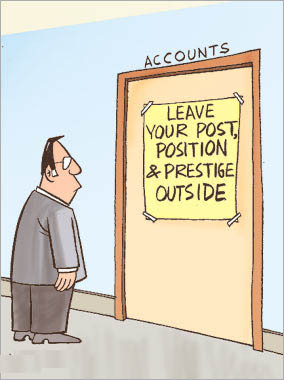
Authorship Is A Lesson In Humility

The pain was almost unbearable as I read my book doctor’s lengthy and critical evaluation of my first manuscript. I felt like my heart was being ripped out of my chest. Without significant additional help, not to mention hundreds of hours of work and a lot of money for surgery, my manuscript wasn’t going to live. It was my first lesson in humility as a would-be author.

Thankfully, my book doctor was funny and tactful as he delivered his prognosis. He told me he could teach me how to resuscitate my baby if I was willing to pay the $80 per hour co-pay.

As if my deficiencies as a writer weren’t a big enough blow to my ego, I was also told I had to wait three months before he could carve out time for my writing lessons. Come on, man! Three months? Really?

The harsh truth was no matter how much authority and respect I garnered in my day job as a physician, in the world of book-writing and publishing, I was a vulnerable, inexperienced nobody. I couldn’t even get a writing coach’s quick attention when I was paying.

Fast forward a year, and thanks to my book doctor’s worth-the-wait teaching, plus my own endurance through repeated rejections and humiliation, I produced a much-improved manuscript and ultimately went on to secure Greg Johnson as my agent and a publishing contract with Zondervan for The Eden Diet.

Woo-hoo! I got an amazing agent and a book contract! I thought that meant, “No more begging for people’s time and attention regarding my book.” Wrong! I hadn’t yet even begun to market. I didn’t know yet how humiliating book signings can be, “Please, Mrs. Bookstore Patron, may I interrupt your shopping agenda and tell you about my book?” Many stopped and listened, politely, but some walked right by, as if they didn’t hear me talking.

Compare that to my life at the office. In my doctor-world, I have actual authority and garner near-immediate respect from people who don’t even know me.

Fast forward again and now I have a contract with Strang/Charisma House for a book that can help even more people. Will I risk rejection again as I hold book signings and market for this second book? Absolutely. I counted the cost, and it’s worth the price. My message can bring countless readers into physical, mental and spiritual wholeness. Isn’t their profound healing worth a little momentary discomfort on my part?

Besides, any tiny shred of humiliation I endure along the way to help other people is infinitesimally small compared to the humiliation my Lord suffered when He was hung on the cross. Actually, now that I think about His humiliation for the greater good, I don’t even have the right to talk about humility.

Word of Mouth or Cyber Bully?

I’m hearing more and more conversations crop up lately from small business owners who say dissatisfied customers with even an ounce of Internet savvy can create an unfair disadvantage for their businesses. They argue customers are too quick to zap off a bad review, poor rating, or negative ‘word of mouth’ without ever giving the business a chance to make it right. “Feedback is a gift,” business owners claim. “And I never even got to open it until it was too late.” I can’t help wondering if it’s more like a party too many businesses don’t pay attention to until a hundred people jump out of the dark and yell “Surprise!” Either way, these highly visible online rants and ratings of the unhappy and dissatisfied can be a real detriment to acquiring new customers. And some businesses are crying, “Cyber bully!” 

But are they really? Let me take it closer to home: enter the novice or mid-list author. These author folks may feel a similar squeeze when negative comments or one-star ratings crop up for their books at various reader/author social networking sites or online booksellers—sometimes even before the book is released and based solely on how excited someone is (or isn’t) to read the book. Add the rumor of authors gaming the system by soliciting everyone and their brother for 4 and 5 star ratings and by low-balling competitors’ titles, and you can see why authors can be squeamish about the power of word of mouth on the Internet. At its best, it works for you. At its worst, not so much.

But does that mean people who scatter low ratings like jellybeans at an Easter egg hunt—with or without commentary to support them—are really abusing the author? Don’t readers realize how much power they wield, how much of a boon or a detriment their ratings could be for an emerging author? 

Probably not. And not only is it a bad idea to police the system, I think it’s futile to try. Internet word of mouth is organic in nature. Those who trust and value the opinions of others will continue to seek them out, and in the long run, that’s a good thing for everyone. Just like when we write we make positive assumptions about our reader’s intelligence and ability to follow our stream of consciousness, we shouldn’t underestimate the sensibility of those same readers when it comes to their ability to sort through the good, the bad and the ugly reviews. I like to think unless the negative rating came from a highly trusted or personal source, most prospective readers toss out the outliers and look for themes anyway.

What about you? As a reader, how much do negative ratings influence your decision to try a new author?

Taming the Marketing Monster

When my daughters were little, they were convinced that a scary monster was waiting in the bedroom closet at night. Our solution was an easy one: I gave them a small hammer to put under their pillow, so when the monster came out, they could conk it on the head. Oddly enough, the monster never showed up, and my daughters slept soundly through the nights.

Empowerment is a wonderful thing.

Now that I’ve become a published novelist, I’ve discovered that most authors have a similar problem: there’s a scary monster in our closets named Marketing, and it will come out of hiding even if you keep a hammer under your pillow. Not only that, but if you ignore it, Marketing will sneak out when you’re not looking to destroy all your hard work to become published.

On the other hand, if you learn to tame it, Marketing will become your faithful friend, bringing you exposure, opportunities, and book sales.  So instead of the hammer, here are a few empowering ideas to stick under your pillow tonight to help you begin the taming of your marketing monster.

  1. It’s YOUR monster. No one else is going to take responsibility for it, so you need to learn as much as possible about the feeding and care of it. Read blogs and books about book marketing. Create a list of media contacts in your area that includes radio stations, televisions, newspapers, magazines and even bulletin boards (find out who gives approval to use them!).  Add the names of librarians, book store managers, and book club contacts. Make a roster of blogs that relate to your topic/novel where you can visit and leave comments. By creating your own database of ideas and contacts, the question of “what do I do?” becomes “where do I start?”
  2. Feed your monster every day. Choose one marketing activity. Do it. Today. Write an announcement/press release of your book’s publication and email it to your contact list. Visit five blogs and mention your book. Donate a copy to the library. Get a Facebook page. Don’t worry about results at this point; just get the word out that you’ve got a book published. Tomorrow, choose another marketing task and do it. The next day, do the same thing. Feeding your monster a steady diet of small marketing activities will keep it content and much less scary. Over time, all those tidbits of publicity you’ve done will add up and begin to yield the bigger results you want: a growing readership.
  3. Take your monster out to play on a regular basis. Meet other authors and network with them on marketing ideas and contacts. Plan joint events. Share experiences. Commiserate over the failures. Celebrate the triumphs. Laugh. Create your own marketing support group.

Most of all, don’t let Marketing scare you. All it really wants is your attention…and to get out of that closet. You just have to open the door.

What scares you the most about Marketing? Has your monster brought you unexpected gifts?

7 Tips for Self-Editing Your Novel

Before I signed with my awesome agent, Barbara Scott, I knew my novel needed another round of edits. I looked at several freelance editors, but I just couldn’t afford the cost. So, I rolled up my shirt sleeves, prayed, and decided to do it myself. Again.

At this point, I’d already gone through my book for grammatical errors, typos, etc. I’d had a published writer and several beta readers go through it. Three other agents expressed interest if I could go back and make my novel stronger.

Here are the tips I learned that pushed my book from a maybe to yes.

1. Print it out. I fought this (don’t ask me why, my frugalness I suppose, sounds better than stubbornness), but it truly makes a huge difference. Your eye will catch things on the printed page you won’t see on the computer screen.

2. Only edit one thing at a time. Go through your manuscript focusing on one thing at a time. Do a sweep for dialogue. Is there useless chatter? Talking that doesn’t move the story forward? Do you have too many tags? Then go back for description. And so forth.

3. Examine every character. Don’t waste time with cardboard characters or the stereotypical bad guy. I highly recommend Deb Dixon’s Goal Motivation and Conflict.

4. Setting. Regardless if you write historical or contemporary, you need to research your setting. Find some of the not so common places to set your characters in. For example, lots of scenes are in restaurants, change it up and put them on a picnic at some fantastic landmark.

5. Hooks and cliff-hangers. Check out the beginning of every chapter and the ending. What can you do to make it stronger? What could happen that would ensure the reader couldn’t put your book down because they have to know what happens next? Is your heroine being chased by a wolf? Then make it a pack of wolves and have her twist her ankle. Take it a step further and do this to every scene. I recommend James Scott Bell’s Revision and Self-Editing.

6. Description. Remember to include things beyond sight. Let us know how it smells, tastes, feels, and sounds. Is the rain splattering or pounding? Are the hero’s hands calloused or warm? See Frontierinternetservices.com.

7. Wrapping up all the ends. Make sure all the sub-plots and story lines are resolved. You can set things up for a sequel, but you can’t leave things undone. Readers will feel cheated if they have to buy the next book to find out what happens to the main storyline in book one.

What are some of your favorite non-fiction writing books? Do you have any tips or tricks you use when editing?

A How-To for Meeting Editors

Book acquisitions editors are some of the busiest people I know and the most elusive. If they admit what they do for a living, people want to send them their grandmother’s self-published poetry or a best friend’s novel that she wrote in high school.

They aren’t flashy dressers. They don’t talk about publishing trends in the checkout line. And at parties, if someone asks them what they do for a living, they mumble and then wave at an imaginary friend. “Nice meeting you,” they say before darting to the other side of the room.

Then how can a writer catch a break? Ah, my dear contestant, you must know the secret lives of editors…not bees. Following are ways to meet an editor:

1. Make friends with other writers, especially those who have published at least one book.

They’ve made the leap, and many are willing to give you advice or help you achieve your dreams. Attend their workshops at writers’ conferences, listen carefully, and ask thoughtful questions. Learn the craft of writing and how to market a book while you write your manuscript.

Published authors know editors, and if you’ve written a manuscript that other authors like, they’ll be more willing to give you a recommendation or an endorsement.

2. With your polished manuscript in hand, query an agent.

Make sure to read an agent’s submission guidelines before you approach them, or pitch your project to an agent at a writer’s conference.

Attend the best conference you can afford. One of the perks of attending a conference is that you can request an appointment with an agent. Agents know editors, and they know whether your manuscript is ready to be published. Listen to their advice, and rewrite your manuscript if necessary. An agent can be your best ticket to meeting an acquisitions editor.

3. Acquisitions editors attend writers’ conferences as well.

They set up appointments with agents, and they take 15-minute appointments with conferees. Sometimes they will agree to critique your manuscript for a fee.

4. Attend workshops taught by editors at writers’ conferences.

Editors teach a variety of workshops that vary from character development to plot development to self-editing. They will tell you what kinds of projects they’re looking for so that when you get your chance to meet an editor, you’ll be prepared.

5. Attend meetings of a local writers’ group.

If the group is large enough, they will invite published authors to speak, and through the friendships you make with authors and other members of the group, you can support each other through the process of becoming a published author. If you don’t have a local writers’ group, consider starting one.

Finally, what’s the best way to meet an editor? Keep writing and improving your craft until someone takes notice of you. Editors love fresh, unique voices. You could be the next American Idol of the publishing world.

Five Tax Tips Most Writers Miss

I’m a strange breed of writer. A Missouri mutt if you will.

One part relational, warm and fuzzy with a passion for flowery phrases. One part practical business woman with multi-layered experience in payroll, accounting, banking, marketing, human resources and taxes.

My poor agent must wonder what to do with this mixed mess. Sorry Barb.

However, there are benefits to my schizophrenic passion mix. I not only know writing is a business, but I understand the business in writing. My emotional side wants to please God, so I’ll overturn any stone to steward the gifts He gave me.

My varied interests drive me to dig through my diverse background for hints, tips, and answers to support my love for words and their meanings. And I like to share what I learn.

For this post, I took something I know and hope the resource helps my writer friends. Whether writing is your childhood dream or an adult job — it’s still business. And you’re the owner.

April 15th is around the corner, so let’s make sure all you business owners are getting your full tax benefits. We must give Caesar what is Caesar’s, but not a penny more.

Here are the five tax deductions most often missed by writers I speak with:

1. Mileage. Keep a detailed log. All trips you take to buy supplies (including bookstores to buy books), go to meetings or meals where you discuss the craft, projects, or marketing are usually deductible. And don’t forget those trips to the post office.

2. Telephone and Internet charges. You’ll need to calculate your percentage for business use.

3. Subscriptions and dues. Magazines count for research (do we read anything without evaluating the writing?). Writing organizations, clubs, or anything else related that charges dues and fees count.

4. Travel, including rentals, parking and toll fees. Don’t forget your mileage to and from airports.

5. Extraordinary entertainment, but you must support your claim with good documentation. Examples are movies you study, amusement parks, if you observe behaviors, capture quotes, or watch a process relevant to something you write. Music and other artistic forms you study or use for creative inspiration. What entertains you while feeding the muse?

Most writers don’t make a lot of money, so a penny saved is a penny we need to earn.

Tax laws change often — don’t fail to get current data. This article has good general information, but see your own professional tax preparer for an in-depth evaluation of your situation. If you want to research on your own, go to the IRS for specific guidelines.

My mixed interests help me support the dream I love by making sure I take all the legal tax deductions I’m entitled to. A Missouri mutt needs to eat, too.

Do you have more tips you could share? What other savers can make writers money? Do you consider yourself a business owner?

Tax tips for writers by Missouri mutt
My Missouri Mutt - "Boss"

Finding a Publisher: 10 Steps to Success Part One

If you are a first time author and looking for a publisher, you need to know several facts about the book publishing business. It’s a big ocean to dive into, and remember: there are sharks. Like any kind of business, and book publishing is a business, there are people who want to make a quick buck out of naive and vulnerable authors, so avoid them at your peril.

Step 1 – Write the book. Publishers are not really interested in ideas. They want to see proof that a would-be author has the skill, the stamina and the discipline to finish the job. Publishers expect that a novel should be about 80,000 to 100,000 words long and, taking an average, that’s about 300 pages.

Step 2 – Before you send your MS to a publisher, have the courage to show your creation to someone who will give you an honest assessment of your writing. Don’t ask your spouse or best friend because they are not the best people to give you an honest report. Your local librarian might be a good place to start. It’s a harsh truth, but unfortunately the writing world is overcrowded with writers who have great expectations of themselves but have little talent.

Step 3 – Okay, you have written a book, and your honest critics say it is brilliant and should be published, well done! Now is the time to do some hard work trawling through the books, internet sites and writers groups who can aid you in your search and provide professional help and good advice.

In the UK there is a very useful publication called The Writer’s Handbook, and it is up-dated every year. The editor Barry Turner has done much of the leg work for you, and his handbook really is a useful and complete guide to agents, publishers, editors and copywriters.

I am sure there must be a similar publication in the USA, so go out and get your own copy. I know it seems daft, but you need to know your own book, what genre it is and even what sub-genre it falls into. Next get a highlighter pen and work your way through the handbook and mark out those publishers who publish novels similar to your own. Be meticulous in this exercise, for it will save you time in the long run. It’s a total waste of time sending your romance story to a publisher who only publishes science fiction. Read the small print carefully.

Step 4 – Having got your list of prospective publishers then check out the minutiae of the submission guidelines. Many publishers will not accept unsolicited MS. So do not waste your time, money and effort sending your MS along to one of these companies. When they say they don’t accept unsolicited MS, they mean it, and they probably have their own arcane reasons for this rule. 

Step 5 – There are many publishers who do accept ‘unsolicited’ MS especially from new authors, in the hope they are going to sign-up the ace in the pack and that might just be you.

Your publishers list may be getting shorter by now, but this is good because you are refining your search, and with every step you are closer to finding the right publisher for you.

What are some steps that you took to find the best publisher for you (if you have one)? What are steps that you need to take to find a good publisher for you and your book (if you don’t have one)?